


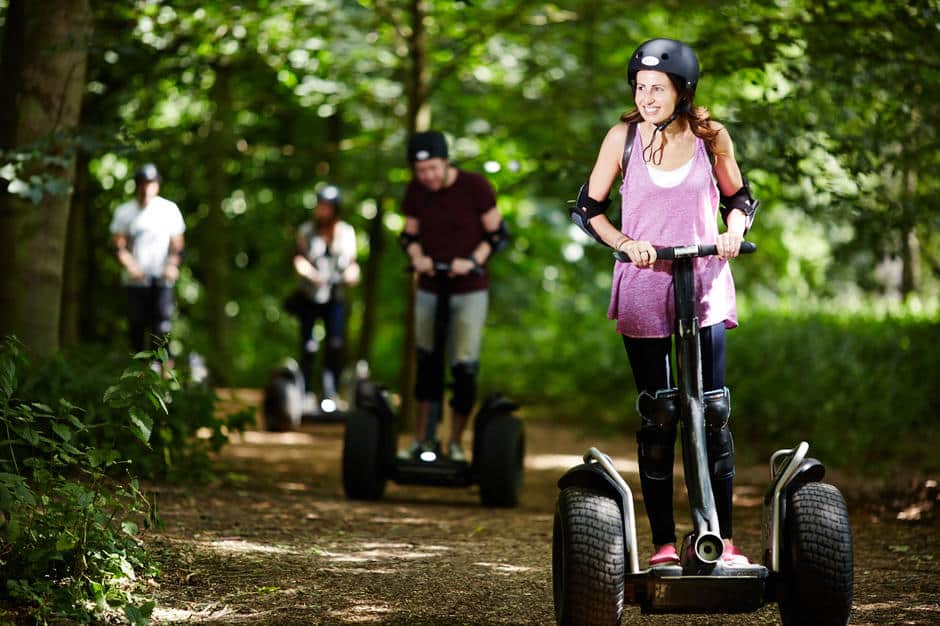


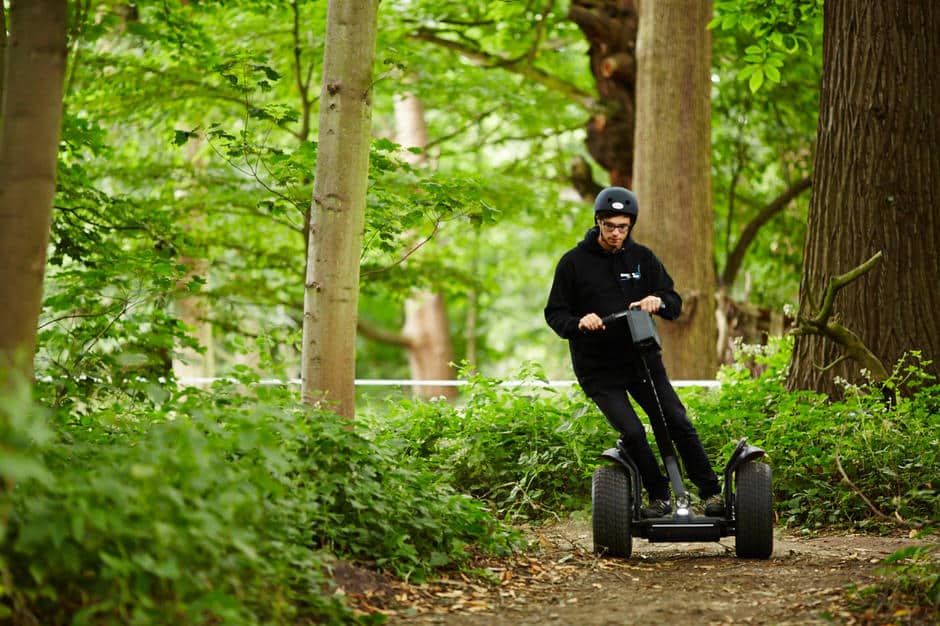
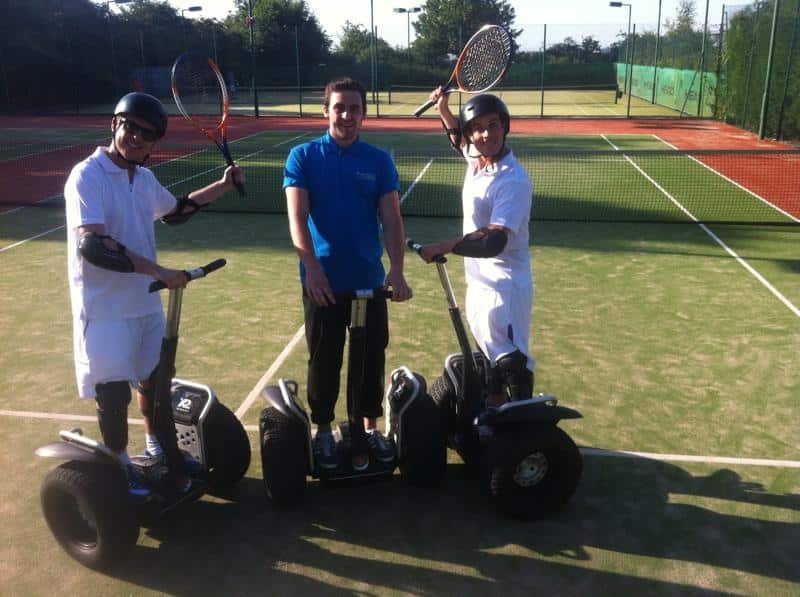
A Segway event is built around a simple idea. Give your team a new skill to try, make it safe and easy to join, then let the shared laughter do the work. The machines respond to body movement, so people quickly learn that tiny shifts matter. Lean forward and it moves. Stand steady and it settles. Turn gently and the course starts to make sense.
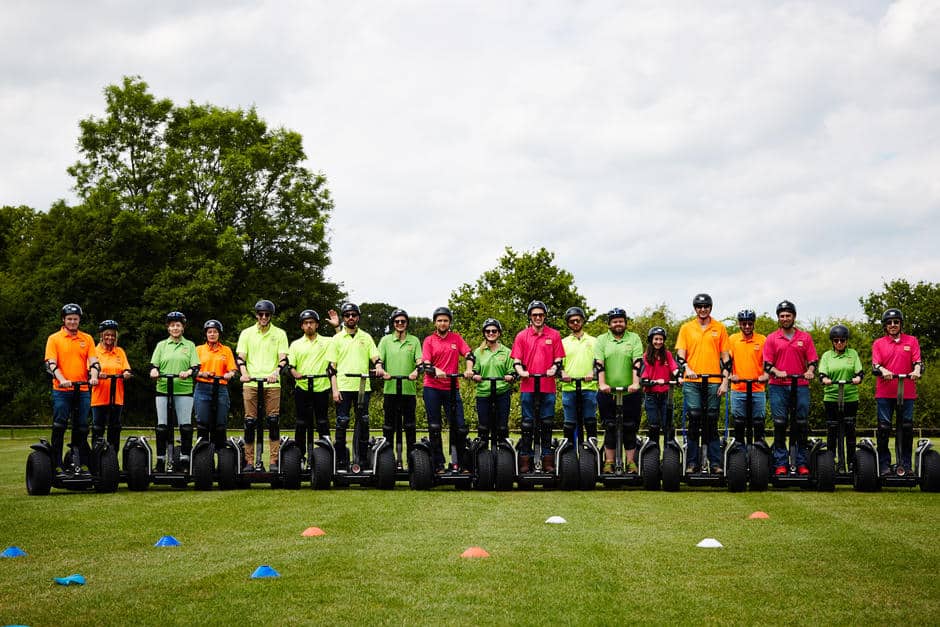
The session begins with a clear welcome and briefing. No one is expected to arrive knowing what to do, and no one is made to look silly for needing a moment. Our team explains the controls, shows the group how to stand, stop and steer, and keeps the pace sensible. Once everyone has had time to get comfortable, the activity opens up and the confidence builds fast.
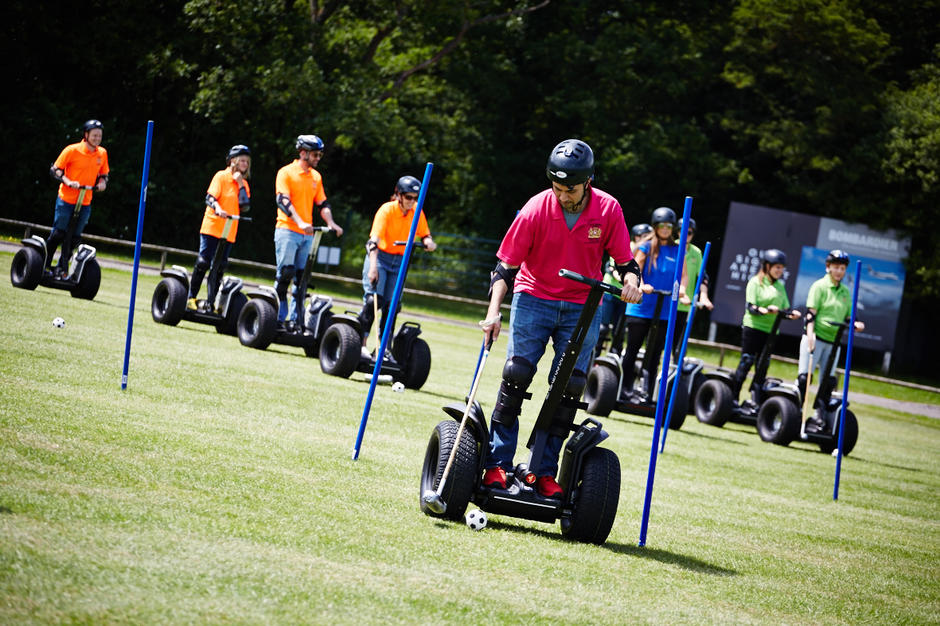
From there, your team gets hands on. They practise moving, turning and stopping before taking on a course or set of Segway challenges shaped around the event space. Some people go straight for precision. Others take a few gentle laps before they start smiling properly. That is the point. The activity gives people room to learn in front of each other without it feeling like a test.
It suits the mix of personalities you get in real workplaces. The loud ones will probably announce every corner. The quiet ones can concentrate, improve and get a nod from the group when they nail it. The competitive people have something clear to aim at, while the more cautious guests can take it steadily and still feel part of the action. It is shared, but not shouty. Social, but not forced.
Segway Team Building Events fit neatly into corporate away days, summer parties, charity fundraisers, evening events and team-building programmes that need movement and a change of scene. They are especially good when you want people out of their usual roles. Job titles matter less when everyone is trying to find their balance. A finance director, a new starter and a sales lead all have the same first wobble, which is rather useful.
The feeling in the group changes as the session goes on. At first, people watch the Segways with a bit of suspicion. Then someone gets moving, someone else laughs, and suddenly the queue is leaning forward to see how it works. By the end, there is usually plenty of advice being offered by people who, ten minutes earlier, were asking which way to stand.
We look after the kit, the set-up and the running of the activity on the day. Your team does not need to bring equipment or prior experience. You tell us about the occasion, the people taking part and the venue you have in mind, and we shape the practical details around that. Then we get the group briefed, moving and involved, while you enjoy watching colleagues discover a very different way to travel a few metres.
This is not a sit-down bonding exercise with name badges and awkward applause. It is physical enough to wake people up, but not the sort of activity that demands sporting talent. It gives teams a shared story, quick progress and a lot of visible encouragement. Best of all, it creates those small moments that people talk about later, usually involving a cautious start, a surprisingly neat corner, and someone insisting they were brilliant from the beginning.