

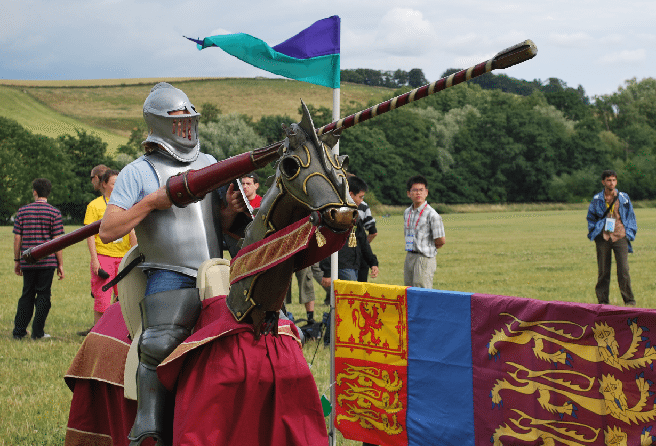
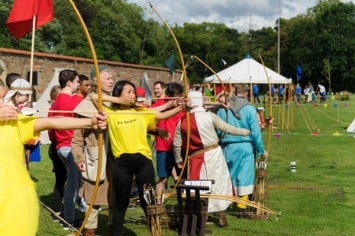
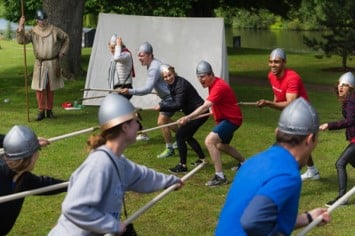
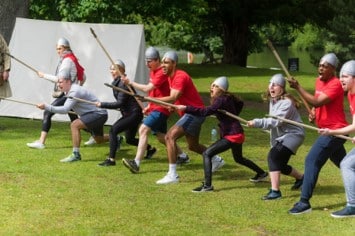
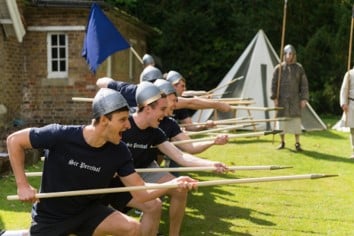
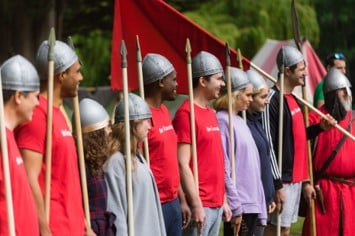
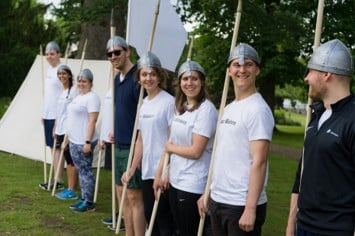
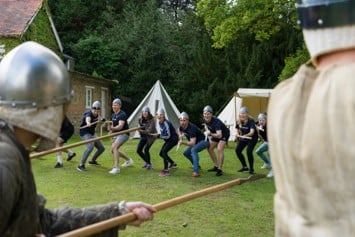
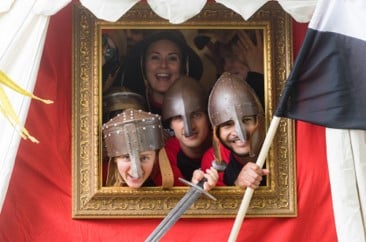
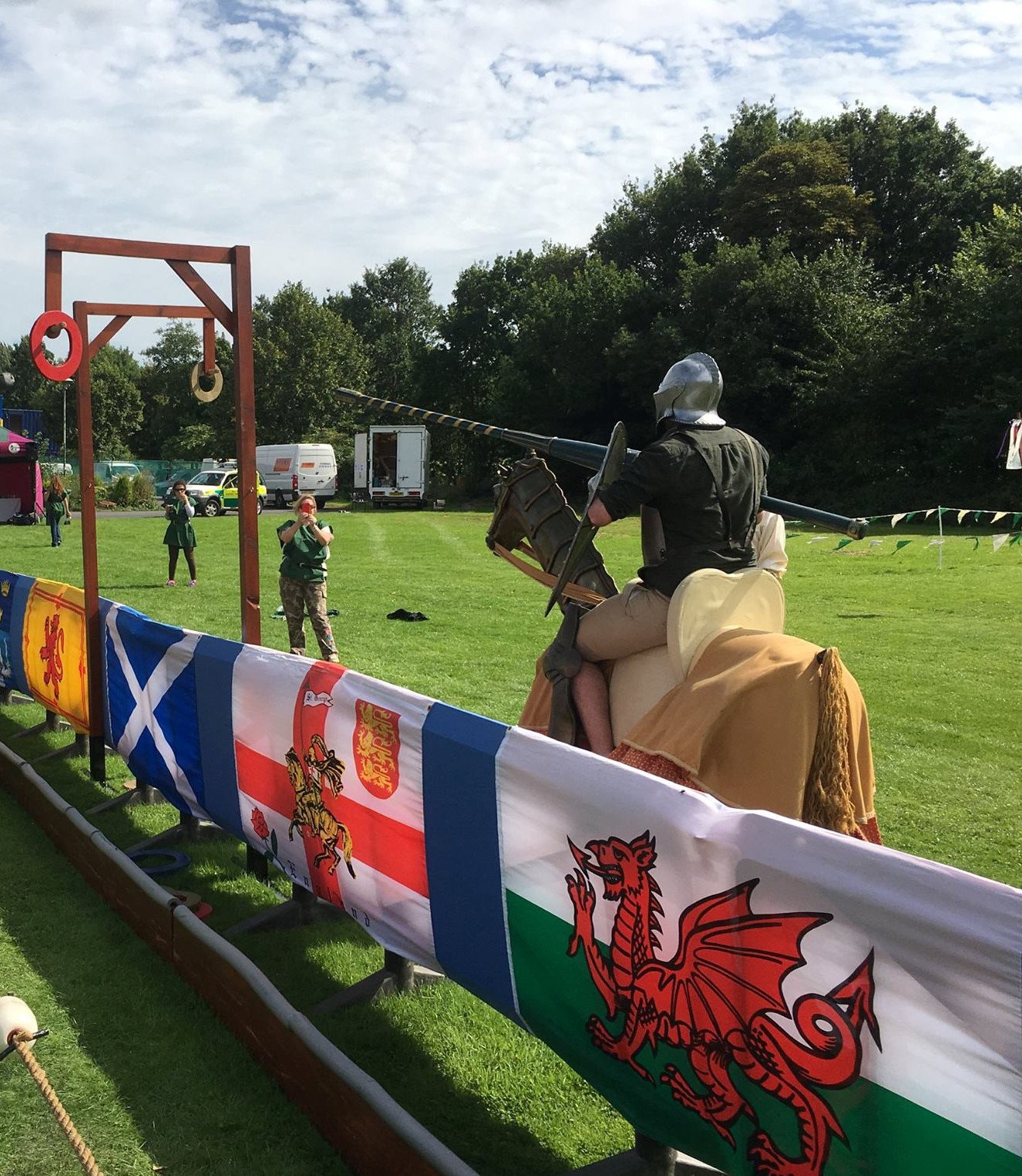
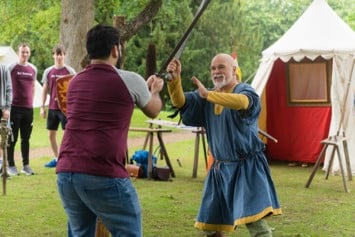
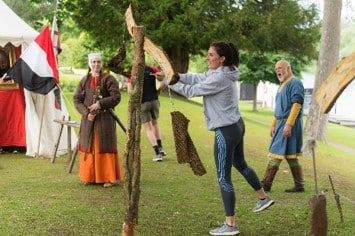
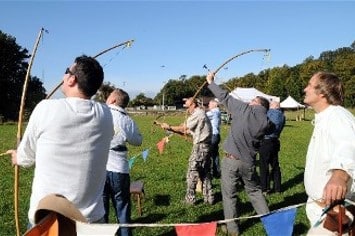
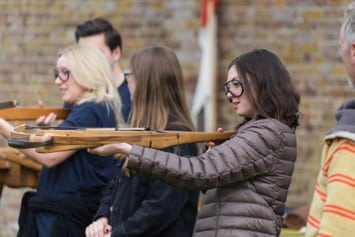
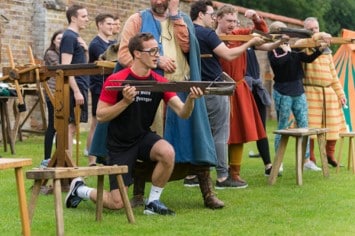
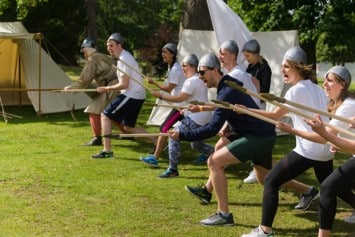
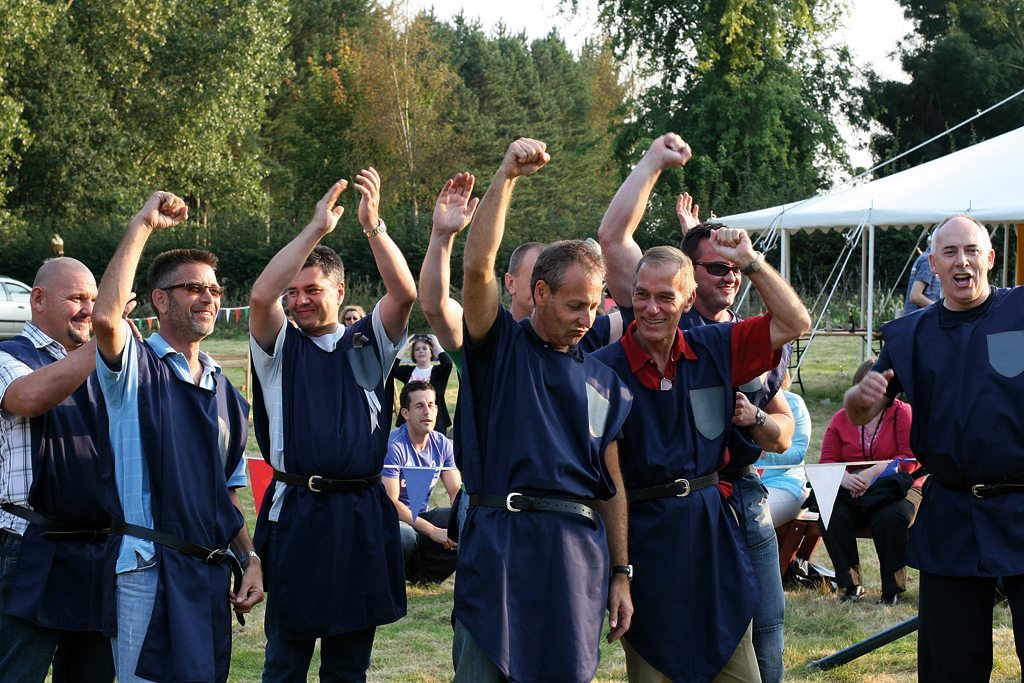
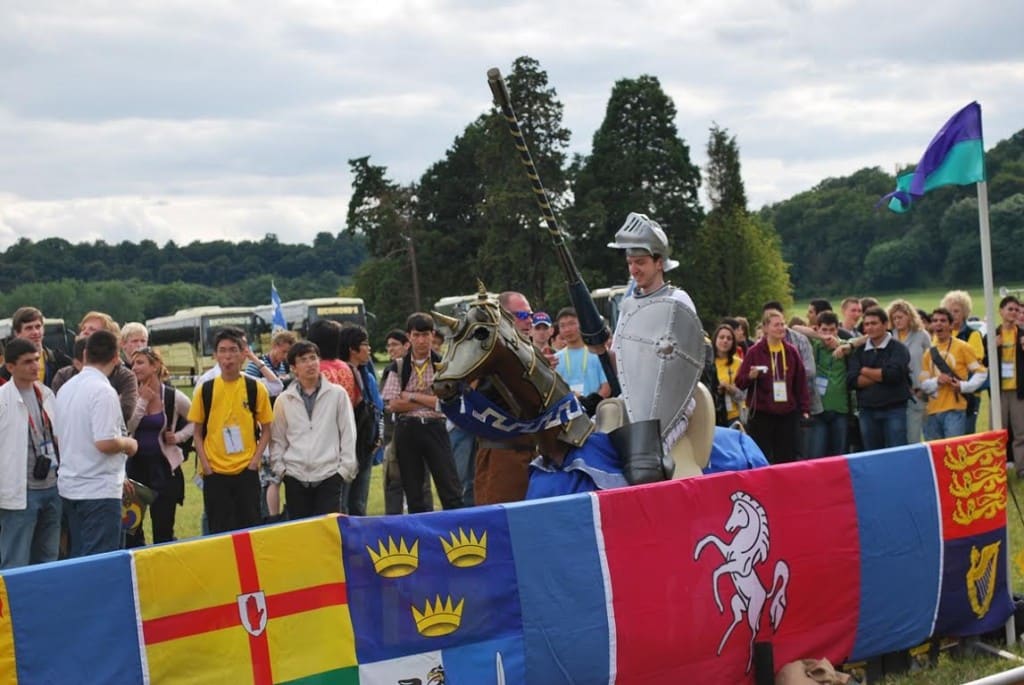
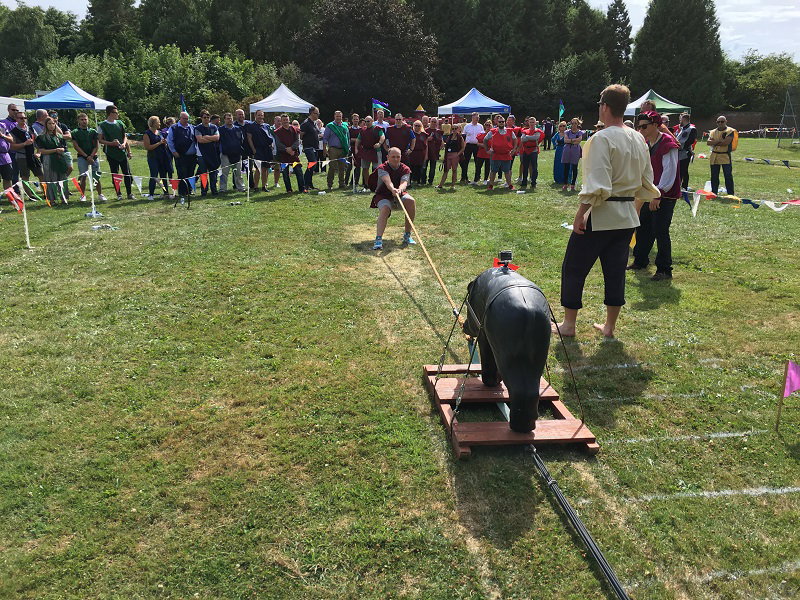
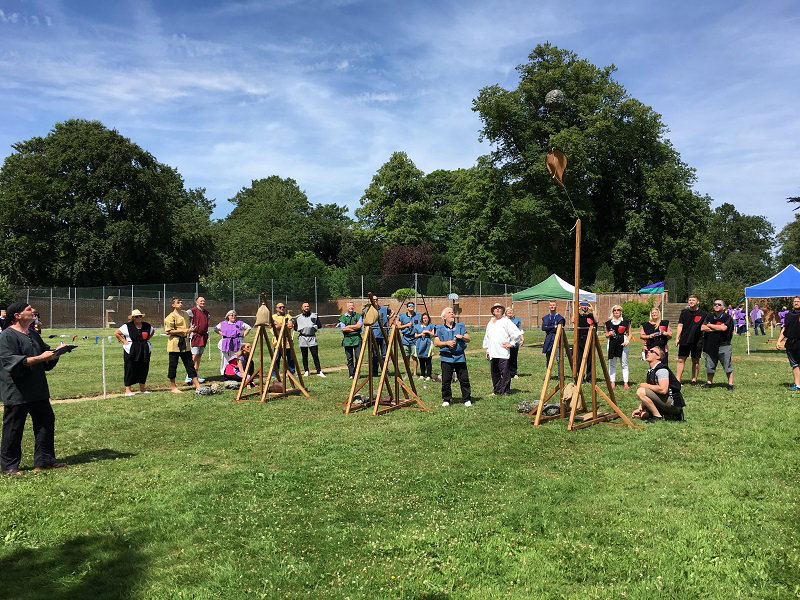
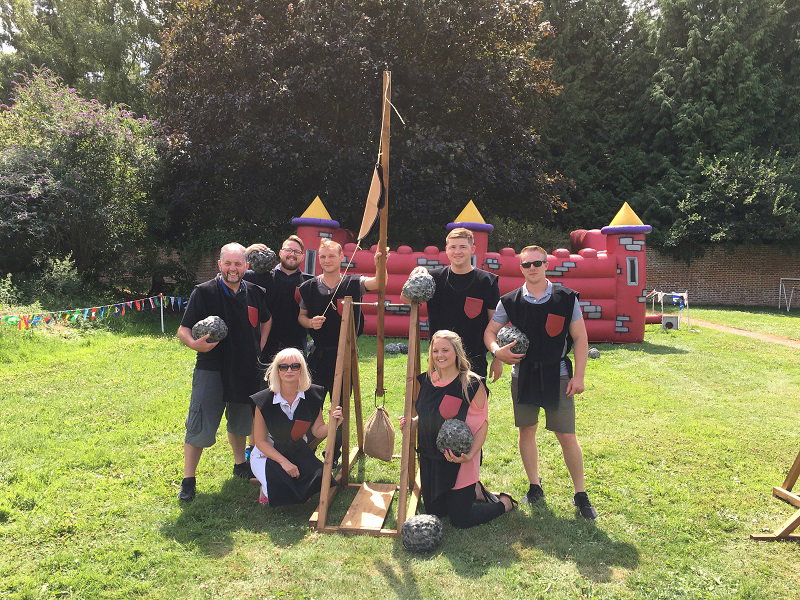
Medieval Day is a themed team building event with a simple promise. Your people become knights for the day and compete with colleagues in a setting that feels miles away from normal office life. It is not about sitting through another presentation or forcing conversation over coffee. It gives the group a reason to gather, choose sides, make quick decisions and enjoy a bit of good-natured rivalry.
The day works because the theme does a lot of the heavy lifting. People understand it straight away. There are teams, challenges, a sense of contest and the chance to lean into the theatre of it without taking themselves too seriously. The medieval setting gives everyone permission to be a little bolder, a little sillier and a lot more present. That is often where the useful team moments start to appear.
From the start, your team is drawn into the world of the event. Colleagues are grouped, briefed and given a clear role in what happens next. They listen to instructions, size up the opposition and start working out who is best at leading, who spots the detail and who can keep the mood up when things get competitive. Nobody needs to arrive with a hidden talent for chivalry. Turning up willing to have a go is more than enough.
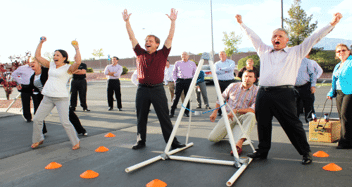
As the event builds, the room or outdoor space starts to shift from polite workplace chat to proper team energy. People call out encouragement. They make plans, change them, and then pretend that was the plan all along. The competitive ones get their moment, but it is not only about who shouts loudest. The calm thinkers, organisers and natural peacekeepers often become the people their teams quietly rely on.
It is a strong fit for a company away day, a team reward, a charity fundraiser or an evening party that needs more shape than drinks and background music. The theme gives guests a shared story, which helps when people do not all know each other well. It can break down the usual clusters and get different departments mixing without the forced networking feeling. By the end, people have done more than share a room. They have had to cooperate, compete and laugh at the same ridiculous moments.
The feel is playful, but there is still useful team value underneath it. Groups have to communicate clearly, include different voices and make decisions while the clock is moving. That means the quiet person with the good idea has a reason to speak, and the loud person has a reason to listen. Those small shifts matter. They are the bits people tend to remember when they are back at work together.
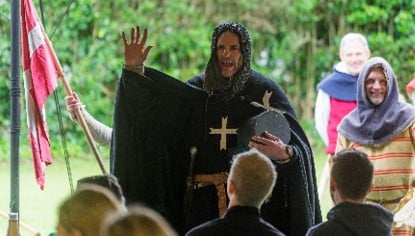
We provide the medieval theming and host the event on the day, keeping the activity moving so you do not have to become the town crier, referee and logistics manager all at once. Your team gets clear direction, structure and a reason to stay involved from start to finish. You can focus on the wider occasion, your guests and the moment when everyone realises they are taking the knight business far more seriously than expected. That is usually a very good sign.