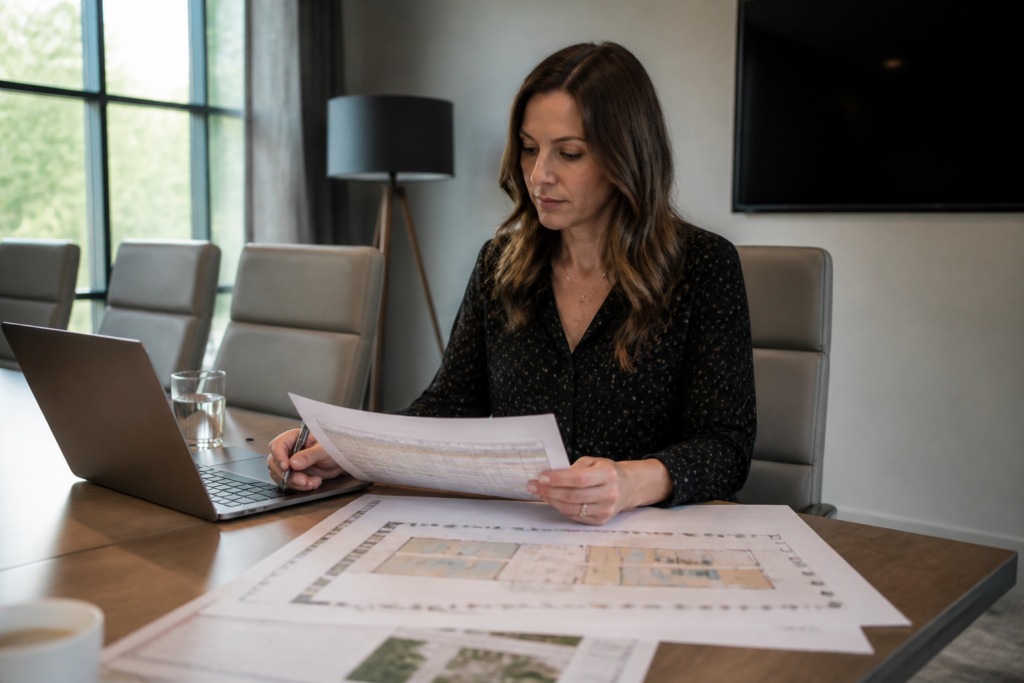
You want a day that works, not a planning process that takes over your week. This corporate event planning guide keeps things practical, because the best event decisions come from a clear objective, a realistic budget and suppliers who know exactly what they’re there to do.
Start your corporate event planning with the outcome
Before you look at venues, write a short event brief. Keep it to one page if you can. Include the purpose, audience, format, rough headcount, location, date range, internal owner and approval route.
Then make the objective measurable. If it’s a client event, that might mean meetings booked or pipeline created. If it’s an internal event, it might mean attendance, feedback scores or managers seeing better connection across teams afterwards.
This step saves time because it gives you a filter. A smart city venue might suit a leadership briefing. A relaxed activity day might suit a tired team after a hard quarter. Different job.
Know your audience before you choose the format
Your audience affects nearly every choice. Senior clients need a different pace to a 200 person staff away day. A hybrid workforce may need more time for people to talk, because they don’t always get that chance week to week.
Think about job roles, comfort levels, travel time, dietary needs, access needs and how confident people are in group settings. If you’re adding team building, pick something that includes people properly. Nobody should feel they’ve been signed up for a fitness test by surprise.
- For networking, use short icebreakers with simple rules.
- For communication, choose collaborative challenges where people have to share information.
- For morale, keep the pressure low and the tone warm.
- For leadership development, use problem solving tasks with a short debrief.
- For values or community work, consider a CSR task with a clear end result.
Set the budget and approval route early
Budget pressure usually starts when costs arrive in pieces. So build one working budget and update it as quotes come in. Separate fixed costs, such as room hire or production, from variable costs, such as catering and activity places.
Allow for VAT, service charges, deposits, cancellation terms and a contingency. Also confirm who can sign off changes. That matters when the venue needs a quick answer or a supplier space is about to go.
- Venue hire and room set up
- Food and drink
- AV, lighting and production
- Registration or event tech
- Staffing, security or stewards
- Speakers, entertainment or facilitation
- Transport and accommodation
- Branding, print and signage
- Photography or video
- Insurance, licences and contingency
Work backwards from the date
Lead time depends on size. Large conferences, galas and launches often need 6 to 12 months. Mid size corporate events usually need 3 to 6 months. Smaller team events and offsites can often work with around 3 to 4 months, if the brief is clear.
Once you have the date range, build a timeline with decision points. Put venue sign off, supplier deposits, invite dates, menu choices, AV checks and final numbers into the plan. Then add owner names, not just tasks.
If nobody owns a task, it usually becomes yours. Put names against the plan before the busy bit starts.
Choose the venue with the whole day in mind
The venue drives more decisions than anything else. Capacity is only the start. You also need the right layout, arrival flow, breakout space, accessibility, Wi-Fi, catering rules, AV options and load in timings.
Ask how people will move through the space. Where do they register? Where does a queue form? Can suppliers unload safely? If you’re running an activity, check ceiling height, floor surface, outdoor space and wet weather options.
Shortlist suppliers properly
For key suppliers, get 2 or 3 quotes where time allows. But don’t compare on price alone. Compare the scope, what’s included, insurance, risk documents, payment terms and who your main contact will be on the day.
You may need a venue, caterer, AV team, facilitator, photographer, registration provider, speaker, transport company, stewards, print supplier and access support. Not every event needs all of them. However, every supplier should know their timings, access route, set up needs and escalation contact.
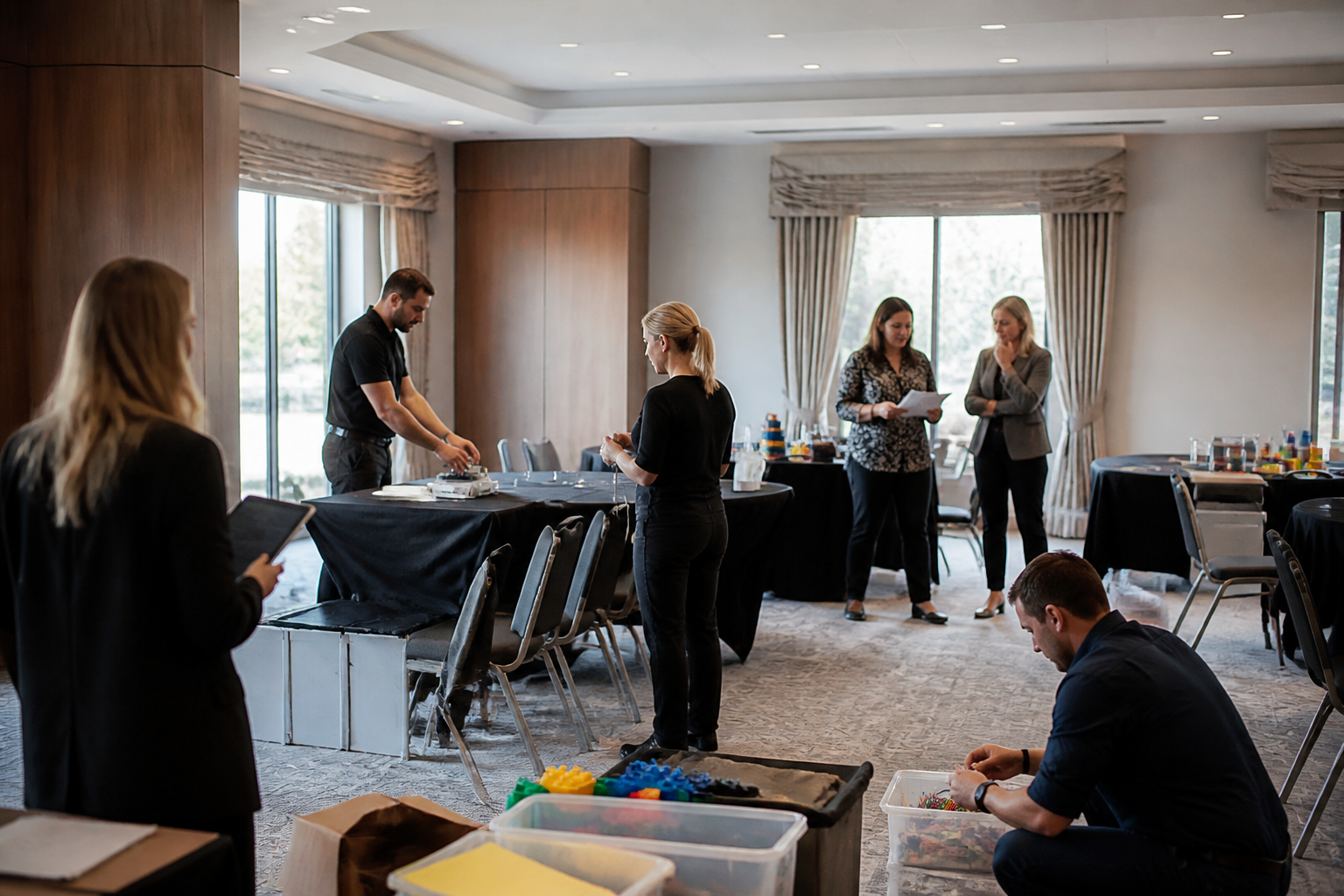
When you book NewWave for team building, we bring the kit, run the activity and brief our crew. Your team turns up and takes part. What’s quoted is what you pay, so you’re not chasing extra hire costs later.
Build the agenda, run sheet and comms plan
A good agenda has breathing space. Plan arrivals, registration, content blocks, breaks, lunch, networking, team building and clear transitions. Add buffer time because people move slower than spreadsheets suggest.
The run sheet is more detailed. It should show supplier arrivals, room turns, AV cues, speaker timings, catering drops, activity set up and who makes each call. Share the right version with each supplier, so they don’t have to guess.
Your comms plan should cover save the dates, invites, joining instructions, dietary and access questions, reminders and post event follow up. For internal events, managers need the reason for the day too, because they often answer the first round of questions.
Cover safety, access and compliance without overcomplicating it
Safety planning should match the scale and risk of the event. A 20 person workshop doesn’t need the same plan as a large public facing event. Even so, you still need a risk assessment and clear responsibilities.
Check capacity, entrances, exits, vehicle routes, temporary structures, congestion points and accessible routes. Also confirm food allergen handling and attendee data processes. For larger events or qualifying venues, ask how Martyn’s Law duties apply and who owns each part.
Measure the result while it’s still fresh
Send a short survey within 24 to 48 hours. Then compare the results with the objective you set at the start. Look at attendance, feedback, cost per attendee, leads, meetings booked or employee comments, depending on the event type.
After that, reconcile the budget and ask suppliers for notes. Record incidents, near misses, late changes and anything you’d repeat. You’ll thank yourself next time, especially when someone asks for a similar event at shorter notice.
A simple final checklist
- Write the event brief and measurable objective.
- Confirm the audience, format and approval route.
- Set the budget, including contingency and cancellation terms.
- Shortlist the venue against access, layout, AV and travel needs.
- Book suppliers with clear scopes and day contacts.
- Build the agenda, run sheet and communications plan.
- Check risk, access, data, food allergens and venue security duties.
- Add team building only where it supports the purpose of the day.
- Survey quickly, review the numbers and save the lessons for next time.
If you want a team building slot that fits around your agenda, we’ll help you choose one that suits your people, space and timings. We’ll run it on the day, bring what’s needed and keep that part of the plan off your plate.