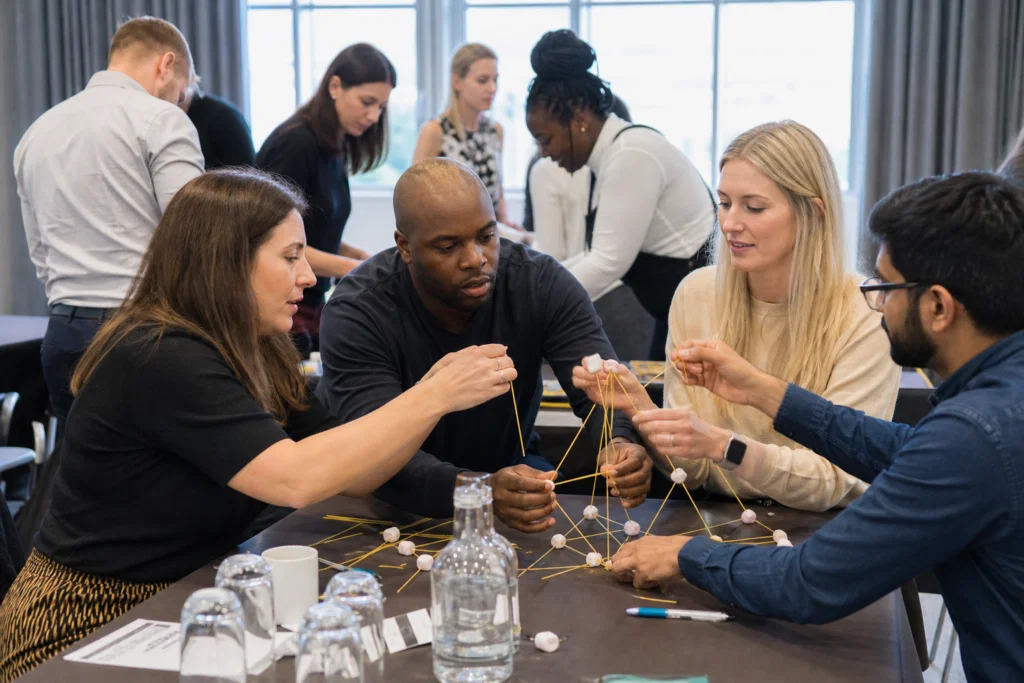
Team building is planned activity that helps colleagues work better together. It can be a practical problem-solving session, an away day, a charity challenge, a creative workshop, a sports-style event or a relaxed social format. The point is not to fill a diary with forced fun. The point is to create the right conditions for trust, communication and cooperation.
For UK employers, team building works best when it has a clear reason. A new team might need to get to know each other. A leadership group might need to practise decision-making. A busy department might need a morale boost after a demanding period. A hybrid team might need time together that is better than another video call.
This guide explains what team building means in plain English, what it can and cannot do, and how HR teams and managers can choose activities that feel useful rather than awkward.
What team building means in practice
Team building is the deliberate act of helping a group become a better team. That can mean improving communication, building trust, clarifying roles, encouraging collaboration or giving colleagues a shared experience outside the usual work setting.
It does not have to mean a long residential trip or a high-energy challenge. A well-run two-hour indoor activity can be team building if it helps people interact in a useful way. A full away day can miss the mark if nobody understands why they are there.
The best team building usually has three ingredients: a clear objective, an activity that suits the people taking part and some form of reflection afterwards. The reflection does not need to be heavy. It might be a short debrief on what helped the group make decisions, how people shared information or what the team wants to bring back into everyday work.
It also helps to separate team building from general entertainment. Entertainment is about enjoyment. Team building can be enjoyable, but it should also create useful contact between colleagues. That might mean people from different departments working together, quieter voices being heard, or managers seeing how the group handles pressure when the usual hierarchy is less visible.
Why UK workplaces use team building
UK workplaces use team building because everyday work rarely gives people enough time to build relationships properly. Meetings are often task-focused. Hybrid work can reduce informal conversations. Busy periods can leave teams operating in silos, even when everyone is working hard.
Recent workplace research points to the same broad themes: relationships, managerial support, communication, role clarity and wellbeing all affect how people experience work. Team building cannot replace good management, fair workloads or clear processes, but it can support them when it is planned as part of a wider people strategy.
For example, a team that has been through restructure may need a session focused on trust, role clarity and communication. A sales team preparing for a new quarter may benefit from competitive but good-natured challenges. A dispersed workforce may need an away day where people meet colleagues they usually only see on screen.
For HR teams, team building can also create a useful pause. It gives managers a chance to observe group dynamics, spot where collaboration is strong and identify practical barriers. The event should not become a substitute for listening properly to employees, but it can open up better conversations.
What team building is not
Team building is not a quick fix for poor management, burnout, unclear roles or unresolved conflict. If a team is struggling because workloads are unrealistic or communication has broken down, an event can help start a reset, but it cannot solve the underlying issue alone.
It is also not the same as making everyone socialise in the same way. Some people enjoy competitive games. Others prefer creative, strategic or charitable tasks. Some colleagues will be comfortable with physical activity, while others will need a more accessible format. Good planning avoids putting people on the spot or assuming that one style of activity suits everyone.
Mandatory fun is another common mistake. When an event feels like an obligation dressed up as enjoyment, people notice. If attendance is expected, the activity should sit within working time where possible, have a clear purpose and respect different comfort levels.
Team building should also avoid public embarrassment. Activities that rely on singling people out, pressuring them to perform or making jokes at someone else’s expense can damage trust. A good facilitator gives the group structure without making participants feel exposed.
Common types of team building activities
There is no single best team building activity. The right choice depends on the group, the objective, the venue, the available time and the level of energy you want in the room.
Popular formats include problem-solving challenges, creative workshops, charity projects, indoor games, outdoor challenges, wellbeing sessions, competitive team tasks and evening entertainment with a team element. If you are comparing options, NewWave Events’ team building activities page is a useful starting point.
For an away day, the event might combine a short business session with a hosted activity and a more relaxed social element. That can work well when leaders need time to share updates, but employees also need a break from presentation-heavy agendas. For planning examples, see the guide to corporate away day ideas for UK teams.
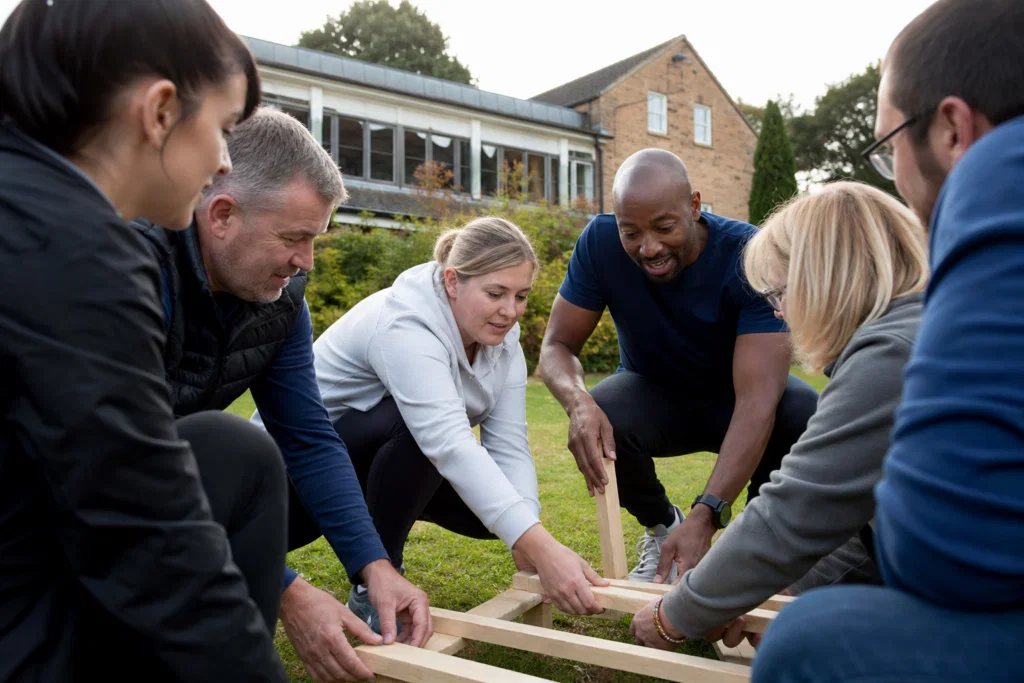
Season and setting matter too. Outdoor activities can work well in spring and summer, but UK weather needs a proper backup. Indoor activities are often better for mixed-accessibility groups, shorter sessions or city-centre venues. Evening activities can suit teams that want connection without a full day out of the business.
How to choose the right format
Start with the reason for the event, not the activity list. Ask what needs to be different after the day. If the answer is simply that people should have a good time, a relaxed social or celebration format may be enough. If the answer is better collaboration, choose an activity where teams must share information, make decisions and adapt as they go.
Group profile matters. Consider job roles, seniority, confidence levels, physical access needs, neurodiversity, travel time, dietary requirements and whether the group already knows each other. A team of 12 senior leaders needs a different format from a company-wide event for 250 employees.
The venue can also shape the event. A hotel conference suite, office atrium, sports field and city-centre bar all create different possibilities. Check room size, noise limits, set-up time, parking, public transport, weather contingency and whether the venue can support the activity safely. NewWave Events has a practical guide to choosing team building venues if you are still comparing options.
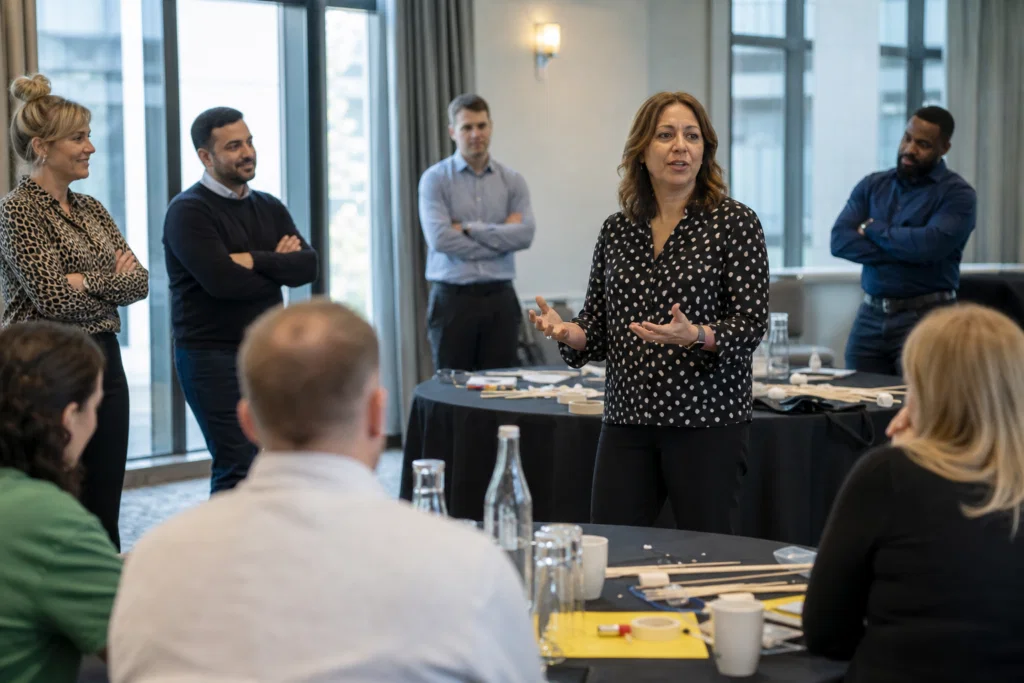
Finally, decide how much facilitation you need. Some activities are best kept light and social. Others benefit from a host who can draw out learning points without turning the day into a lecture. The more serious the objective, the more important it is to brief the facilitator properly.
How to make team building work after the event
The value of team building often depends on what happens next. If the event raises useful observations, capture them while they are fresh. A short manager debrief can be enough: what did the team do well, where did communication slow down, who took the lead, what helped people contribute?
It is worth asking participants for simple feedback too. Avoid overlong surveys. Ask what worked, what felt less useful and what the team should do differently at work as a result. If a theme appears repeatedly, act on it.
Follow-up should be practical. That might mean adjusting meeting habits, clarifying ownership of a project, creating better cross-department introductions or agreeing how hybrid colleagues will stay connected. A team building day that leads to one or two visible changes is more credible than a big event that disappears from memory by Monday afternoon.
For recurring teams, treat team building as part of the rhythm of work rather than a once-a-year gesture. Shorter sessions after busy periods, project kick-offs or leadership changes can be more useful than waiting until morale is low. The aim is to keep relationships healthy before problems become harder to fix.
A practical planning process
A good team building event starts before the activity is chosen. Use this simple process to keep the plan focused and useful.
Agree the reason
Write one plain sentence that explains why the team is getting together. For example: “We want the new project group to build trust before delivery starts.”
Understand the group
Check numbers, roles, location, access needs, confidence levels and whether people already know each other. This prevents the activity from being designed for an imaginary team.
Match the format to the outcome
Choose the activity because it supports the objective. A morale event, leadership session and communication exercise need different levels of structure.
Plan the practical details
Confirm timings, venue, travel, food, accessibility, weather backup, safety responsibilities and how the event fits around working time.
Debrief and follow through
After the event, capture what the team learned and agree one or two practical changes. That follow-up is what turns a good day into better habits.
Planning a team building event?
NewWave Events designs and delivers team building activities, away days and corporate events across the UK. Share your group size, location, timings and objective, and the team can help you shape an event that fits your people rather than forcing them into a standard template.