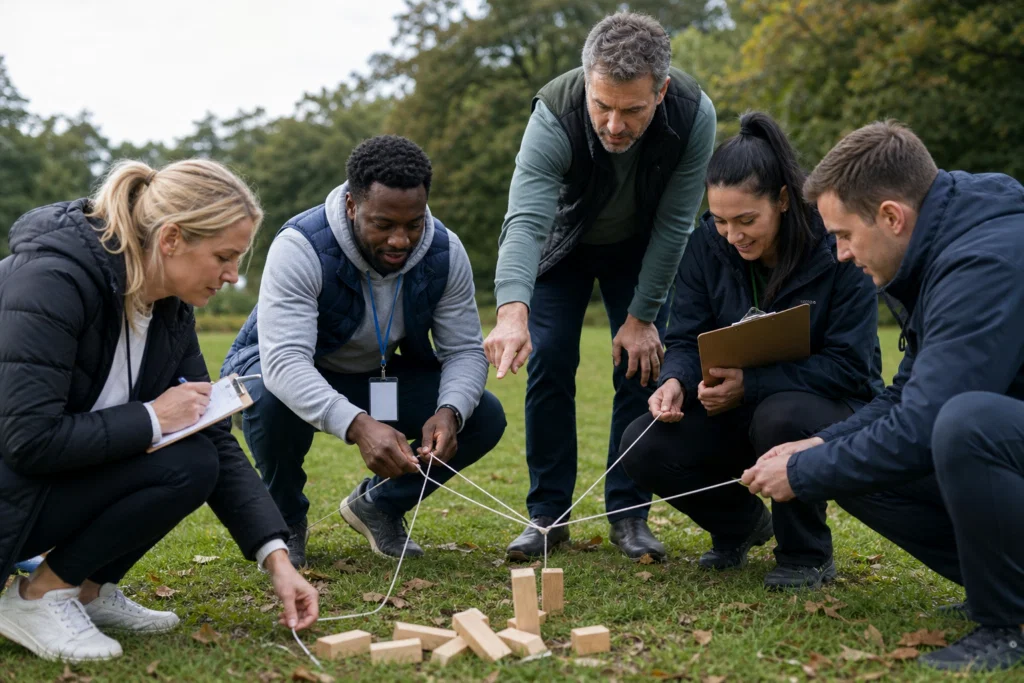
The john adair leadership model, often called action-centred leadership, says effective leaders balance three connected responsibilities: achieving the task, building the team and supporting each individual. It is useful for workplace teams because it turns leadership into observable actions rather than a personality type.
For HR teams and line managers planning a team building day, the model gives a simple test. Does the event help people understand the goal? Does it strengthen how the group works together? Does it give individuals a chance to contribute, practise and be recognised? If one of those areas is missing, the day may be enjoyable but less useful back at work.
What the John Adair leadership model means
John Adair’s action-centred leadership model is based on three overlapping circles: task, team and individual. The overlap matters. A team can have a clear target but still fail if relationships are poor. A group can get on well but drift if nobody has defined success. A capable person can underperform if their role is vague or their strengths are not being used.
Adair developed the model from practical leadership training rather than abstract theory. The official Adair Leadership material describes action-centred leadership as a framework for learning what leaders need to do: achieve the task, build and maintain the team, and meet and develop the needs of individual members.
For workplace leaders, that makes the model easy to use as a diagnostic tool. When a project, department or event is not working, the leader can look at each circle and ask where attention is missing. The answer is rarely one circle on its own. Most team issues sit in the overlap.
The three circles: task, team and individual
The task circle covers the work to be done. Leaders define the aim, agree measures of success, allocate resources, set standards and keep progress visible. In an event setting, this could mean setting a clear purpose for the day before choosing activities. A leadership away day designed to improve delegation should feel different from a reward event or a summer social.
The team circle covers how the group works together. Leaders build shared standards, encourage communication, manage conflict and create the conditions for cooperation. Team building activities can help here because they make working habits visible. Who takes over too quickly? Who spots risks? Who keeps the quieter people involved?
The individual circle covers each person in the team. Leaders need to understand strengths, confidence levels, development needs and motivation. In a practical activity, this might mean giving different people the chance to lead, brief, observe, review or solve problems. It is not about putting everyone under pressure. It is about designing moments where people can contribute in a way that stretches them without setting them up to fail.
Why the model suits team building and away days
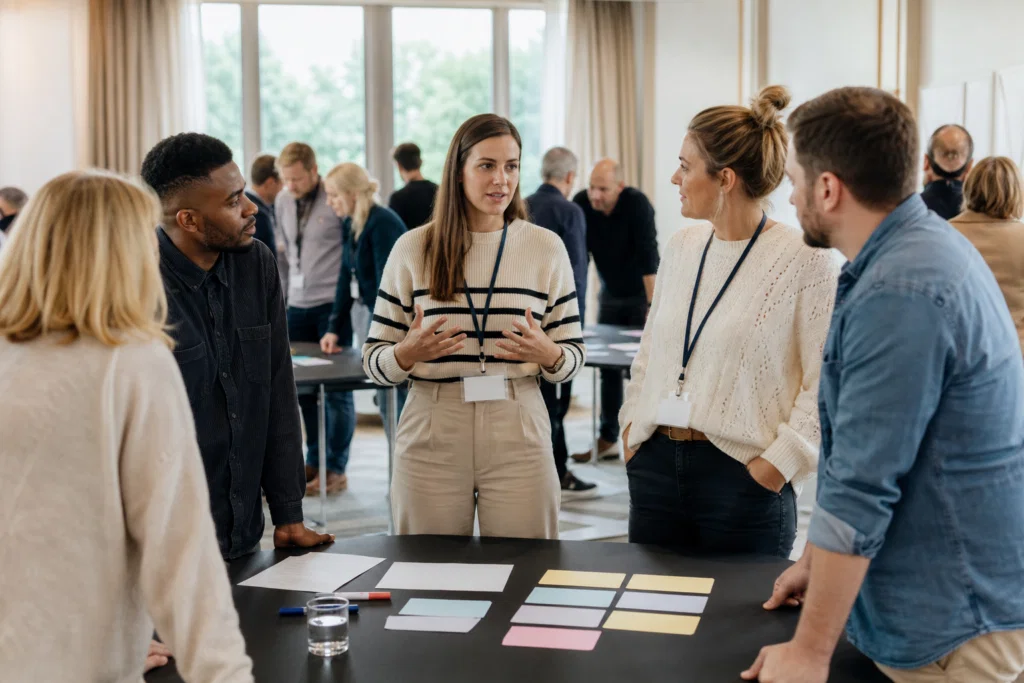
The model suits team building because a well-run activity creates action, feedback and reflection in a short space of time. People are not just talking about leadership behaviours. They are making decisions, managing time, communicating under pressure and seeing the effect of those choices on the wider group.
For HR teams, the model can bring structure to event planning. Instead of starting with a list of activities, start with the leadership gap you want to address. If managers are good at delivery but weak at delegation, choose an activity where success depends on briefing others and trusting them. If a team is friendly but avoids honest feedback, build in a review where people discuss what helped and what slowed the group down.
This is where leadership development team building events can do more than fill a diary slot. The activity should have a clear work-related purpose, skilled facilitation and enough time afterwards for people to connect the learning to daily management habits.
How leaders can apply it at work
The simplest way to apply the model is to use the three circles as a weekly review. Take a current project and score the task, team and individual areas honestly. Low scores are not failures. They show where the leader needs to act next.
For task, ask whether the outcome is clear, whether priorities are understood and whether people know how decisions will be made. For team, ask whether the group has enough trust, pace and shared standards to do the work well. For individual, ask whether each person has the right role, support, feedback and chance to develop.
The leader then chooses an action, not a slogan. That could be rewriting the brief, changing the meeting format, pairing an experienced colleague with a new starter, or giving a team member a defined leadership role for a short project. Adair’s model is practical because it pushes leaders away from vague intent and towards visible behaviour.
Common mistakes when using the model
The first mistake is treating the three circles as equal time blocks. Balance does not mean giving each area the same number of minutes. A tight deadline may need more task focus for a period. A new team may need more team focus before it can move quickly. A colleague returning after absence may need more individual support.
The second mistake is using the model only when something has gone wrong. It works better as a planning tool. Before a project launch, away day or restructure, leaders can ask what the task requires, what the team needs to work well and what individuals may need to perform with confidence.
The third mistake is choosing activities that entertain the group but do not connect to the leadership need. A team can have fun and still leave with no shared learning. If the aim is stronger leadership, the design should include a clear brief, time pressure, decision points, rotating roles and a useful debrief. For broader planning, the guide to corporate away day ideas for UK teams can help match the format to the outcome.
Using the model to brief a team event supplier
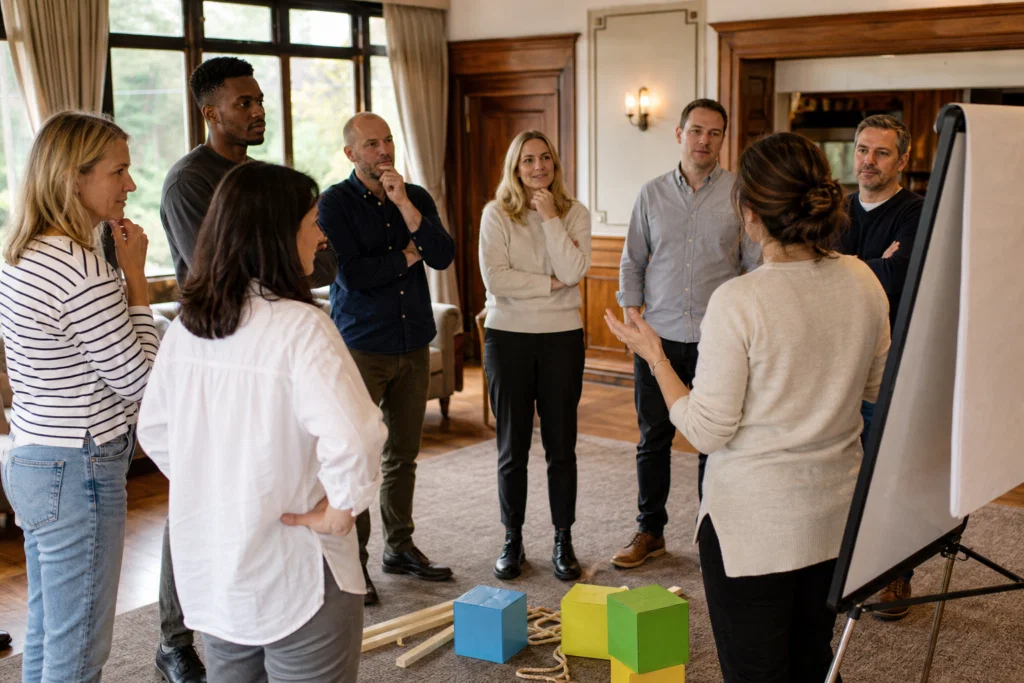
If you are planning a corporate event, Adair’s model gives you a better brief for your supplier. Instead of asking for a generic leadership activity, explain which circle needs the most attention and what you want people to do differently afterwards.
A task-focused brief might ask for activities where teams have to define a plan, divide responsibilities and adapt when conditions change. A team-focused brief might ask for collaboration across departments, mixed groups and a facilitated review of communication habits. An individual-focused brief might ask for rotating leadership roles, confidence-building tasks and opportunities for people who do not normally lead meetings.
NewWave Events designs team building activities across the UK, so the format can be shaped around the audience, venue, timings and business purpose. The strongest briefs are clear about the people in the room, the current team challenge and what a useful outcome would look like on Monday morning.
A five-step way to use the model for an away day
Use these steps before selecting activities. They help turn the John Adair leadership model into a clear event brief.
Define the work issue
Name the real reason for the event. It might be unclear priorities, weak delegation, poor cross-team communication or a new management group that needs shared standards.
Map the three circles
Write down what the task needs, what the team needs and what individuals need. Keep the wording practical. If people need clearer roles, say that.
Choose activities with purpose
Select activities that make the target behaviour visible. For example, delegation needs role allocation, time limits and enough complexity for one person not to control everything.
Build in a proper debrief
Leave time after each activity to discuss what happened. Ask what helped the task, what helped the team and what each person noticed about their own contribution.
Agree one workplace action
End with a small commitment that can be used back at work. That might be a clearer briefing format, a new check-in habit or rotating meeting roles.
Plan a leadership team building event with purpose
If you want an away day that supports leadership development, start with the outcome and build the activity around it. NewWave Events can help you shape a practical team building event that connects task, team and individual needs in a way your group can use back at work.