A good team understands its goal, knows how its work fits together and can challenge ideas without damaging trust. It doesn’t rely on one strong personality or a single morale boost. Instead, it builds steady habits around priorities, contribution, communication, standards and learning.
For UK companies, the question isn’t only what makes a good team in theory. It’s how to create those conditions when people are busy, working remotely, under pressure or spread across departments. A well-planned team building event or away day can help, but it needs to reflect how your team actually works. The activities should let people practise communication, problem solving, leadership and trust, then turn those lessons into working habits.
Here are 10 practical traits of high-performing teams. HR teams and managers can use them when planning a team day, leadership session or wider corporate event.
1. A shared purpose
The first trait is a clear purpose. People should be able to explain what the team is trying to achieve, who it serves and what good work looks like. If the answer changes depending on who you ask, the team may waste time on competing priorities.
Purpose isn’t a slogan on a slide. It needs to guide decisions. A sales team might prioritise response time and client retention, while a finance team might prioritise accuracy, deadlines and calm handovers. A project team might prioritise risk visibility and fast decision making. The aim is to make the work clear enough for people to choose well when trade-offs appear.
2. Focus. Good teams don’t treat every task as equally urgent. They know which outcomes matter this quarter, which problems need escalation and which requests can wait. Managers make a real difference here because reasonable workloads and clear priorities leave more room for proper collaboration. Teams that are always firefighting usually fall back into silos.
For an away day, start by asking what the team needs to leave with. If the issue is unclear direction, choose exercises that require prioritisation and decision making. If the issue is cross-team working, build the agenda around a shared challenge rather than a generic activity. You can find wider planning examples in NewWave Events’ guide to corporate away day ideas for UK teams.
3. Trust
The third trait is trust. In a good team, people can say “I do not understand”, “I disagree” or “this deadline is at risk” early enough for others to act. That doesn’t mean every conversation feels comfortable. It means people would rather hear the truth than protect a polite fiction.
This matters because workplace pressure is not abstract. In Great Britain, work-related stress, depression or anxiety remains a major cause of work-related ill health. A team can’t remove every pressure, but it can reduce avoidable strain by making workloads, deadlines and mistakes easier to discuss.
Trust grows through repeated evidence. Leaders admit when plans change, and colleagues follow through on commitments. People are thanked for raising risks rather than punished for being realistic. Meetings also make room for quieter voices, not only the first person to speak.
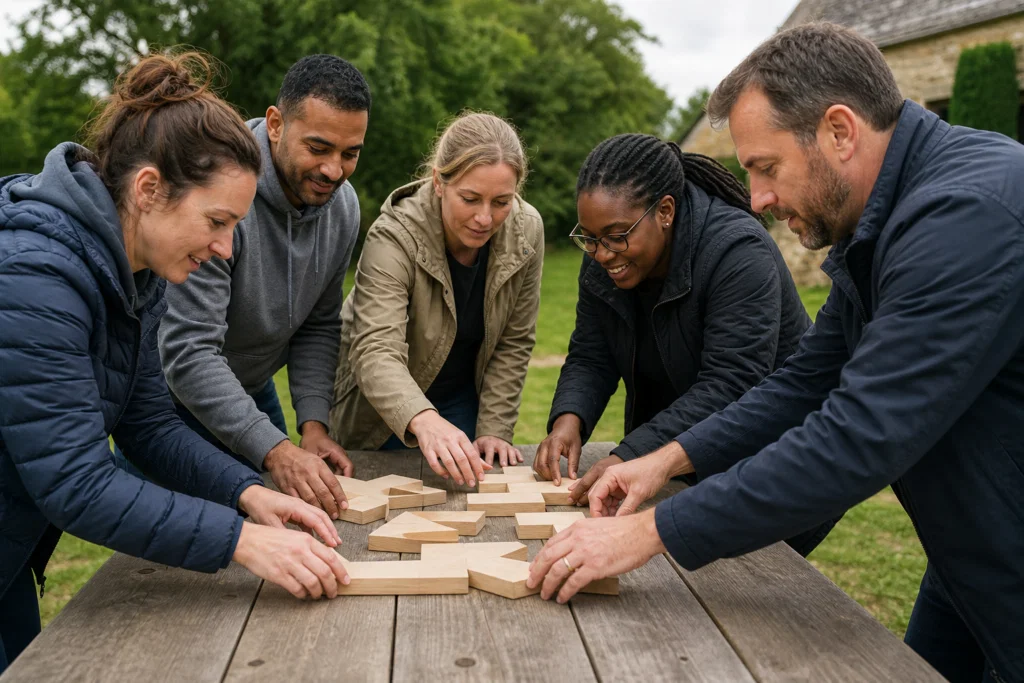
Team building can support trust when an activity gives people a low-risk way to rely on one another. A problem-solving challenge, creative task or outdoor activity can show how the team communicates under time pressure. The facilitator then needs to connect it to work: who took charge, who spotted risks, who checked understanding and what the group would change next time.

4. Clear roles
The fourth trait is role clarity. Good teams know who owns each decision, who needs to be consulted and where responsibility passes from one person to another. This matters especially in hybrid teams and project groups, where work can move across functions quickly.
Role clarity isn’t the same as rigid job titles. High-performing teams still help each other, but support doesn’t blur accountability. If three people think someone else is handling a client update, the client may hear nothing. If nobody knows who has final sign-off, a simple decision can drift for days.
5. Shared standards. Teams work better when they agree the basics, such as response times, meeting etiquette, escalation routes, quality checks and how to handle absence or handovers. These standards should be practical. A 20-page team charter won’t help if nobody uses it.
A team event is a useful place to test role clarity because activities reveal assumptions quickly. In a timed challenge, some people may wait for instructions, others may take over and others may quietly solve the practical problem. The review is the useful part: did the group assign roles, check progress and adapt, or did it rely on guesswork?
6. Useful communication
The sixth trait is useful communication. Good teams don’t simply communicate more. They choose the right format for the job. A quick update may belong in a message, while a sensitive issue needs a conversation. A decision with several dependencies may need a short meeting with the right people in the room.
Communication also includes listening. People should know when they’re being asked for ideas, when a decision has already been made and when they’re responsible for action. If those distinctions are unclear, meetings become frustrating because nobody knows whether they’re there to contribute, approve or receive information.
7. Constructive conflict. Good teams don’t avoid disagreement. They keep it focused on the work. Recent Acas research on workplace conflict shows how often conflict involves colleagues or line managers, and how commonly it affects stress, motivation and productivity. That doesn’t mean all conflict is harmful. It means teams need the skills to deal with disagreement early and fairly.
For team events, avoid activities that reward the loudest person in the group. Choose formats where people must share information, test options and make decisions together. Facilitated challenges work well because the group can pause, review what happened and practise a better approach straight away. NewWave Events’ team building activities include formats for communication, problem solving, collaboration and morale.
8. Shared accountability
The eighth trait is shared accountability. In weaker teams, accountability appears after a mistake. In stronger teams, it’s part of how work moves. People agree owners, deadlines and definitions of done. They flag problems before a deadline is missed and follow up without turning every reminder into personal criticism.
Shared accountability also means reviewing outcomes, not only effort. If a project went well, what made it work? If a client handover failed, where did the process break? This keeps improvement focused on systems and behaviours rather than blame.
9. Inclusion. A good team uses the range of experience in the room. That includes newer starters, remote colleagues, specialists, introverts and people who aren’t in formal leadership roles. Inclusion is practical because it affects who gets information, who joins decisions and whose concerns are taken seriously.
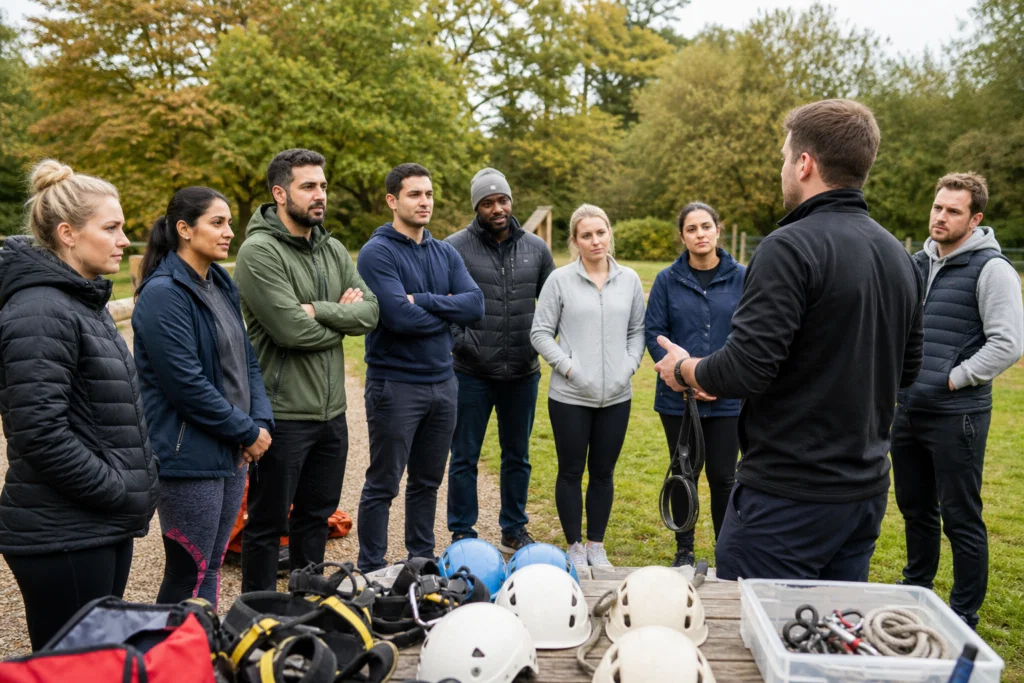
When planning an event, inclusion should shape the activity choice. A physically demanding outdoor day may suit some groups and be wrong for others. A competitive format can lift energy, but it needs careful design so it doesn’t sideline people. A good brief covers access needs, confidence levels, working patterns and the mix of personalities before you choose the activity.
10. Continued learning
The tenth trait is learning. High-performing teams don’t assume that one good workshop fixes teamwork. They keep reviewing how they work, what has changed and where habits are slipping. Learning can be as simple as a 15-minute project review, a monthly team check-in or a manager asking what’s getting in the way.
This is where a team building event earns its place. The event gives people a shared experience, but follow-up turns that experience into progress. Capture two or three behaviours the team wants to keep, such as raising risks earlier, assigning decision owners in meetings or making space for quieter colleagues before closing a discussion.
Managers can then reinforce those behaviours in normal work. Recognition helps too. People need to hear when they’ve handled a difficult handover well, supported a colleague or improved a process. It doesn’t need to be theatrical. Specific, timely acknowledgement often works better than a broad “well done everyone”.
If your team needs a venue as well as an activity, consider access, travel time, weather options, room layout and how the space supports the day’s purpose. NewWave Events’ guide to choosing a team building venue covers the practical decisions that affect whether people can take part properly.
How to build these 10 traits into a team event
A team event works better when it’s designed around a specific team need. These five planning steps keep the day practical and relevant.
Define the working problem
Decide what needs to improve: communication, trust, leadership, morale, collaboration across departments or decision making. A clear brief stops the event becoming a pleasant day with no lasting link to work.
Choose the right activity style
Match the activity to the outcome. Problem-solving tasks suit communication and role clarity. Creative challenges can support inclusion and fresh thinking. Outdoor or multi-activity formats can help morale and connection.
Make participation realistic
Check group size, location, travel time, accessibility, confidence levels and physical demands. A good event should stretch the team in the right way, not exclude people before the day begins.
Facilitate the learning
Build in short review points. Ask what happened, what helped, what got in the way and how the team would apply the lesson at work. The debrief is often where the value sits.
Agree the follow-up
End with two or three practical behaviours the team will keep using. Assign owners where needed, then ask managers to revisit those commitments in normal meetings.
Plan a team building event with a clear purpose
If you want to improve how your team communicates, collaborates or reconnects, NewWave Events can help you choose an activity and format that fits your people, location and business goal.
Share what you want the day to achieve, and the team will shape options around your brief. That could mean an indoor problem-solving session, an outdoor away day or a multi-activity corporate event across the UK.