To motivate a team, make the work clear, manageable and worth doing. People need to understand the goal, have enough control over how they reach it, feel recognised for useful effort and have time to build trust with the colleagues they rely on.
For UK companies, that means motivation cannot sit with HR alone. Line managers shape the day-to-day experience, senior leaders set the tone and well-planned team events can give people the space to reset relationships, solve problems and feel part of something shared.
Start by finding what is draining motivation
Low motivation is often treated as an attitude problem, but it is usually a work design problem. Before adding incentives or booking an event, look at what might be making good work harder than it needs to be.
Common causes include unclear priorities, too many urgent requests, weak handovers, poor communication between departments, lack of recognition, limited development and managers who have not been given the time or training to manage people well. Motivation also drops when teams are expected to show energy while workloads remain unrealistic.
Use a short pulse survey, manager listening sessions or a team retrospective to ask three practical questions: what helps you do good work, what gets in the way and what would make the next quarter feel more manageable? Keep the questions specific. Vague requests for feedback often produce polite answers, while concrete questions show people you are prepared to act.
Recent UK workplace figures show why this matters. Work-related stress, depression and anxiety remain a major cause of work-related ill health, and engagement data continues to link positive experiences at work with better reported performance and lower intention to leave. Motivation is not a perk. It is part of how work is set up.
14 techniques for motivating a team
These techniques work best together. A team away day can lift morale, but it will not compensate for unclear roles or constant pressure. Start with the basics, then use events and shared experiences to strengthen what you are already trying to build.
- Clarify the outcome. People are more motivated when they know what the team is trying to achieve and how their work contributes. Replace broad aims such as “improve performance” with clear priorities, deadlines and decision owners.
- Connect the work to a purpose people can understand. Purpose does not need to be grand. It can be as simple as helping customers get a faster answer, reducing mistakes for another department or making a process easier for colleagues.
- Give people real autonomy. Set the standard and the boundary, then let capable people choose the route. Autonomy is not absence of management. It means trusting people with decisions that sit close to their work.
- Recognise useful effort quickly. Recognition works best when it is specific. Thank the person for the behaviour you want repeated, such as sharing knowledge, staying calm under pressure or helping a new colleague settle in.
- Make workload visible. Teams lose energy when pressure is hidden. Use weekly workload checks to spot pinch points, redistribute tasks and stop non-urgent work from crowding out important work.
- Build manager confidence. A line manager who can coach, listen and make decisions has a direct effect on motivation. Give managers time for one-to-ones, not just targets to report on.
- Create moments for employee voice. Ask for input before decisions are final, not after. If a suggestion cannot be used, explain why. People are more likely to contribute again when the process feels honest.
- Invest in development. Motivation rises when people can see progress. That might mean skills training, peer learning, project ownership, mentoring or a chance to practise leadership in a safe setting.
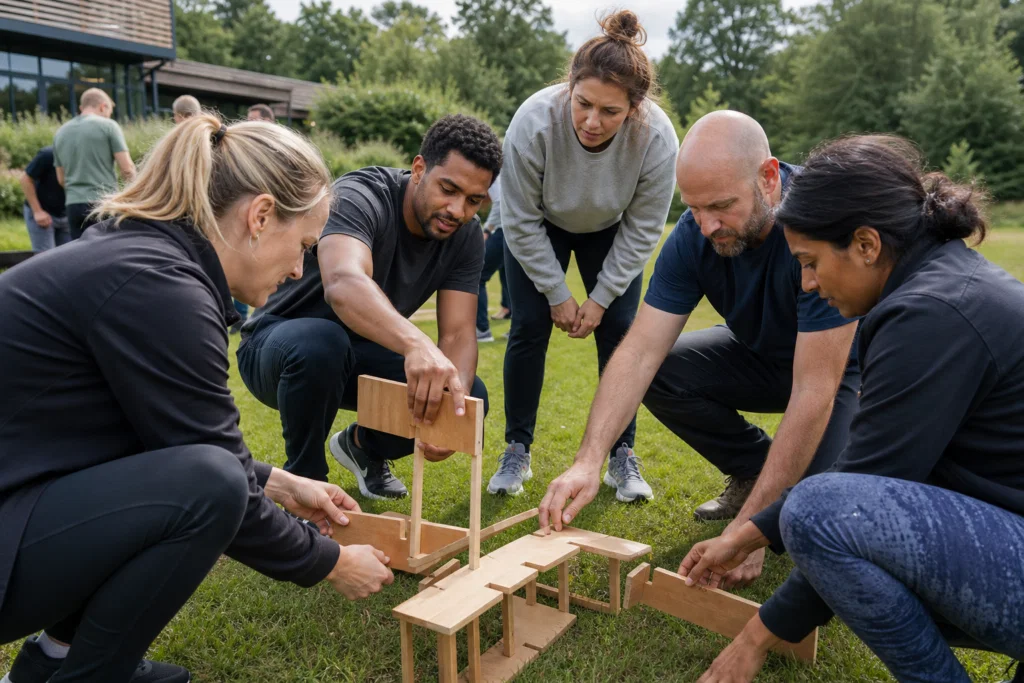
- Use team building with a clear reason. Choose activities that match the outcome you want, such as problem solving, confidence, communication or morale. A well-briefed facilitator can turn a fun activity into learning people remember.
- Protect time for relationships. Teams do not build trust through status updates alone. Shared lunches, away days, charity challenges and informal team sessions can help colleagues understand each other beyond job titles.
- Make rewards purposeful. Benefits, bonuses and treats should have a clear aim. If the goal is retention, wellbeing or engagement, decide that up front and review whether the approach is working.
- Support flexibility fairly. Flexible working can help people balance work with the rest of life, but it needs clear expectations. Agree how the team communicates, when people need to be available and how decisions are documented.
- Celebrate progress, not only end results. Long projects can drain energy if recognition only comes at the finish. Mark milestones, solved problems and useful lessons learned along the way.
- Follow through after promises. Nothing weakens motivation faster than asking for feedback and doing nothing with it. Share what will change, what cannot change yet and when the team will hear an update.
Turn the techniques into a team day
If the list has highlighted a need for better communication, morale or collaboration, a structured activity can give the team a useful shared starting point.
Use team building as part of the motivation system
Team building works best when it has a job to do. If the team is tired, choose something that lifts morale without adding pressure. If departments are working in silos, choose a collaborative challenge that mixes people across functions. If leaders want better communication, build in a facilitated debrief so the learning does not disappear on the coach home.
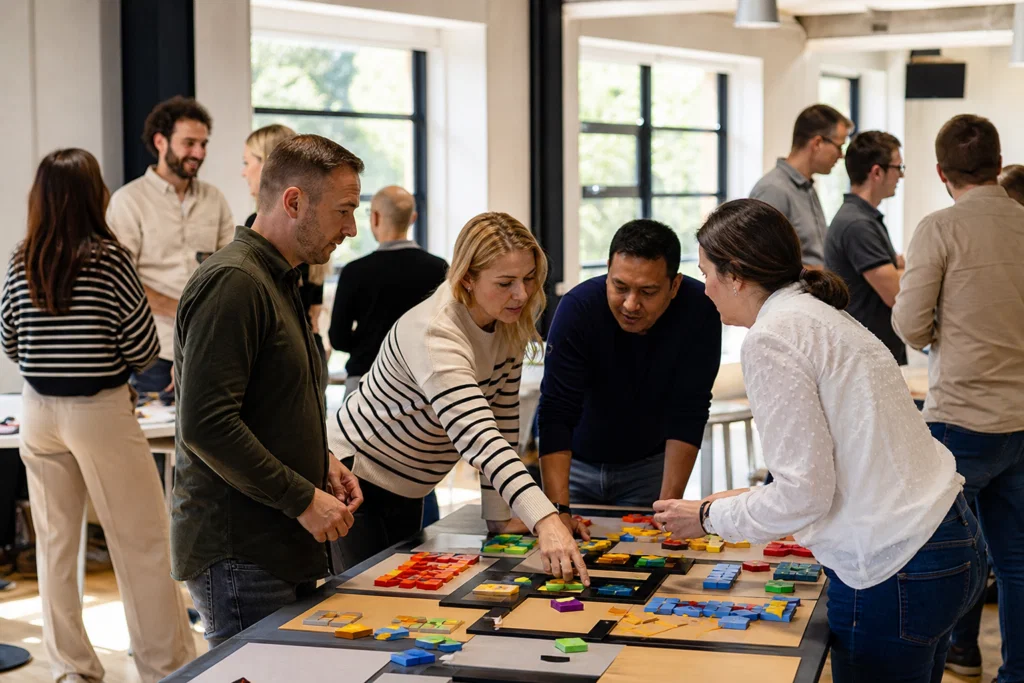
For workplace audiences, the strongest events usually combine structure and enjoyment. People need to know why they are there, but they should not feel as though every minute is a lesson. A corporate away day might include a short business update, a problem-solving activity, relaxed food and a team challenge that gets people working with colleagues they do not normally meet.
NewWave Events designs team building activities around outcomes such as morale, communication, problem solving, leadership and staff reward. The activity matters, but the briefing, pacing and group mix often matter just as much.
If you are planning a full day rather than a single activity, start with the business reason. A reward day, strategy day and new-manager day should feel different. For more planning ideas, see these corporate away day ideas for UK teams.
Adapt motivation for hybrid, remote and flexible teams
Hybrid and flexible teams need deliberate motivation habits because people have fewer accidental moments of connection. A quick chat in the office kitchen might once have solved a problem, reassured a colleague or spotted a mistake early. In a flexible team, those moments need a little more design.
Start with communication rules. Agree what belongs in a meeting, what belongs in a shared document and what needs a quick call. Then look at fairness. Remote colleagues should not hear important updates second hand, and office-based colleagues should not become the default route for urgent work just because they are visible.
Flexible working can support motivation when expectations are clear. Current Acas guidance says flexible working can include changes to when, where or how someone works, and that it can help employers keep staff happy and motivated. For employers, the practical task is to make flexibility workable for the team as well as the individual.
Team events also need to respect working patterns. Give enough notice, avoid assuming everyone can travel at short notice and design the day so people who rarely meet in person have useful time together. A quarterly in-person team building session can be more valuable than asking people to commute for a routine update they could have read online.

Planning for a flexible team?
Hybrid teams often need more notice, clearer outcomes and a better reason to gather. NewWave Events can help shape a day that makes the in-person time worthwhile.
Keep motivation healthy, not pressured
Motivation should not mean asking people to absorb more work with a smile. If a team is already stretched, a high-energy push can make the problem worse. Sustainable motivation comes from clear priorities, sensible workloads, recovery time and managers who notice when pressure is becoming too much.
Check the signals. Are people skipping breaks? Are meetings spreading across the edges of the day? Are the same reliable people always picking up extra work? Are managers praising long hours more than good judgement? These patterns can quietly teach the team that being motivated means being constantly available.
Healthy motivation also means talking about money and security where they affect work. Recent UK data found that money worries had affected the ability of some employees to do their job. Employers cannot fix every financial pressure, but they can review pay fairness, communicate benefits clearly and avoid presenting low-cost gestures as a substitute for fair treatment.
For events, this means choosing the right tone. A morale event after a demanding period should give people space to reconnect and enjoy themselves. It should not feel like another performance test.
Measure whether motivation has changed
Motivation initiatives need follow-up. Otherwise it is hard to tell whether a team event, new recognition scheme or manager training programme has changed anything beyond the day itself.
Use a small number of measures before and after. For example, ask whether people understand priorities, feel recognised, have manageable workloads, feel able to raise concerns and trust colleagues across the team. Combine those responses with practical indicators such as absence, turnover, project delays, meeting load and participation in development.
For team events, review the outcome within two weeks. Ask managers what they noticed, ask employees what felt useful and decide what should happen next. If the event surfaced a communication issue, schedule a working session. If people valued cross-department time, build it into the calendar. If the activity was purely a reward, say so and do not overclaim it as training.
A simple review cycle will help HR teams and leaders make better choices next time. It also shows employees that motivation is being treated as a working practice, not a slogan.
A practical motivation plan for team leaders
Use this five-part plan when you want to improve team motivation without relying on one-off gestures.
Diagnose the real issue
Ask what is blocking motivation before choosing a solution. Look at workload, clarity, recognition, manager support and team relationships.
Choose one outcome
Decide whether the priority is morale, communication, retention, confidence, collaboration or recovery after a busy period.
Match the activity to the outcome
Select the management action, team building activity or away day format that fits the problem. Do not use the same format for every team.
Brief managers and facilitators
Make sure everyone running the activity knows the context, group size, sensitivities and desired outcome.
Review and follow through
Share what changed, what was learned and what happens next. Motivation fades when feedback disappears.
Plan a team event that supports motivation
If you want to motivate your team through a away day, reward event or structured team building activity, NewWave Events can help you choose a format that fits your people and your objective. Tell us what you want the day to achieve, and we will recommend practical options for your group size, location and budget.