Team cohesion is the strength of connection that helps a group of people work towards the same goal. A cohesive team has clear roles, enough trust to speak honestly, shared standards for how work gets done and a sense that success belongs to the group, not just to individuals.
For HR teams and managers, the point is practical. Team cohesion reduces friction, makes collaboration easier and helps people recover faster when plans change. It does not mean everyone has the same personality, agrees all the time or spends every Friday socialising. Good cohesion is built through everyday management, useful communication and shared experiences that give people a reason to rely on each other.
What team cohesion means at work
Team cohesion describes how strongly people identify with the team and how well they coordinate their effort. It has a social side, because people need enough trust and respect to work together, and a task side, because people also need clarity about goals, roles, standards and decision making.
A team can be friendly without being cohesive. People may get on well but still duplicate work, avoid difficult conversations or wait for one person to make every decision. A cohesive team is more disciplined than that. People know what they are trying to achieve, understand how their work affects others and are willing to deal with problems before those problems become personal.
In a workplace setting, cohesion usually shows up in small behaviours: colleagues share useful information, new starters are included quickly, people ask for help before a deadline slips, and managers make expectations clear. Those behaviours matter more than slogans about culture.
Why team cohesion matters for UK employers
Cohesion affects how work feels and how work gets done. When teams lack trust or clarity, people spend more time checking, chasing, second guessing and protecting themselves. That is tiring for employees and inefficient for the business.
Recent workplace data points to the same underlying issue. Gallup’s 2026 UK workplace data reported low employee engagement and high daily stress among UK employees. Acas research published in 2025 also found that workplace conflict is common, with informal discussion and line manager conversations often used to resolve it. These findings do not prove that every team needs an away day, but they do show why managers cannot leave connection, communication and conflict handling to chance.
Strong cohesion can support:
- faster coordination between departments or project groups
- clearer ownership of tasks and decisions
- better handling of disagreement before it escalates
- more confidence during change, restructuring or growth
- greater inclusion for hybrid, remote, new or dispersed employees
It also has a wellbeing angle. Employers still need to manage workload, stress and conflict properly. HSE guidance on work-related stress highlights areas such as demands, control, support, relationships, role and change. Team cohesion cannot replace legal duties or good management, but it can make it easier for people to raise concerns early.
Turn cohesion goals into the right activity format
If your team needs better collaboration rather than just a social afternoon, match the activity to the behaviour you want to improve, such as communication, trust or problem solving.
Team cohesion is not the same as morale
Morale is how people feel. Cohesion is how well they hold together around shared work. The two often influence each other, but they are not interchangeable.
A team may have high morale after a good trading period, a bonus announcement or a successful launch. That positive mood can fade if roles are unclear or meetings are dominated by the same few voices. Equally, a team going through a difficult period can remain cohesive if people trust the process, understand the priorities and believe that managers are dealing with problems fairly.
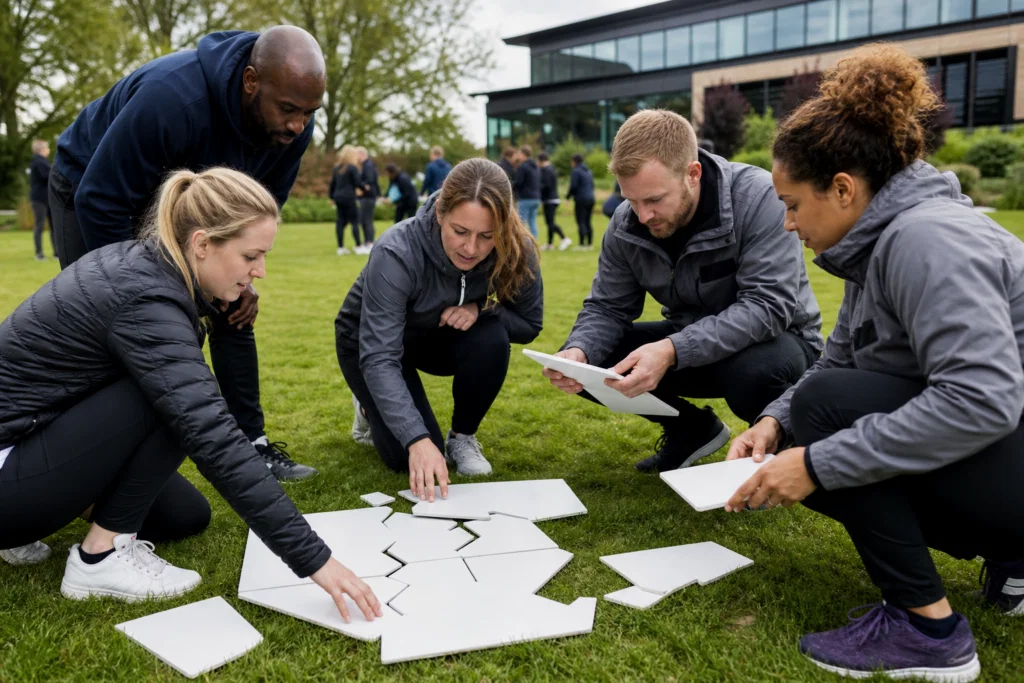
This distinction matters when planning team building. A social event can lift mood, which has value, but cohesion needs more than entertainment. The best team experiences create shared problem solving, mixed-group collaboration and a useful moment to reset how people work together. If your team needs that kind of reset, choose team building activities that match the behaviour you want to encourage, rather than choosing an activity only because it sounds fun.
How to spot weak team cohesion
Weak cohesion is not always loud. It can look polite on the surface while work slows down underneath. The clearest signs are repeated misunderstandings, low participation, private complaints, unresolved tension and a habit of blaming other teams.
Managers and HR teams should look for patterns rather than isolated bad days. A single missed handover is normal. Regular missed handovers suggest that the team has a coordination problem. One quiet person in a meeting may simply be reflecting. A whole group that avoids challenge may not feel safe enough to disagree.
Common warning signs include:
- people are unclear about priorities or who owns a decision
- meetings produce little action or the same people always speak
- teams work in silos and only share information when chased
- new starters take too long to feel part of the group
- conflict is either ignored or handled too formally too late
- hybrid workers hear news after office-based colleagues
These are management signals, not personality flaws. The right response is to fix the conditions around the team: clearer communication, better meeting habits, stronger manager support and shared experiences that rebuild trust.
How to build team cohesion day to day
Team cohesion improves when people repeatedly experience clarity, fairness and useful interaction. Occasional events help, but daily habits do most of the work.
Start with clarity. Each person should know what the team is trying to achieve, what they own and where they need to involve others. If a team is hybrid or spread across locations, write down the basics: communication channels, response expectations, meeting rhythms and decision routes.
Next, make feedback normal. Teams become less defensive when feedback is frequent, specific and tied to the work, not saved for formal reviews. Managers should also make room for upward feedback, because people are more likely to commit to decisions when they have had a fair chance to raise practical concerns.
Conflict needs early attention. Acas guidance and research repeatedly point towards the value of informal resolution where appropriate. That does not mean brushing problems aside. It means giving managers the confidence to have timely, respectful conversations before issues harden into formal disputes.
For larger resets, a planned away day can give teams enough time away from delivery pressure to discuss how they work together. A useful corporate away day should combine interaction, reflection and practical follow-up, not fill the agenda with back-to-back presentations.
Give your away day a clear follow-up plan
A team day works harder when managers leave with agreed actions, not just photos. Build in time to capture what the group will do differently back at work.
How team events can strengthen cohesion
A good team event gives people a shared task outside their usual work pattern. That shift can reveal strengths, improve cross-team familiarity and create a safer setting for people who do not normally collaborate. The event does not have to be extreme or elaborate. It does need to be well matched to the group.
For a new team, choose activities that help people learn names, working styles and strengths without putting anyone on the spot. For a leadership group, choose a challenge that tests communication, delegation and decision making. For a large organisation, use multi-activity formats so people can mix across departments without queues or long periods of waiting.
Venue choice also matters. The wrong room can undermine the purpose of the day, especially if the group needs space to move, talk in smaller teams or switch between activity and discussion. If you are still comparing options, this guide to choosing team building venues explains what to check before booking.
The follow-up is where cohesion becomes more than a good memory. Capture the useful observations from the day, agree one or two behaviour changes and give managers a simple way to revisit them. Without follow-up, even a strong event can become a one-off break from work rather than a step towards better teamwork.

A practical cohesion plan
Use this sequence when a team needs better connection, clearer working habits or a more useful team building event.
Set the shared purpose
Define what the team is trying to achieve and why it matters. Keep it concrete enough for people to use when prioritising work.
Clarify roles and handovers
Make ownership visible. Agree who decides, who contributes and how information moves between people or departments.
Build regular two-way communication
Use team meetings, one-to-ones and feedback channels to hear concerns early. Do not rely on informal office conversations that hybrid or remote colleagues may miss.
Create shared experiences
Choose team building activities that require cooperation, communication and mixed-group problem solving, rather than activities that only entertain.
Review what changes afterwards
Turn the learning into a small number of working agreements. Revisit them after the event so the team can see what has improved and what still needs attention.
Plan a team event that supports better cohesion
NewWave Events designs and delivers corporate team building activities, away days and company events across the UK. If your team needs stronger communication, better cross-department working or a shared reset away from the office, we can help you choose the right format and plan the details properly.