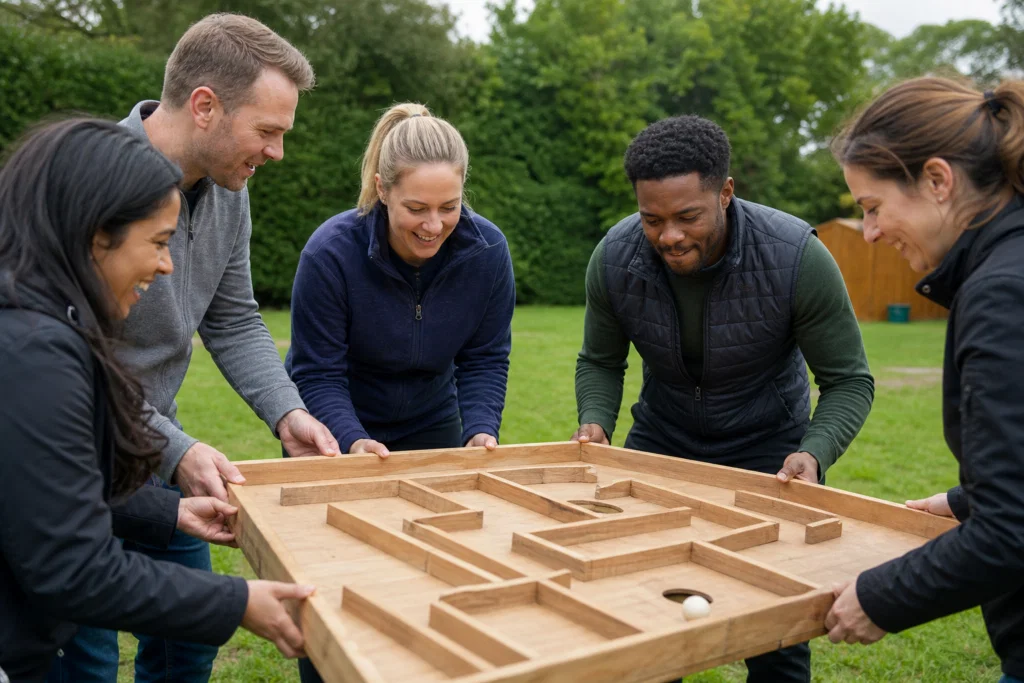
To build an effective team, start with a clear purpose, define how work will be shared, create habits for honest communication, give people structured ways to practise collaboration, and review progress often. Team building helps most when it is tied to a real workplace need rather than treated as a one-off reward.
For UK companies, HR teams and team leaders, the aim is not to make every team member the same. A good team has enough clarity to move quickly, enough trust to speak openly, and enough structure to keep decisions, deadlines and responsibilities from drifting.
Start with the work the team exists to do
An effective team needs a reason to work together. That sounds obvious, but many teams inherit objectives from different departments, senior leaders or project plans and never turn them into a shared view of success.
Begin by writing a short team purpose in plain English. It should explain who the team serves, what the team is responsible for, and what would be noticeably better if the team worked well. Avoid abstract wording that could apply to any department. A sales team, operations team, leadership group or project team will each need a different answer.
Then agree a small number of outcomes. These should be visible enough for the team to use in weekly conversations, not buried in an annual plan. If collaboration is central to the result, make at least one outcome team-based rather than purely individual. That helps stop people hitting their own targets while making life harder for colleagues.
This is also the point to listen. Ask team members where work currently slows down, which handovers cause confusion, and what decisions keep coming back for approval. Those answers often show whether the problem is motivation, structure, capacity, trust or a mix of all four.
If you are planning an away day, do this diagnostic work before booking the activity. It gives the event a job to do. A team that needs faster decisions needs a different format from a team that needs confidence, cross-department relationships or a better way to handle pressure.
Turn your team goal into an event brief
If your team already knows what needs to improve, use that insight before choosing the activity. A focused brief makes the event easier to design and easier to review afterwards.
Make roles, responsibilities and decision rights clear
Teams lose time when people are unsure who owns what. They also lose goodwill when one person quietly carries the awkward tasks while another person controls decisions without being accountable for the outcome.
Map the work before you map the people. List the regular outputs, decisions, approvals and handovers the team depends on. Then agree who is responsible, who must be consulted, and who simply needs to be informed. Keep this light enough to use. A complicated responsibility matrix that nobody reads will not help.
Decision rights matter because many workplace frustrations are really decision frustrations. People need to know which decisions they can make alone, which decisions need manager input, and which decisions need wider agreement. Without that clarity, confident people can overstep, cautious people can wait too long, and managers can become unnecessary bottlenecks.
Clear roles should not become rigid silos. Build in simple rules for asking for help, covering absence and sharing knowledge. If the team works across locations or shifts, document where core information lives and how changes are communicated. Good teamwork depends on fewer private workarounds.
For teams that are being reshaped, a facilitated session can help. People are often more honest about duplicated work, unclear ownership and decision delays when the conversation is structured and neutral.
Build trust through everyday communication
Trust is built in ordinary moments: how people respond to mistakes, how quickly they share information, whether managers listen properly, and whether difficult points can be raised without embarrassment. It is not created by a slogan or a single social event.
Set a few communication habits that the team can keep. For example, agree when updates should happen, what needs to be written down, which meetings can be shortened, and how urgent work should be flagged. Teams often need fewer meetings, but better preparation and clearer decisions.
Managers have a large influence here. A team leader who only asks for status updates will get status updates. A team leader who asks what is blocking progress, what support is needed and what has changed will get more useful information. Regular performance conversations should feel normal rather than saved for appraisal season.
Psychological safety is often discussed in broad terms, but the daily practice is simple: invite quieter voices in, respond calmly to bad news, separate the person from the problem, and thank people for raising risks early. If people learn that honesty creates blame, they will protect themselves instead of the team.
Team building can support this when the activity gives people a safe, practical way to practise communication under mild pressure. Problem-solving challenges, collaborative tasks, creative briefs and structured outdoor activities can all reveal how a team listens, plans, adapts and includes people. The value comes from the debrief afterwards, not just the activity itself.

Choose team building activities with a clear purpose
A team building activity should match the behaviour you want to strengthen. If the team needs to communicate under time pressure, choose a challenge with shared information and a clear deadline. If the team needs to build relationships after restructuring, choose something with mixed groups and enough space for conversation. If the team needs confidence, choose an activity where progress is visible and nobody is put on the spot unfairly.
There is no single best format. Indoor activities work well when the weather, travel time or accessibility needs make control important. Outdoor activities can give teams more energy and variety, especially for away days and summer events. Evening entertainment can help people connect more informally after a conference or strategy day.
The common mistake is choosing an activity because it looks fun, then trying to attach a business reason later. Start with the team need, then design the event around it. NewWave Events can help with team building activities that suit different group sizes, objectives and locations across the UK.
For mixed groups, think carefully about physical effort, confidence levels, dietary needs, neurodiversity, mobility and religious or caring commitments. Inclusion is not about removing all challenge. It is about making sure the challenge is fair, safe and purposeful.
If the event is part of a wider people plan, connect it to practical follow-up. A leadership team might leave with decision rules. A project team might agree new handover habits. A newly merged team might create working principles for the first quarter together.
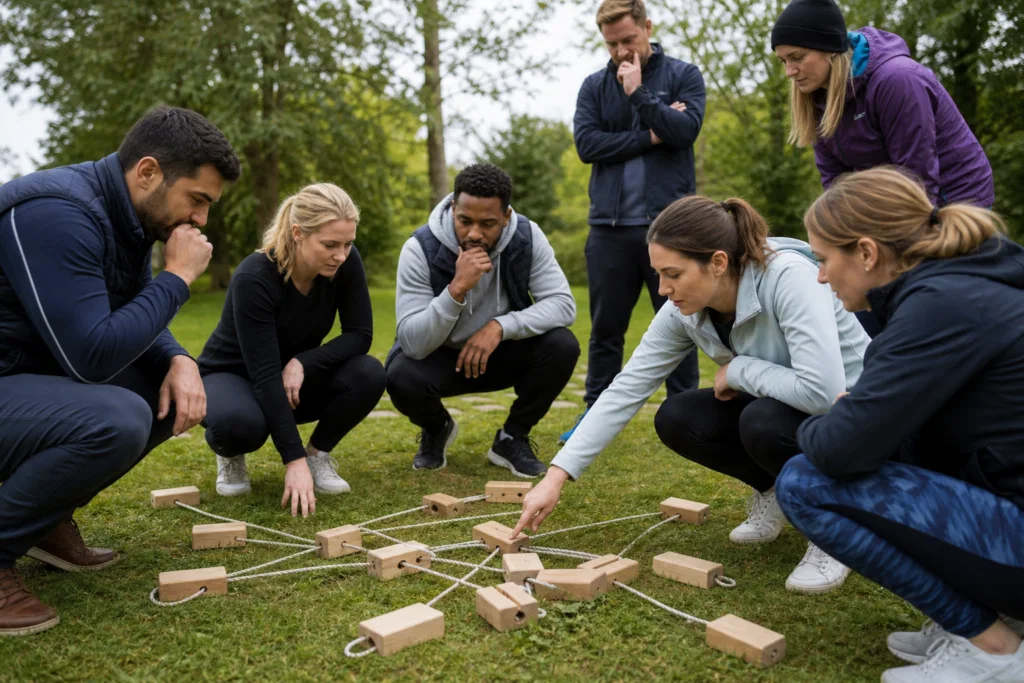
Match the activity to the behaviour you want
A team that needs clearer communication, stronger relationships or more confident decision-making will need different event formats. Choose the experience after you have agreed the purpose.
Keep pressure, conflict and inclusion in view
Effective teams are not conflict-free. They disagree about priorities, standards, workloads and pace. The difference is that healthy teams deal with disagreement early and directly, before it becomes avoidance, resentment or formal process.
Managers should make it normal to raise friction in a proportionate way. A simple prompt such as “What is harder than it needs to be?” can uncover issues before they become personal. If a disagreement is already affecting work, deal with the behaviour and impact rather than asking people to simply “be positive”.
Pressure also needs active management. Work-related stress is not separate from team effectiveness. Heavy workloads, unclear roles, weak support and poor relationships can all damage performance. If the team is regularly missing deadlines, working late or relying on the same people to rescue projects, the answer is not another motivational speech. It may be workload, resourcing, planning or decision-making.
Inclusion belongs in the same conversation. A team is weaker if some people cannot contribute fully because the format, venue, working pattern or communication style excludes them. For employees with disabilities or health conditions, employers should consider reasonable adjustments and may also find official Access to Work guidance useful where additional practical support is needed.
When planning an away day, inclusion should be designed in from the start. Venue access, travel time, activity intensity, quiet space, briefing style and food arrangements all affect whether people can take part properly. The right team building venue can remove many practical barriers before the day begins.
Review progress and keep improving after the event
A team becomes effective through repeated habits. One away day can create momentum, but the manager and team need to turn that momentum into routine. The best time to plan follow-up is before the event, not afterwards when everyone is back in a full inbox.
End any team session with a small number of commitments. These should be specific enough to test within a month. For example, the team might agree a new weekly planning rhythm, a clearer route for decisions, a standard handover format, or a rule for raising workload concerns before deadlines are at risk.
Review the commitments quickly. Ask what has changed, what has not changed, and what the team should stop doing. Avoid turning the review into a blame session. The point is to learn how the team works in practice, then adjust.
For larger programmes, treat team development as a cycle: diagnose the need, design the right intervention, deliver it well, debrief honestly and revisit the outcome. HR teams can use this cycle across departments while still tailoring activities to each group. A finance team, customer service team and senior leadership team may all need team building, but they rarely need the same day.
If you are planning a company-wide session, combine the team framework with practical event planning. Our guide to corporate away day ideas for UK teams can help you shape a day that has variety without losing focus.
A practical framework for team development
Use this sequence when you want team building to support real working improvements rather than sit apart from normal business activity.
Diagnose the need
Clarify whether the main issue is purpose, roles, communication, trust, workload, conflict or change. Use short surveys, manager interviews or a pre-event planning call.
Define the outcome
Agree what should be different after the activity. Keep it practical, such as faster decisions, better handovers, stronger cross-team relationships or clearer leadership behaviours.
Design the experience
Choose activities, venue, timings and group structure around the outcome. Build in accessibility, energy levels, travel and the mix of personalities in the room.
Deliver with facilitation
Use clear briefing, fair teams and active facilitation so people understand the point of the activity and feel able to take part.
Debrief and embed
Translate what happened during the activity into workplace actions. Capture commitments, assign owners and review progress within a few weeks.
Plan a team building event with a clear purpose
NewWave Events designs and delivers team building activities, away days and corporate events across the UK. If you want an event that supports how your team works back in the office, we can help you shape the brief, choose the right format and manage the delivery.