Unusual team building activities in London work best when they feel purposeful, easy to join and different enough to get people out of their normal roles. That does not mean forcing everyone into something extreme. It means choosing an activity with a clear reason behind it: collaboration, confidence, creativity, cross-team conversation or a well-earned social reset.
Escape rooms still have a place, but London offers far more for companies that want a fresher away day. The ideas below are designed for HR teams, office managers and team leaders who need activities that can suit mixed personalities, hybrid teams, tight timings and real corporate event constraints.
What makes a team building activity feel genuinely unusual?
An unusual team building activity is not unusual because it is loud, awkward or complicated. It usually feels different because it changes the way colleagues interact. Someone who is quiet in a meeting might lead a creative task. A senior manager might need help from a graduate. A group that normally works through screens might have to make something by hand.
London gives planners a wide choice of formats, including immersive experiences, food and drink workshops, creative sessions, river-based activities, competitive socialising venues and flexible event spaces. The challenge is not finding something different. The challenge is choosing something that suits the people in the room.
Before shortlisting activities, decide what the event needs to do. A reward afternoon needs a different pace from a leadership away day. A new-starter mixer needs simple conversation points. A large annual event needs strong logistics, clear instructions and enough variety to stop queues becoming the main memory.
15 unusual team building activities in London beyond escape rooms
These ideas are deliberately varied. Some work well as stand-alone London away days, while others can be brought into an office, hotel, conference venue or summer party setting.
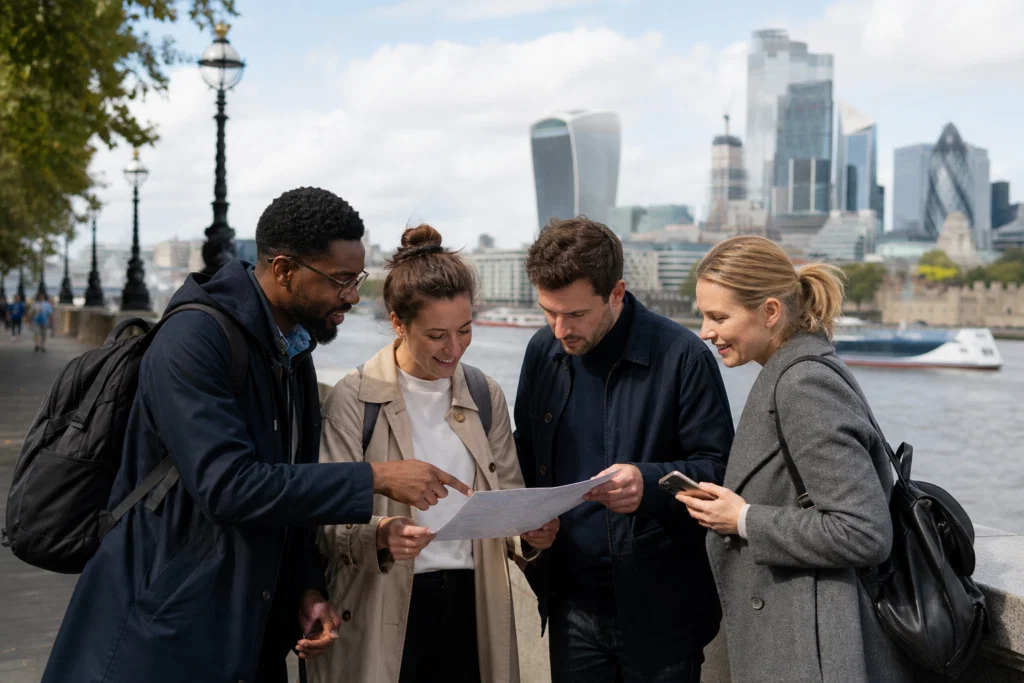
- Thames treasure hunt by boat or riverside route. Teams follow clues along the river, with optional boat travel or riverside checkpoints around landmarks. It gives visitors and London-based staff a shared setting, but the task still needs planning, communication and time management.
- Street art workshop. A guided graffiti or mural-style session lets teams design a shared piece, usually around a company theme, value or event message. It works well for mixed departments because artistic confidence matters less than agreeing a concept and dividing the work.
- Corporate bake-off challenge. Teams compete on flavour, presentation and teamwork rather than perfect technical skill. It suits indoor venues and can be adapted for dietary requirements if these are captured early.
- Charity bike build. Groups assemble children’s bikes or similar donation items under facilitator supervision, then complete light challenges before the items are checked and donated. This gives the event a practical CSR outcome without turning the day into a lecture.
- Pop-up game show. A hosted quiz or game show format with buzzers, music rounds and team challenges gives structure to a social event. It is a strong option when you need energy after a conference, because people can participate without changing clothes or travelling again.
- Indoor drone challenge. Small teams plan flight paths, rotate pilot roles and compete on accuracy rather than speed alone. It works best in a suitable indoor space with clear safety controls and a facilitator who can keep the pace moving.
- London market food challenge. Teams explore a food market or hosted tasting route, answer clues and complete small creative tasks. This is a good fit for relationship-building because conversation happens naturally around food, not forced icebreakers.
- Murder mystery dinner. A hosted mystery gives colleagues roles, evidence and suspects to question. It can sit neatly inside an evening meal, which makes it useful for teams that want entertainment but still want time to eat and talk.
- Casino night with fun money. Roulette, blackjack or race-night style games give people an easy way to move around and mix. With no real-money gambling, the activity stays social and accessible for corporate groups.
- Rooftop garden games. If the venue has suitable outdoor space, simple competitive stations such as boules, quoits, giant games or team relay tasks can create a relaxed summer feel without needing a full sports field.
- Dragon boat racing. For active teams, dragon boating gives everyone a visible role and relies on rhythm more than individual fitness. It needs more planning than an indoor activity, including weather, changing space, participant comfort and transport.
- Collaborative podcast or broadcast studio session. Teams plan a short episode, assign roles, record a segment and review the result. It is unusual because it uses workplace skills in a new format: listening, editing ideas, speaking clearly and keeping to time.
- Wellness reset with a practical team focus. A yoga, breathwork, mindfulness or sound-based session can work when it is framed properly. Keep it optional in tone, avoid overpromising outcomes and give people a calm transition from busy workdays.
- Mobile cocktail or mocktail lab. Teams create drinks around a brief, such as a product launch theme or company value. A good version includes alcohol-free options as standard, so the activity is about flavour, presentation and storytelling rather than drinking.
- Multi-activity festival day. Several short stations, such as creative tasks, inflatables, sports-day games, food challenges and hosted quizzes, let large groups choose or rotate. This format is useful for London companies with different departments, age groups and energy levels.
If you want a wider starting point, NewWave Events has more team building ideas for London, including formats that can be tailored for offices, venues and away days.
Need help choosing from the 15 ideas?
If you have a group size, date and rough London area in mind, NewWave Events can suggest which formats will work in practice and which ones to avoid.
How to choose the right unusual format for your team
The safest choice is not always the best choice, but the most unusual choice is not always the most useful either. Start with the team’s make-up. A sales team that enjoys competition may respond well to a game show, casino night or river challenge. A newly merged team may benefit more from a collaborative workshop, charity build or food-based activity where the conversation is part of the task.
Group size matters. Activities that feel personal with 20 people can become slow with 150 unless they are designed as rotations. For large groups, choose formats with multiple stations, visible hosting and simple scoring. For smaller leadership teams, choose activities with more reflection, decision-making or problem-solving built in.
Also consider how much emotional exposure the activity demands. Some unusual ideas ask people to perform, be creative or try something physically new. That can be brilliant for the right group, but it needs careful framing. Give people roles that vary, so nobody feels the only way to take part is to be the loudest person in the room.
London planning details that affect the event experience
London events often succeed or fail on the practical details. Travel time across the city can be longer than it looks on a map, especially if people are moving after a conference or during the evening peak. Build the schedule around the venue’s nearest stations, realistic walking routes and the time needed for cloakrooms, lifts, registration and briefing.
If suppliers need to bring equipment into central London, check access early. Loading bays, service lifts, parking restrictions, venue rules and congestion charging can affect timings and budgets. For venues inside or near the Congestion Charge zone, ask suppliers how they manage delivery and collection so this does not become a last-minute issue.
Season matters too. Outdoor London activities can be excellent in spring and summer, but wet-weather planning should be more than a vague promise to “move inside”. Decide the backup version in advance: a covered area, an indoor activity swap, ponchos, shorter rotations or a venue with both indoor and outdoor options. NewWave Events has a separate guide to indoor vs outdoor team building activities if you are weighing up the trade-offs.
Planning around a London venue?
Share the venue details before you commit to an activity. Access, ceiling height, outdoor space and timings can all affect what will run smoothly.
Making unusual activities inclusive, not awkward
The best unusual activities give people several ways to contribute. In a treasure hunt, one person can navigate, another can solve clues and another can manage time. In a creative challenge, people can sketch, present, organise materials or shape the idea. In an active event, there should be roles that do not depend on speed, strength or confidence.
Ask about access needs, dietary requirements, religious considerations, alcohol preferences and comfort with physical activity before the event is locked. This does not need to be intrusive. A short, practical pre-event form can capture what the organiser needs without making people explain personal details to their manager.
Hybrid and remote working also changes the purpose of a team day. When colleagues do not see each other every week, an away day should make the journey worthwhile. Avoid filling the day with passive presentations, then squeezing the activity into the final 25 minutes. Give people enough time to talk, reset and leave with a clearer sense of who they work with.
How to brief an event partner and get better ideas back
A good brief saves time and improves the quality of the proposal. Share the number of guests, preferred London area, event date, timings, venue status, budget range, seniority mix, accessibility needs and the reason for the event. If the team has done several escape rooms, quizzes or drinks receptions already, say so. That context helps the event partner avoid repeating the same format with a different name.
Be clear about the tone. Some companies want high-energy competition. Others want something relaxed, polished and low-pressure. Neither is wrong. The problem comes when the activity does not match the culture of the group.
Once the activity is chosen, agree the operational details: arrival time, setup space, power, weather plan, facilitator numbers, scoring, prizes, photography permissions and who gives the final briefing. If you are still comparing venue options, this guide to choosing team building venues may help you narrow the search before confirming the activity.
A simple way to plan an unusual London team day
Use these five planning checks before you ask for proposals. They help turn a broad request for “something different” into a brief that can be priced and delivered properly.
Define the purpose
Decide whether the day is mainly for reward, collaboration, communication, onboarding, leadership or cross-team mixing. The activity should support that purpose.
Map the audience
Look at group size, job roles, seniority, confidence levels, access needs and how well people already know each other.
Choose the setting
Decide whether the activity should come to your office, sit inside a hired venue or use London itself as the backdrop.
Protect the timings
Allow time for arrivals, briefing, rotations, breaks and prizes. A rushed activity rarely feels worth the effort.
Plan the finish
End with a clear close, whether that is prize giving, a shared meal, a short debrief or a relaxed social hour.
Plan an unusual team building event in London
NewWave Events designs and delivers team building activities and corporate events across the UK, including creative, indoor, outdoor, evening and large-group formats for London teams. If you need ideas that fit your people, venue and timings, share the brief and we’ll help you shape the right event.