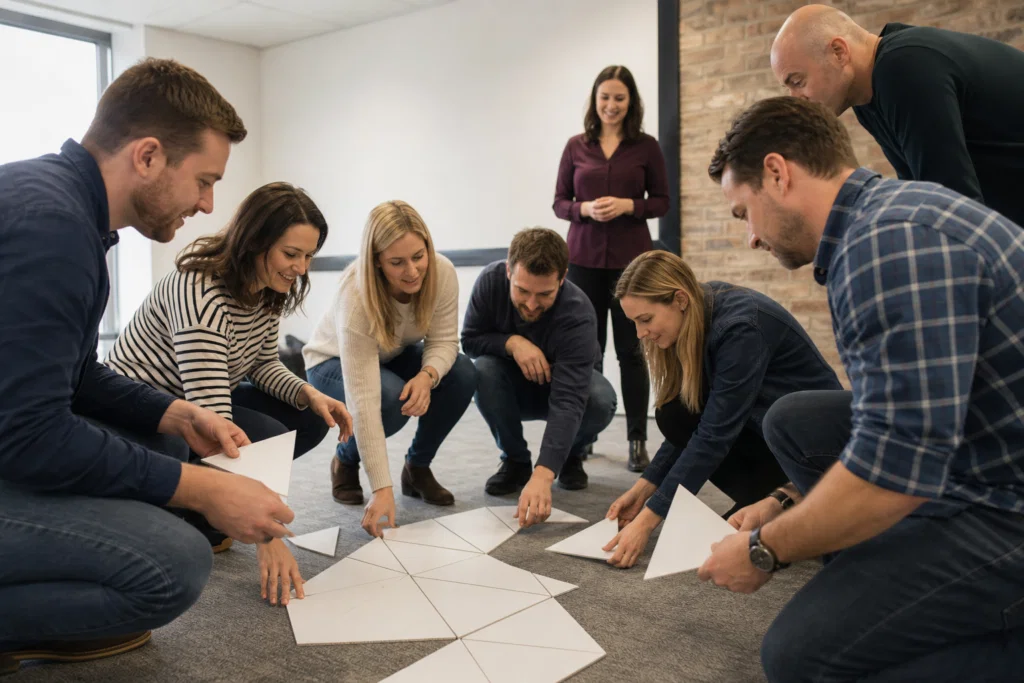
Team building activities for small groups work best when everyone has a clear role, nobody can hide at the back and the activity has a reason beyond filling time. For 5 to 15 people, the best choices are usually hands-on, well-briefed and easy to scale without splitting the group too early.
This guide gives you 25 practical ideas for small workplace teams, plus planning advice for HR teams, managers and event organisers choosing an away day, office session or hosted activity. Some ideas are quick and simple. Others suit a half-day event with a facilitator, venue and proper event plan.
What small groups need from team building
A small team building event has a different feel from a company-wide away day. People notice who contributes, who holds back and whether the activity has been chosen with care. That can be useful, but it also means the format needs to be fair and comfortable.
For 5 to 15 people, choose activities that give everyone something to do without putting one person on the spot for too long. A good session balances talkers and quieter colleagues, gives a route into the task quickly and avoids relying on physical confidence, specialist knowledge or alcohol.
Small groups also benefit from a sharper purpose. You might want a new project team to get used to each other, a leadership group to practise decision-making, or a hybrid team to rebuild informal contact. The activity should match that purpose. If the group needs trust, pick collaboration. If the group needs energy, pick light competition. If the group needs better working habits, choose a task with a debrief.
If you are comparing formats for a wider away day, NewWave Events also has a guide to corporate away day ideas for UK teams.
25 team building activities for small groups
The ideas below are designed for 5 to 15 people. Most can run as one group, with pairs or mini-teams used only when the task benefits from it.
- Escape room challenge. A small group solves clues against the clock. It works well because every clue needs observation, communication and calm thinking. For workplace groups, ask the facilitator to leave time for a short debrief about how the team shared information.
- Indoor detective mystery. Colleagues interview suspects, study evidence and agree on a solution. This suits mixed confidence levels because people can contribute by listening, spotting detail or presenting the final theory.
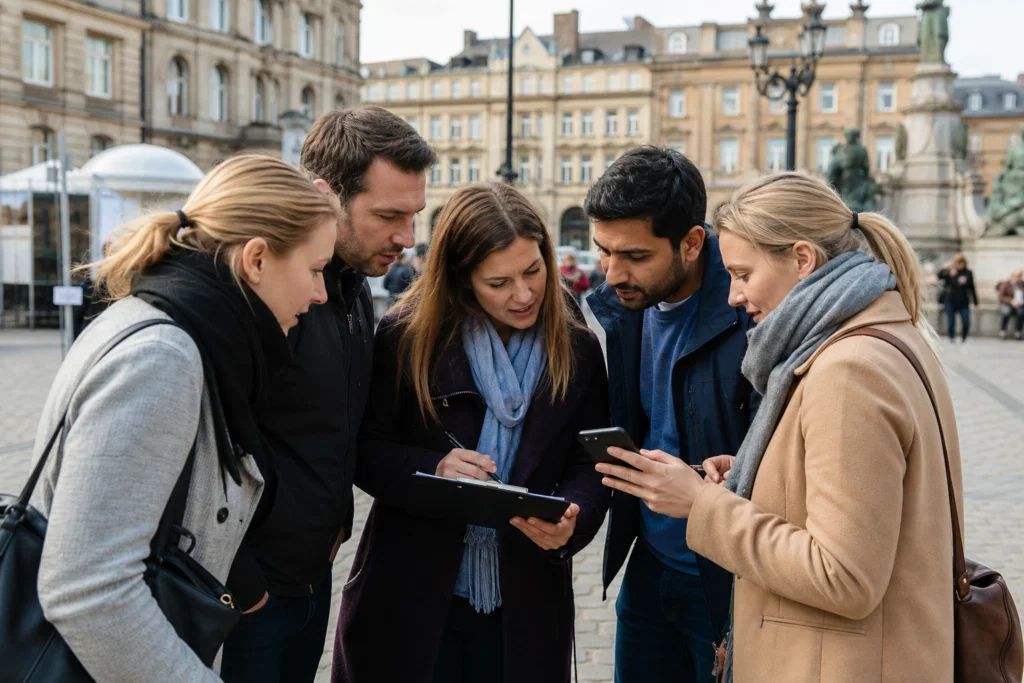
- Mini treasure hunt. The group follows clues around an office, venue or nearby town. Keep the route short for small teams and build in tasks that reward observation rather than speed alone.
- Collaborative cooking session. The team prepares a meal or set of dishes together. It creates natural conversation and gives people practical roles, such as timing, preparation, plating and tasting.
- Chocolate making workshop. A guided chocolate activity is sociable without being too loud or competitive. It suits office teams, client-facing teams and groups who want a relaxed creative task with something to take away.
- Mocktail or cocktail class. A drinks workshop gives the group a shared skill to learn. Offer alcohol-free options as standard, not as an afterthought, so everyone can take part comfortably.
- Corporate quiz with team rounds. A short quiz works for small groups if the questions mix general knowledge, picture rounds and workplace-safe creative rounds. Avoid making it a memory test about colleagues unless everyone has agreed to that tone.
- Board game tournament. Choose fast games with simple rules and rotate tables. This is useful for a low-cost office session, especially when the group needs informal time rather than a high-energy event.
- Problem-solving circuit. Set up several short logic, communication and practical challenges. Small teams get a good mix of pace and reflection, and the organiser can adjust the difficulty as the group settles in.
- Creative brand challenge. Give the group a fictional product, audience and time limit, then ask them to create a pitch. This encourages ideas, persuasion and decision-making without using live company work.
- Charity kit packing. Colleagues assemble care packages, school supplies or other agreed items for a charity partner. The task needs clear instructions, a suitable charity arrangement and a respectful explanation of who the activity supports.
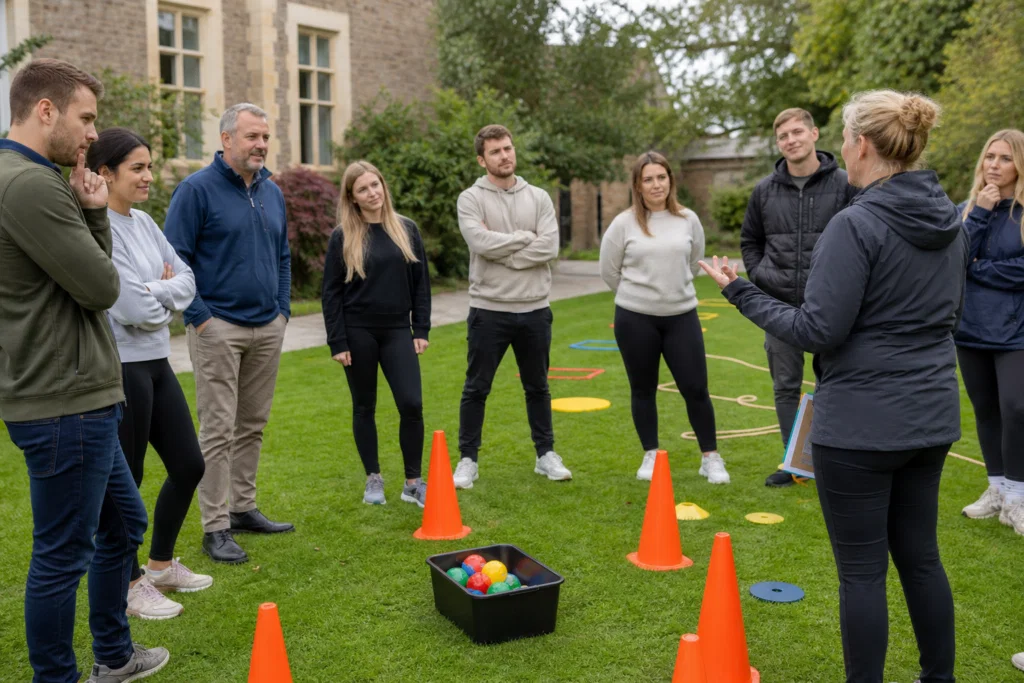
- Office mini Olympics. Use light, inclusive games such as bean bag target throws, reaction tests and gentle relay tasks. Keep the scoring friendly and allow non-physical roles such as timekeeper, captain or commentator.
- Outdoor GPS challenge. A small group uses clues, checkpoints and location tasks across a safe route. This works well for away days, provided the organiser checks access, weather plans and walking distances.
- Country sports taster. Activities such as archery, laser clay shooting or axe throwing can work for small groups when run by qualified providers with suitable space and safety briefings.
- Mini raft design on dry land. Teams design, explain and test a model or concept without entering water. This keeps the planning and communication benefits of a build task while avoiding the logistics of a water-based activity.
- Wellbeing walk with prompts. A guided walk with light discussion prompts helps a small team talk away from desks. It should be optional in intensity, accessible and backed up with an indoor plan if weather or mobility needs make that better.
- Workplace yoga or mindfulness. A short guided session can help a group reset during a busy period. Give people clear information beforehand so nobody feels surprised by physical movement, quiet reflection or the level of participation expected.
- Values in action workshop. The group looks at realistic work scenarios and agrees what good behaviour looks like. This is strongest when the scenarios are practical and relevant, not abstract statements on a wall.
- Communication drawing task. One person describes an image while others draw it, then the group compares results. It is simple, quick and useful for showing where instructions, assumptions and questions break down.
- Blindfold navigation with consent. One colleague guides another through a simple route or task using voice instructions. This needs clear opt-in, safe space and an alternative role for anyone who would rather not be blindfolded.
- Leadership rotation challenge. Give the team several short tasks and rotate the leader each time. This lets emerging leaders practise briefing, listening and delegation without turning the whole day into a formal assessment.
- Team timeline session. Colleagues map the team’s recent milestones, pressures and wins. It can be a useful reset after a busy project, especially when the discussion ends with two or three actions the team can control.
- Improvisation for work conversations. A facilitator leads low-pressure improv exercises focused on listening, building on ideas and responding in the moment. Keep it workplace-safe and avoid forcing performance in front of the group.
- Casino games evening. Fun casino tables create a sociable evening format for small groups, particularly after a meeting or away day. Use play money, clear rules and a relaxed format so the emphasis stays on conversation.
- Mini awards and appreciation session. The group shares specific thanks linked to recent work. This needs careful framing so it feels sincere, not forced. Ask for examples of helpful behaviour rather than popularity votes.
Need help narrowing down the 25 ideas?
NewWave Events can suggest small-group activities that fit your team size, venue and preferred level of competition.
How to choose the right idea for your team
Start with the reason for the session, then choose the activity. If the team is new, choose something with quick shared problem-solving, such as an escape room, detective mystery or treasure hunt. If the team is tired, choose a lower-pressure format, such as chocolate making, a wellbeing walk or a calm creative workshop.
For leadership groups, the strongest activities tend to include choices, trade-offs and a proper review. A leadership rotation challenge, problem-solving circuit or values workshop gives the facilitator something useful to discuss afterwards. For social connection, food, drink, quiz and casino formats are often easier because conversation happens naturally around the activity.
Think about the setting too. Office sessions are convenient and usually cost less, but they can feel too close to normal work if the room is cramped or full of interruptions. Venues give the group a cleaner break from the day job. If you need help weighing that up, this guide to choosing a team building venue covers the main decisions.
Planning details that matter for 5 to 15 people
Small events still need proper planning. The organiser should know who is responsible for the activity, what the venue provides, what the supplier brings, how the group will move around and what happens if someone cannot or does not want to take part in a specific task.
For a short office session, 60 to 90 minutes is often enough. For an away day, allow a half day or a full day with breaks, travel time and a clear finish. Small groups can go deeper into discussion, but they can also tire quickly if every activity asks for high concentration.
Health and safety planning should be proportionate to the activity. A quiz needs a different level of planning from archery or an outdoor GPS route, but both need someone to think through risks, access, instructions and responsibilities. For supplied activities, ask for the provider’s risk assessment, insurance details and setup requirements early enough to deal with issues before the event day.
Accessibility should be part of the brief, not a late fix. Ask about mobility, sensory, dietary, religious, caring and health needs in a simple, confidential way. Then choose spaces, timings and roles that make participation realistic. If you want more format comparisons, NewWave Events has a separate guide to indoor and outdoor team building activities.
Planning an activity with access or safety considerations?
Share your venue, group profile and activity shortlist with NewWave Events so the practical details are built into the plan from the start.
How to make the session inclusive rather than awkward
Small groups can make people feel exposed, so the tone of the briefing matters. Explain why the activity has been chosen, what level of participation is expected and how people can take a different role if needed. Avoid surprise physical tasks, public ranking of individuals or activities that depend on personal disclosures.
Competition can work well, but keep it at team level and make the scoring light. The best small-group events give people more than one way to contribute. Someone might be good at spotting detail, calming a discussion, drawing out quieter colleagues or keeping the task on time. Build activities where those behaviours count.
Language also matters. Instead of saying an event is for outgoing people, sporty people or creative people, describe the actual task and the support available. That helps people judge whether the session is suitable and reduces the risk of anyone opting out because the invitation sounds narrow.
Turning a small team event into useful change
A team building activity does not need a long workshop-style debrief, but it should end with something the team can use. Ask two or three practical questions: What helped us work well? Where did we lose time? What should we try in our next meeting or project?
Keep the follow-up realistic. One agreed habit is better than a page of notes nobody reads. That might be a clearer meeting role, a better handover, a new way to check understanding or a regular moment for appreciation at the end of a project.
For HR teams and managers, the most useful event is one that fits the people in the room. If you are planning for 5 to 15 colleagues, NewWave Events can help you choose a format, source the right activity and manage the delivery so the team can focus on taking part.
A simple way to plan a small team building event
Use this five-part check before you book an activity. It keeps the planning focused on the group, not just the idea that looks best on paper.
Define the purpose
Decide whether the session is mainly for connection, communication, leadership, reward or a project reset. One main purpose is enough.
Check the group profile
Look at confidence levels, access needs, dietary requirements, travel limits and whether the team knows each other well.
Choose the right format
Match the activity to the purpose. Use collaborative formats for trust, light competition for energy and facilitated tasks for behaviour change.
Plan the practicalities
Confirm timings, room layout, supplier requirements, risk assessments, breaks, bad-weather options and who is responsible on the day.
Close with one action
End by agreeing one small workplace habit the team will try after the event. Keep it specific enough to use the next week.
Plan a small team building event with NewWave Events
If you are organising team building activities for a small group, NewWave Events can help you choose an activity that fits your people, venue, timings and budget. Tell us what you want the session to achieve and we will suggest practical options for your UK team.