Ice breaker bingo is a simple workplace activity where each person has a bingo card filled with prompts such as “Has worked in another country” or “Prefers tea to coffee”. Players move around the room, speak to colleagues and mark a square when they find someone who matches the prompt.
It works well at away days, onboarding sessions, conferences, team meetings and company socials because it gives people a reason to start short, low-pressure conversations. The best versions are quick, inclusive and tailored to the group, rather than packed with awkward personal questions.
What is ice breaker bingo?
Ice breaker bingo, sometimes called human bingo or people bingo, turns introductions into a light activity. Instead of asking everyone to stand up and introduce themselves one by one, you give each person a card of prompts and ask them to find colleagues who match the squares.
A typical card uses a 5 by 5 grid with a free square in the middle. The first person to complete a row, column or diagonal calls bingo. For a more relaxed event, you can ignore winners and use the card as a conversation starter for a set amount of time.
For workplace teams, the point is not the bingo mechanic itself. The point is structured mixing. It helps new starters speak to people outside their immediate team, gives quieter colleagues a clear opening line and stops the same groups clustering together at the start of the day.
Ice breaker bingo is most useful when people do not know each other well, or when different departments are coming together. For teams that already know each other, make the prompts more specific to shared projects, working habits or lighter personal interests.
Need the opener to match the rest of the day?
If ice breaker bingo is part of a wider away day, NewWave Events can shape the warm-up, main activities and flow so the session feels joined up.
How to play ice breaker bingo at work
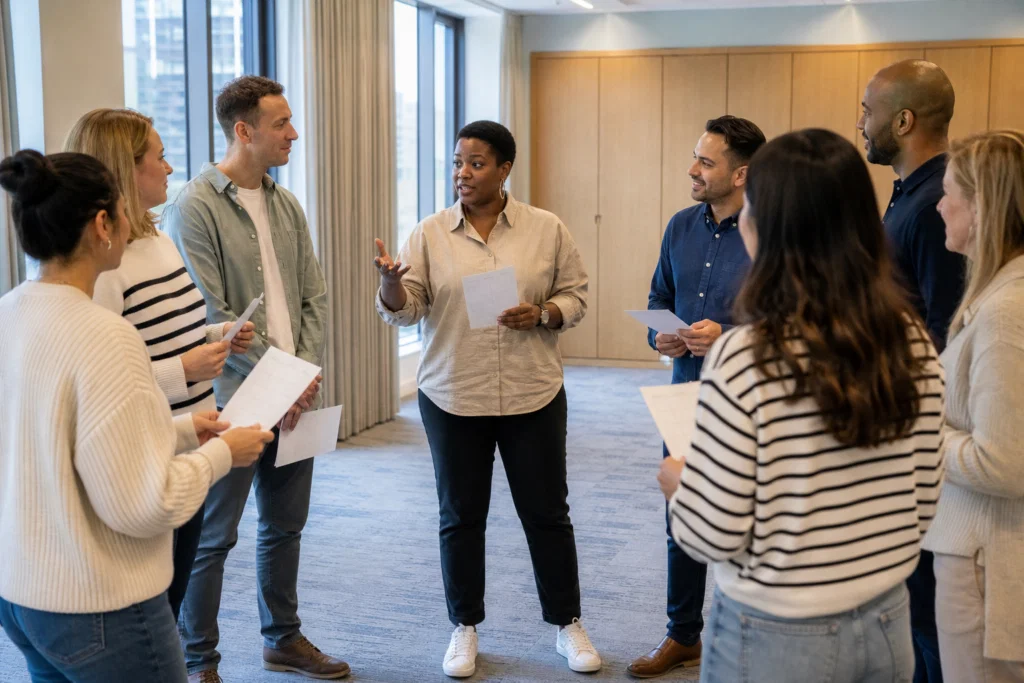
Start by giving each person a printed card, or a digital card if you are running a remote or hybrid session. Explain that players should move around, ask questions and write a colleague’s name in a square when that colleague matches the prompt.
Set the rules before people begin:
- Each square needs a different person’s name, unless the group is very small.
- Players should ask a follow-up question before moving on, rather than treating it as a signature hunt.
- The winning line can be a row, column or diagonal.
- Players should not pressure anyone to answer a question they would rather skip.
- The facilitator’s decision is final if two people call bingo at the same time.
For most work groups, 10 to 15 minutes is enough. A short time limit keeps the room moving and prevents the activity from becoming repetitive. If you are using ice breaker bingo at the start of a larger corporate away day, place it before presentations or workshops so people have already spoken to several colleagues before the formal agenda begins.
When someone calls bingo, ask them to read out the winning squares and the names they found. Then invite one or two people to share something they learnt. Keep this debrief brief. The energy should carry into the next part of the event, not drain away in a long plenary discussion.
Free card ideas for workplace bingo
Good bingo prompts are easy to answer, safe for a workplace setting and broad enough that people can find a match without interrogating half the room. Use a mix of work-related prompts, everyday interests and light preferences.
Try these prompts as a starting set:
- Has joined the company in the last year
- Has worked in more than one department
- Prefers tea to coffee
- Has a pet
- Has completed a charity challenge
- Speaks more than one language
- Has attended a work event in another city
- Enjoys cooking
- Has a favourite productivity shortcut
- Has mentored a colleague
- Likes an early morning meeting
- Prefers a walking one-to-one
- Has worked from a train
- Has a hidden creative hobby
- Knows a useful keyboard shortcut
- Has taken part in a company sports day
- Has presented to a client or stakeholder
- Has lived outside the UK
- Can recommend a good podcast
- Has volunteered through work
- Uses a paper notebook
- Has changed career path
- Enjoys problem-solving games
- Has organised a team lunch
- Can name a good local lunch spot
For senior leadership sessions, make the prompts more about working styles, communication and decision-making. For graduates or new starters, use prompts about first roles, learning goals and office routines. If you need more conversation-led alternatives, a bank of icebreaker questions for work can help you write prompts that sound natural rather than forced.
How to make the game inclusive
Ice breaker bingo should help people feel more comfortable, not put them on the spot. Avoid prompts about age, salary, religion, relationship status, health, alcohol, politics, family circumstances or anything that assumes everyone has the same lifestyle.
Use opt-out language at the start. A simple line such as “If a prompt does not feel comfortable, move to another square” gives people permission to manage their own boundaries. You can also include one or two neutral squares, such as “Ask me about my current project” or “Tell me a useful work tip”.
Accessibility matters too. If your group includes people who may find moving around difficult, run the activity at tables, use rotating pairs or let participants complete squares through short conversations in place. For remote teams, use breakout rooms and ask players to type matched names into a shared card or document.
Be careful with competition. A small prize can add energy, but a high-pressure race can make the activity feel transactional. The best sign is not that someone wins quickly. It is that people carry on chatting once the first bingo has been called.
Planning for a mixed group?
NewWave Events can adapt team activities for different confidence levels, mobility needs and room layouts, so everyone can take part comfortably.
Facilitation tips for HR teams and team leaders
Prepare the card around the purpose of the event. An onboarding version should help people learn names and roles. A cross-department session should help people find shared challenges and useful contacts. A celebration event can be lighter, with prompts about hobbies, travel and office rituals.
Brief managers before the session if they are taking part. Senior people should join in properly, not hover at the edge of the room. Their involvement often gives others permission to relax, especially in teams where hierarchy usually shapes who speaks first.
For large groups, print several card versions so players do not all chase the same few prompts. Use clear instructions on screen, appoint a confident facilitator and make sure the room layout allows people to move without crowding. If the session is part of wider team building activities, use bingo as the warm-up, not the whole event.
Workplace wellbeing data continues to show that poor relationships with colleagues can affect how people experience work. An icebreaker will not fix deeper relationship issues by itself, but a well-run activity can create useful first conversations and help a planned team day start in a better place.

When to use another icebreaker instead
Ice breaker bingo is not right for every group. If you have fewer than eight people, the format can feel thin because players run out of possible matches. In that case, use paired questions, two truths and a lie, or a short problem-solving activity.
If the team already knows each other well, standard prompts may feel too easy. Use a more task-based warm-up, a quiz about the business or a shared challenge that links to the goals of the day. For groups that need energy but less movement, seated fun icebreakers for work may be a better fit.
Avoid using bingo when the session is about a sensitive restructure, conflict or performance issue. In those contexts, people may need clearer facilitation, smaller conversations and a more careful structure. Bingo is best when the aim is connection, orientation and gentle mixing.
If you do use it, end with a practical next step. Ask people to sit with someone new for the first workshop, pair up with a person from another department or carry one conversation into the next activity. That is where the game starts to support the wider event.
A simple way to run the activity
Use this structure when you need a quick, organised opener for a meeting, away day or team building session.
Set the purpose
Decide whether the activity is for introductions, cross-team mixing, onboarding or a relaxed social start. The purpose should shape the prompts.
Build the card
Use a 5 by 5 card with clear, work-safe prompts and a free square in the middle. Create more than one version for larger groups.
Explain the rules
Tell people how to mark squares, whether each name can be used once and how long they have. Keep the explanation under a minute.
Keep people moving
Use a visible timer, encourage follow-up questions and gently redirect anyone who treats the card as a race for signatures.
Close with a link to the day
Ask one or two people to share something they learnt, then move straight into the next session while conversations are still warm.
Plan an icebreaker that fits your team day
Ice breaker bingo is a useful starting point, but the best team events connect every activity to the people in the room and the purpose of the day. NewWave Events designs and delivers corporate events and team building activities across the UK, with formats that work for small teams, large groups and mixed departments.
If you are planning an away day, conference opener or company social, we can help you choose the right mix of icebreakers, hosted activities and event support.