Fun icebreakers for work should make people feel more comfortable, not put them on the spot. The best ones are short, easy to explain and clearly linked to the meeting or team moment you are running.
For a regular catch-up, one question or a two-minute prompt is usually enough. For an away day, conference or larger team event, an icebreaker can help people mix before moving into a more structured activity. The aim is simple: lower the social temperature, give quieter people a route into the room and help the meeting start with more energy.
Why good icebreakers work
A good icebreaker gives people a low-pressure reason to speak early. Once someone has said something simple at the start, it often feels easier to contribute later when the discussion becomes more focused.
That matters in modern workplaces because teams are often split between offices, homes and different working patterns. People may know names on a screen but have little shared context. A short opener can help rebuild that context without taking over the agenda.
Keep the promise modest. An icebreaker will not fix a poor meeting, unclear leadership or a strained team culture. It can, however, make the first few minutes feel less stiff and help a mixed group settle before the real work begins.
If you are planning something bigger than a meeting, such as a team day or company update, it may be worth connecting the opener to the rest of the session. NewWave Events often designs warm-up activities as part of wider team building activities, so the first few minutes support the purpose of the day rather than feeling bolted on.
How to choose the right icebreaker
Start with the meeting type. A Monday team check-in needs something quick and familiar. A project kick-off can use a prompt about working styles or priorities. A leadership session may need a more purposeful opener that helps people speak honestly without becoming too personal.
Then consider the group. New starters, remote colleagues, senior leaders and large mixed departments will not all respond in the same way. Avoid prompts that rely on private information, physical confidence, expensive hobbies or cultural knowledge that some people may not share.
A useful test is whether someone can pass without embarrassment. Give people choices, such as answering one of two questions, typing into chat or speaking to one person before sharing with the room. This is especially helpful for hybrid meetings, where remote participants can easily feel like an afterthought.
- Use one-sentence instructions.
- Keep the first round under five minutes unless the meeting is designed around team building.
- Choose prompts that match the tone of the meeting.
- Tell people how the activity links to the agenda.
- Stop while the room still has energy.

Need an opener for a mixed team?
If your meeting brings together people who do not usually work closely, NewWave Events can help turn a simple warm-up into a more purposeful team activity.
30 quick icebreakers for work
These ideas are designed for normal work settings: team meetings, workshops, training sessions, away days and project kick-offs. Most need no kit beyond a timer, a chat box or a few blank cards.
- One-word check-in. Ask everyone to describe how they are arriving at the meeting in one word. It is quick, simple and gives the facilitator a read of the room.
- Two choices. Offer a light either-or question, such as early start or late finish, tea or coffee, city break or countryside. Keep it harmless and move at pace.
- Today’s small win. Ask people to share one small thing that has gone well this week. This works best when the meeting needs a positive but realistic start.
- What are you bringing? Ask each person to name one skill, perspective or piece of knowledge they are bringing to the session. It suits project kick-offs and workshops.
- Desk object story. Invite people to show or name one object near them and explain it in ten seconds. Remote colleagues can join easily, and office groups can use items on the table.
- Meeting weather. Ask people to describe their current work mood as weather: sunny, foggy, windy, calm or stormy. It gives useful emotional context without asking for a long explanation.
- Two-minute pairs. Put people in pairs and ask them to find one thing they have in common outside their job title. Bring back one or two examples, not every answer.
- First job flashback. Ask people to name their first paid or voluntary role and one thing it taught them. It often reveals useful stories without becoming too personal.
- Skill swap. Ask everyone to name one work skill they can help others with and one skill they would like to learn. Capture the answers if the team wants follow-up.
- Three tabs open. Ask people to name, in general terms, three things currently taking up their attention. This helps busy teams acknowledge workload before starting.
- Best advice received. Ask for one piece of advice that has helped someone at work. Keep answers brief and avoid turning it into a speech round.
- Project headline. Ask people to write the headline they would like this project to earn by the end. It helps a group talk about success in plain language.
- Silent ranking. Give a simple scale, such as confidence about the topic from 1 to 5, and ask people to show fingers or use chat. Discuss the pattern, not individual scores.
- Map yourself. In person, ask people to stand roughly where they are based in the UK. Online, ask people to type their town or region. It helps distributed teams place each other.
- Best meeting rule. Ask everyone to suggest one rule that makes meetings better. Use the answers to agree how this meeting will run.
- Favourite tool. Ask people to name one tool, app or simple habit that helps them work. It can surface practical ideas across the team.
- The unread manual. Ask people to finish the sentence: “If I came with a work manual, one useful page would say…” Keep it optional and light.
- Photo-free weekend. Ask people to share one weekend moment without showing photos. This avoids screen-sharing delays and keeps the detail in each person’s control.
- Customer shoes. Ask people to name one thing a customer, client or colleague needs from the team this month. It brings the room back to purpose.
- Question lucky dip. Prepare a few safe questions and let each person pick a number. Good options include favourite lunch, best commute tip or one thing they are looking forward to.
- Energy vote. Ask the group whether the session should start with quiet thinking, quick discussion or a direct agenda review. It gives the facilitator a useful steer.
- Same but different. In small groups, ask people to find one shared thing and one difference. It works well for departments that do not usually mix.
- Work soundtrack. Ask people what kind of music, silence or background sound helps them concentrate. Avoid asking anyone to sing or perform.
- One thing to park. Ask people to name one distraction they want to park before the meeting starts. This can be private, written on a note or typed into chat.
- Five-second show of hands. Use quick prompts, such as who has worked here under one year, over five years, in more than one department or with a client this week. It helps people see the mix in the room.
- Reverse introductions. Pair people up and ask them to introduce each other using name, role and one agreed detail. Give pairs time to check what they are comfortable sharing.
- What would help? Ask each person to finish: “This meeting will be useful if…” It sets expectations early and can stop the session drifting.
- Team myth-buster. Ask people to name one assumption others sometimes make about their role. This can build respect between departments when handled carefully.
- Mini gratitude round. Ask people to thank a colleague or team for one specific recent action. Keep it work-related and avoid making praise feel forced.
- Exit first, then start. Ask people to write the one outcome they want by the end of the meeting. Share a few answers, then use them to sharpen the agenda.
How to run icebreakers without awkwardness
The facilitator makes the difference. A clear, calm introduction helps people understand that the activity has a purpose and will not drag on. Say how long it will take, what people need to do and whether sharing is optional.
Do not start with the most senior person every time. That can shape the answers that follow. Mix up the order, use pairs first or ask people to write privately before speaking. If someone passes, accept it and move on.
For hybrid meetings, design for the people joining remotely from the start. Use prompts that work equally well in the room and online. If you split into pairs, include remote pairs or use breakout rooms rather than asking online participants to listen while the room chats.
Accessibility matters too. Avoid activities that require quick movement, small printed text, colour-only instructions or personal disclosure. If the meeting is linked to flexible working, caring responsibilities or wellbeing, give people time to think and keep the tone respectful.
Using icebreakers in team days and away days
For an away day, the opener should do more than fill time while people arrive. It can help guests move out of normal office habits and into the purpose of the day, whether that is communication, problem-solving, celebration or cross-department connection.
A simple meeting icebreaker may be enough for a small workshop. For a full team day, it is often better to build a short warm-up into a wider event structure. That might mean a quick communication challenge before a collaborative task, a light quiz before a conference session or a mixed-team opener before outdoor activities.
The most useful away days usually have variety. People need time to talk, time to do something active or creative, and time to connect the activity back to work. If you are planning a larger session, this guide to corporate away day ideas for UK teams can help you think beyond the first five minutes.
Icebreakers also help with seating plans and team mixing. Rather than asking people to “network”, give them a small task that requires a quick conversation. It feels more natural and it helps prevent the same people clustering together all day.
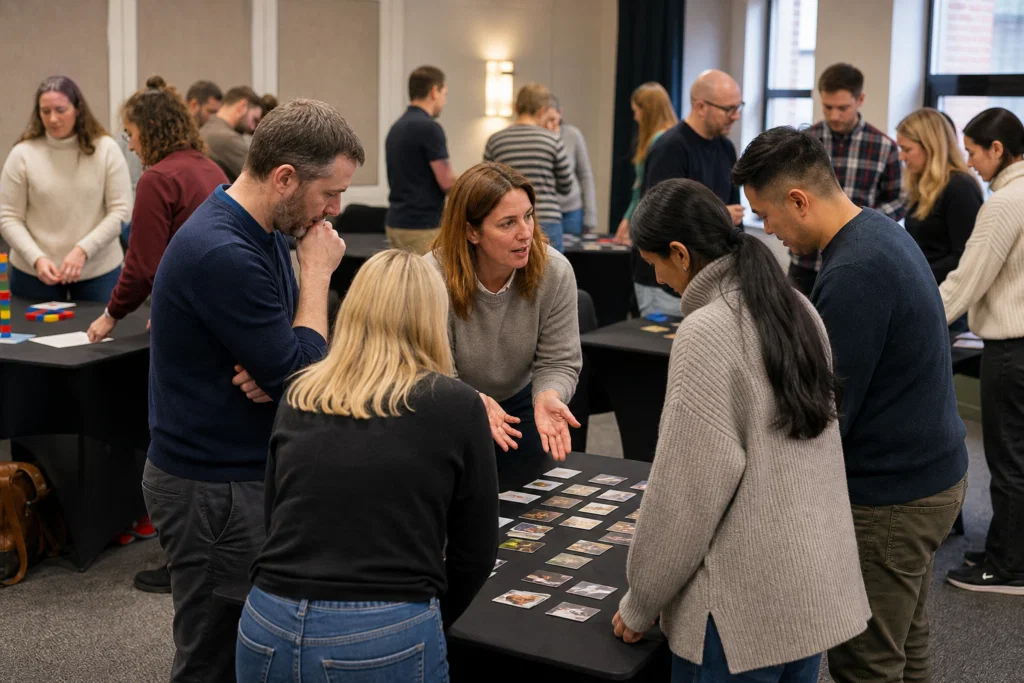
Planning an away day around connection?
For larger groups, we can build the icebreaker into a full agenda with activities, timings and facilitation planned around your goals.
When a quick icebreaker is not enough
If a team is dealing with low trust, conflict, major change or repeated communication problems, a quick icebreaker may feel superficial. In those cases, use it only as a gentle opener before a more carefully facilitated session.
Look for signs that the group needs more structure: the same voices dominate, remote colleagues rarely speak, departments work around each other or people leave meetings without clear decisions. A stronger format might include facilitated discussion, problem-solving tasks, creative challenges or a full team building activity with a proper debrief.
For office-based teams that want something practical but low-fuss, office team building activities can bridge the gap between a short meeting opener and a full away day. The right choice depends on the group size, available space, time and the outcome you want.
The main rule is to be honest about what the activity can do. Use quick icebreakers to start conversation. Use planned team building when you need people to practise collaboration, make decisions together or reconnect after a busy period.
A simple icebreaker planning process
Use this five-step check before adding an icebreaker to a meeting, workshop or team event.
Pick the purpose
Decide whether the opener is there to relax the room, introduce people, gather views or prepare the group for a task.
Match the format
Choose an activity that works for the room you have: in-person, remote, hybrid, large group or small team.
Set a time limit
Most meeting icebreakers should take two to five minutes. Larger events can use longer warm-ups if they lead into the day.
Give people choice
Offer ways to pass, write first, answer in pairs or use chat. Choice reduces pressure and improves participation.
Link back to work
Close the activity with one useful sentence about why it mattered, then move into the agenda.
Plan a team session that starts well and goes somewhere useful
If you want more than a quick meeting opener, NewWave Events can help design a team building activity, away day or corporate event that suits your people, timings and venue. Tell us what you want the session to achieve and we will shape the right format around it.