The best conference ice breaker and energisers for big rooms are short, clear, low-pressure and easy to run without moving hundreds of people at once. They should help delegates switch focus, speak to someone nearby, reset after a heavy session or build energy before a keynote, without making people feel exposed.
Large conferences need different choices from small team meetings. A ten-person game can collapse in a room of 300 if the instructions are too fiddly, the sound is poor or the activity depends on everyone knowing each other already. The ideas below are built for UK workplace events where HR teams, team leaders and organisers need something practical, inclusive and quick to deliver.
What makes a large-room icebreaker work
Big-room conference energisers work when people understand the task in under a minute. The facilitator should be able to explain what will happen, how long it will take and whether people need to stand, speak, move or use a phone.
For workplace audiences, the safest starting point is light participation rather than performance. Many delegates have travelled, sat through dense sessions or arrived with work still on their mind. A good opener gives them a reason to connect without asking for private information, public embarrassment or sudden physical effort.
Before choosing an activity, check four things: room layout, delegate numbers, accessibility needs and the tone of the conference. A sales kickoff can usually carry more noise and speed than a leadership forum. A seated theatre room needs different choices from a cabaret layout with tables.
It also helps to separate icebreakers from energisers. An icebreaker helps people begin talking. An energiser changes the energy in the room. Some activities can do both, but the purpose should be clear before it goes into the agenda.
Need an opener for a large room?
If your conference starts with hundreds of people arriving from different teams or sites, NewWave Events can recommend icebreakers that settle the room without making delegates feel put on the spot.
20 conference icebreakers and energisers for big rooms
These ideas are designed for large conference rooms, away days and corporate events. Most can be run in 3 to 10 minutes, although some can be extended into a fuller team building session with proper facilitation.
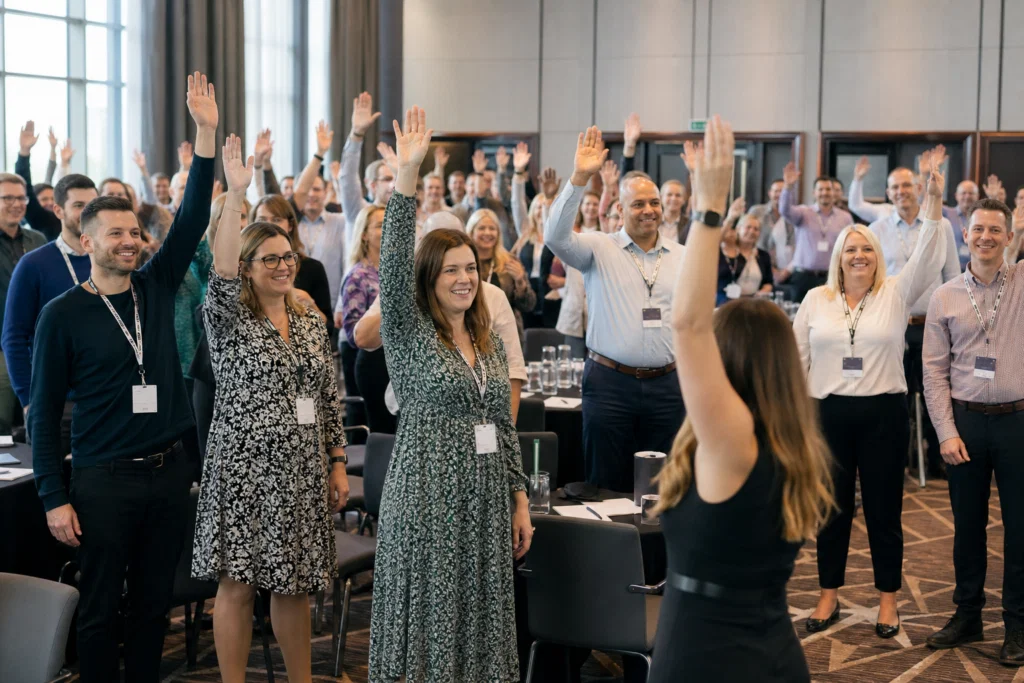
- Stand if… The host reads a series of light prompts and delegates stand if the statement applies to them. Use work-safe prompts such as “stand if you have joined the company in the last year” or “stand if you travelled by train today”. It creates quick visual energy and helps people see shared experiences across a large room.
- Two-word check-in Ask each person to turn to someone nearby and describe how they are arriving at the conference in two words. Keep it brief and do not ask people to share with the whole room unless they volunteer. This works well at the start of a day because it settles the room without forcing a long conversation.
- Neighbour introductions Each delegate introduces themselves to the person beside them with name, team and one practical thing they want from the day. The facilitator can then ask for a few voluntary examples from the room. It is simple, professional and useful when people are sitting next to colleagues they do not know.
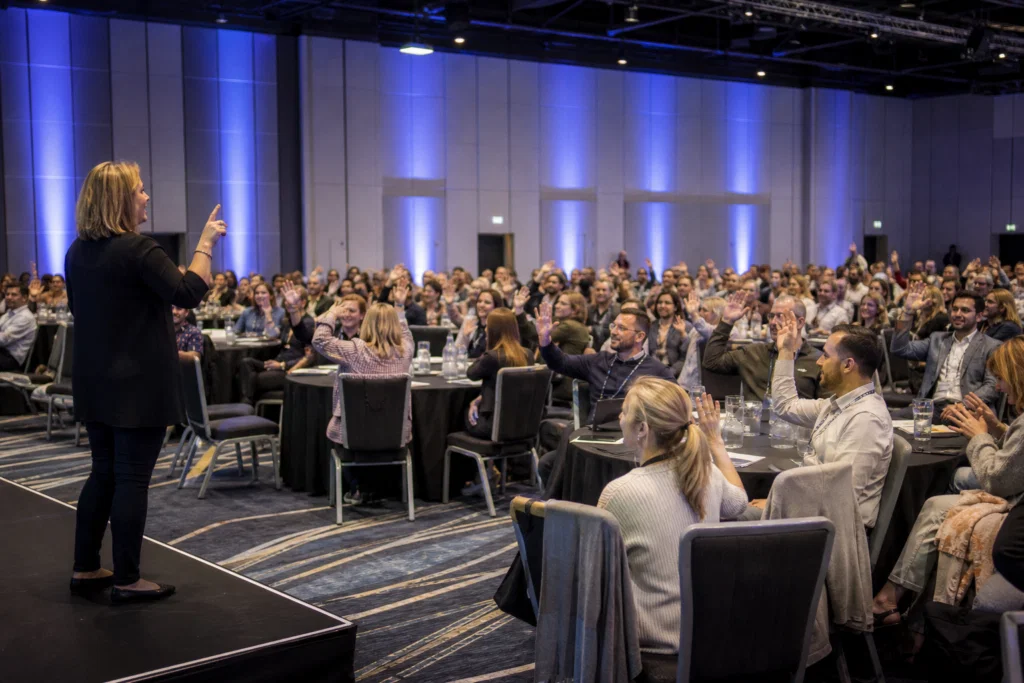
- Room poll by show of hands Use quick questions linked to the event theme. For example, “who works mostly remotely?”, “who manages a team?” or “who is here for the first time?”. This gives the host useful information and helps delegates understand who else is in the room.
- Find your match Give people a card, colour or category as they arrive, then ask them to find one person with the same category during the opening break. For a big room, keep the matching rule obvious and avoid making people roam too far. It works best when the matching prompt links to the conference theme.
- One-minute networking rounds Ask delegates to speak to someone near them for one minute each, using a prompt on screen or read by the host. Rotate once or twice only. This gives structure to networking without creating a chaotic free-for-all.
- Conference bingo Give delegates a bingo card with safe, work-related prompts such as “has worked in another region”, “has presented today” or “has used the new system”. Use it during registration or breaks rather than during a keynote. For more focused workplace versions, see NewWave Events’ guide to ice breaker bingo.
- Common ground in threes Ask people to form groups of three with those close by and find one thing all three have in common, excluding obvious answers such as the company name or the event itself. It encourages conversation but keeps groups small enough for quieter delegates to take part.
- Silent line-up Delegates line up in order of a simple variable without speaking, such as length of service, birthday month or distance travelled. This needs space and clear safety instructions, so it is better for cabaret rooms, exhibition spaces or large open areas than fixed theatre seating.
- Energy scale Ask people to show their current energy level using fingers from one to five. The host can acknowledge the result and choose the next activity accordingly. This is useful after lunch, late afternoon or before a strategy session.
- Table headline Each table writes a short newspaper-style headline for what they want the conference to achieve. A few tables share theirs. It works well at company updates because it turns passive listening into a shared outcome.
- Speed ideas wall Give each table sticky notes or a digital board and ask for one practical idea in response to a prompt. Keep the question narrow, such as “one thing that would make handovers easier”. The host can group ideas during a break or return to them later.
- Pass the clap The facilitator starts a clap, point or simple movement that passes across rows or tables. The aim is rhythm and attention, not competition. It is fast, visual and useful before a session that needs the room alert.
- Desk stretch reset Lead a short sequence of shoulder rolls, seated twists and standing stretches, with permission for people to stay seated. This suits long agendas where delegates have been sitting for more than an hour. Keep it gentle and avoid anything that assumes mobility or fitness.
- Would you rather, work edition Offer two light choices and ask people to move to the left or right side of the room, or vote by hands if space is limited. Keep questions relevant and harmless, such as “morning workshop or afternoon workshop?” and “paper notebook or digital notes?”.
- Applause map Name teams, locations or functions and invite applause from each group. This creates recognition without putting one person on the spot. It is helpful at national events where people may not realise how many sites or departments are represented.
- Quick quiz by table Run five short questions linked to the company, sector or event theme. Tables agree answers together, then mark quickly. Avoid obscure trivia that only senior staff would know. The aim is interaction, not proving who has insider knowledge.
- Object story Ask delegates to choose one item they brought with them and tell a neighbour why it is useful to their working day. This can be surprisingly human while staying professional. It suits seated rooms because no equipment is needed.
- Human barometer Ask a question and invite people to place themselves on an agreement scale across the room, or use hands if movement is not suitable. For example, “how confident do you feel about this change?”. Use it carefully and avoid sensitive questions unless there is a clear plan for what happens with the answers.
- Team challenge taster Run a short facilitated challenge that previews a fuller activity later in the agenda, such as a mini problem-solving task, rhythm challenge or collaborative quiz. This works well when the conference includes structured team building for large groups because it links the energiser to the wider event rather than feeling bolted on.
How to choose the right idea for your audience
Start with the job the activity needs to do. If people are arriving cold, choose a low-pressure icebreaker such as neighbour introductions or a two-word check-in. If the room is flat after lunch, choose an energiser such as a table quiz, applause map or desk stretch reset. If the event needs insight, use a table headline or speed ideas wall.
Match the activity to the seniority mix in the room. Senior leaders may not mind a quick standing poll, but they may resist anything that feels childish or forced. Early-career delegates may enjoy faster formats, but they still need clear boundaries and a professional tone.
Numbers matter too. With 50 people, you can gather feedback from several groups. With 500, you need a mechanic that works visually, by table or through a simple show of hands. The bigger the room, the more the facilitator should reduce the number of instructions.
If the conference is part of a wider away day, the icebreaker should sit naturally alongside the rest of the agenda. You can find broader planning ideas in NewWave Events’ guide to corporate away day ideas for UK teams.
Keeping energisers inclusive and accessible
Good energisers give people a way to take part without assuming they can stand, move quickly, hear every instruction first time or speak confidently in a large group. Build in options from the start rather than treating adjustments as an afterthought.
Use clear spoken instructions and, where possible, show the prompt on screen. Avoid tiny text, low contrast slides and private questions. If the room is large, repeat the task and demonstrate it with one example before asking the audience to begin.
For movement-based activities, offer a seated version. For speaking activities, keep conversations in pairs or tables before asking for voluntary room feedback. For digital polls, provide a non-digital alternative so delegates without a charged phone or reliable signal are not excluded.
Accessibility also includes the agenda around the energiser. Regular breaks, clear timings, accessible materials and early information about the venue all help people take part. The UK Government’s inclusive communication guidance is a useful reference when planning event communications for disabled delegates.
Make inclusion part of the activity design
NewWave Events can adapt conference energisers for different room layouts, mobility needs, confidence levels and event formats, so more delegates can take part comfortably.
Timing, facilitation and room setup
Most conference icebreakers fail because they run too long, not because the idea is bad. A five-minute activity can lift the room. A fifteen-minute version of the same activity can irritate people who came for the main content.
Put energisers where they solve a real agenda problem. Good moments include the first session after registration, after lunch, between technical presentations and before a collaborative workshop. Avoid dropping a noisy activity straight after an emotional or serious keynote unless the change in tone has been handled carefully.
The facilitator needs a microphone, a clear sightline and a simple stop signal. In big rooms, never rely on people hearing instructions from each other. If delegates need to move, check aisles, exits and table spacing before the session starts.
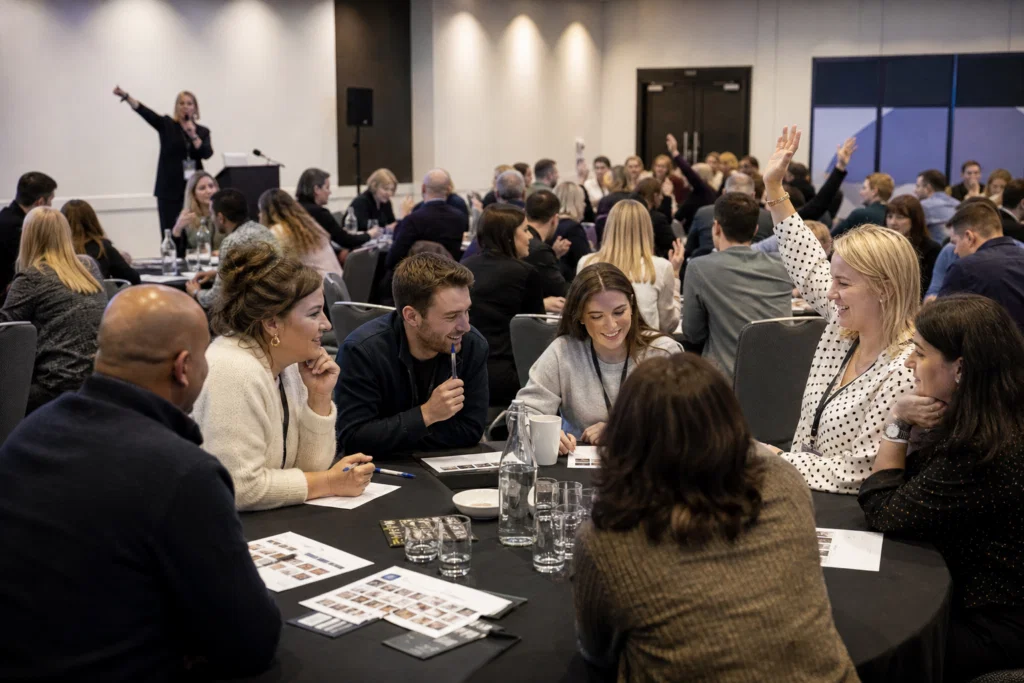
For theatre seating, choose hand votes, neighbour conversations, seated stretches and quick polls. For cabaret layouts, table-based activities work well. For open spaces, you can use movement activities, but only when the safe capacity and flow of people have been considered.
Turning a quick energiser into better team connection
A conference energiser should not feel like a random interruption. Link it to the purpose of the day and use the output where appropriate. If tables create headlines, return to them later. If a poll shows low confidence, acknowledge it and give people a route to ask questions. If a networking prompt starts useful conversations, build a little more time into the next break.
This is where professional facilitation helps. The right host reads the room, shortens an activity when energy dips and adapts instructions when the layout is not working. That judgement matters more in a room of 300 than it does in a team meeting of ten.
For HR teams and event organisers, the practical test is simple: will this activity make the next part of the conference easier? If the answer is yes, it belongs in the agenda. If it is only there to fill time, choose something more purposeful or leave the space as a proper break.
NewWave Events designs and delivers team building activities and corporate events across the UK, including large-group conference activities that can sit inside a wider agenda. If you want the room to connect without awkward filler, plan the icebreaker as part of the event rather than as a last-minute extra.
A simple planning process for big-room energisers
Use this five-part check before adding an icebreaker to a conference agenda. It keeps the activity purposeful and easier to deliver at scale.
Define the moment
Decide whether the room needs introductions, energy, focus, feedback or a reset. Choose the activity only after that purpose is clear.
Check the room
Look at seating style, aisle space, sightlines, sound, screens and delegate flow. A theatre room and a cabaret room need different mechanics.
Reduce the instructions
Write the activity in three clear steps. If the host cannot explain it in under a minute, simplify it before it reaches the stage.
Build in options
Offer seated, non-digital and low-speaking ways to take part where possible. Inclusive design makes the activity smoother for everyone.
Connect it back
Link the result to the next session, whether that is a discussion, workshop, keynote or break. Delegates should understand why the activity happened.
Plan a conference activity that works in the room
If you are planning a conference, away day or large team event, NewWave Events can help you choose and deliver activities that fit the audience, venue and agenda. Share the numbers, room style and goals, and we will shape the right approach.