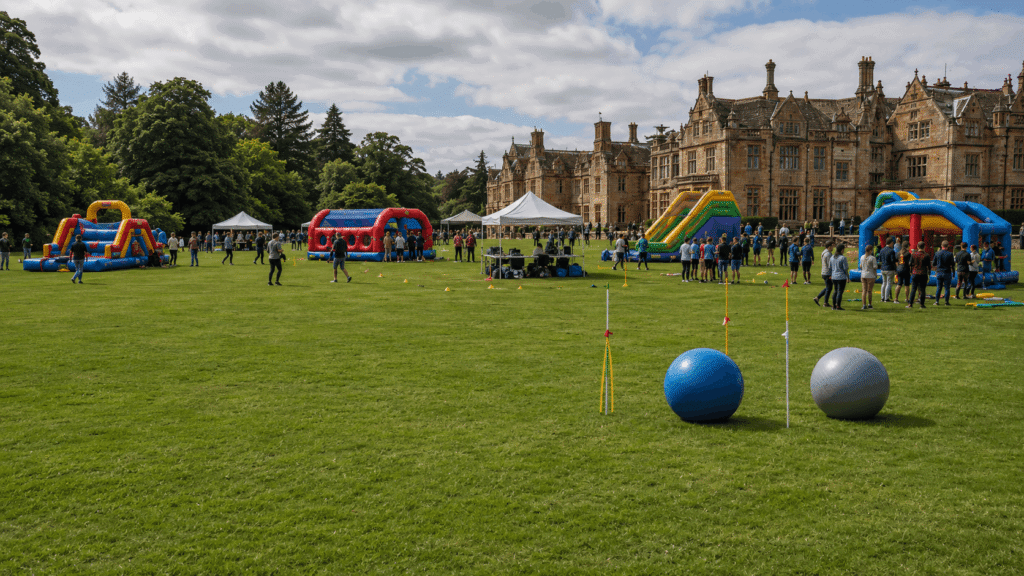
Running team building for 20 people is straightforward. Running it for 200, or 500, or 1,000 is a different job. Every element that quietly works at small scale becomes a planning problem: briefings, arrival flow, catering, safety, staff ratios, and what happens if the weather turns while half the group is outside.
The formats and planning notes below come from delivering large group corporate events across the UK for teams at Google, Amazon, IKEA, Samsung, and Berkeley Homes, among others. If you are briefing an event for 100 or more people, this covers what actually changes at scale and how to keep the experience strong for every attendee, not just the front row.
What breaks when you scale a team building event
A team building event that works for 30 people rarely works for 300 by adding facilitators. Several things quietly fail at scale.
Single-facilitator activities cap out. A workshop with one leader working the room can carry 40 people, sometimes 60. Push it to 150 and the back three rows disengage. Anything that relies on hearing one voice needs either splitting into pods or replacing with a format built to scale.
Briefings become the biggest variable in the day. A 5 minute safety brief for 20 people becomes a 20 minute logistical exercise for 300. If briefings are not staggered by group, the day loses most of its first hour.
Arrival flow, catering, and toilet capacity all become planning constraints rather than afterthoughts. Venues that comfortably hold 150 for a lunch break struggle at 400 without proper zoning.
Weather backup shifts from optional to mandatory. For 30 people, moving indoors is a nuisance. For 300, it is an operation. Any large group event needs a genuine wet-weather plan that has been walked through, not written down.
Safety documentation, insurance, and staff ratios all scale non-linearly. Water-based activities, motorised activities, and country pursuits at 200+ people need dedicated safety planning, not a standard brief. This is where our dragon boat heritage and full insurance for high-risk formats becomes practical rather than marketing.
Team building formats that scale for large groups
Certain formats work at 200 or 500 as well as they do at 40. They share three qualities: they split naturally into pods, they do not depend on a single voice carrying the room, and they use time rather than facilitator attention.
Multi-activity fun day with rotations
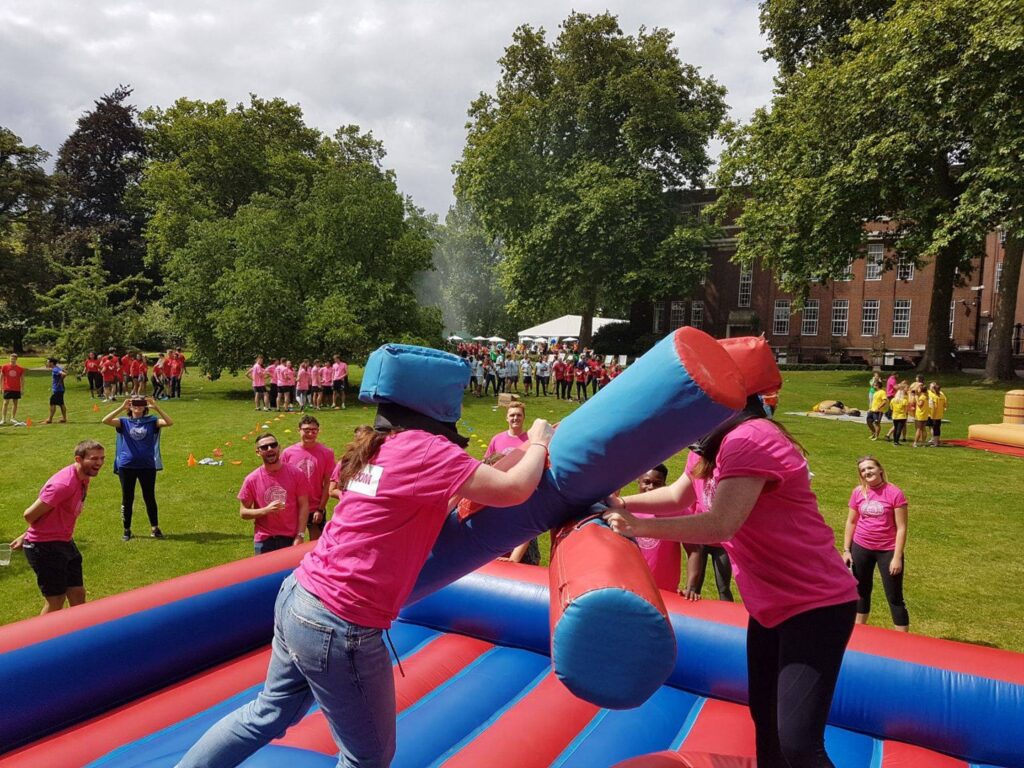
A multi-activity fun day splits the group into pods that rotate through several activities across the day. It is the most reliable format at scale, because every activity is sized for a manageable group even when the total is 400 or more. Typical combinations include country pursuits, target sports, motorised activities, dragon boat racing, and short problem-solving stations. Each pod runs on a timed schedule with its own facilitator team.

African drumming for the full group
An African drumming session is one of the few activities that scales up as it gets larger. A skilled facilitator can lead 400 people playing together in a single rhythm inside 30 minutes. It works particularly well as an opener before a multi-activity day splits the group, or as a closer that brings everyone back together at the end of the day. Every guest gets a djembe.
Dragon boat racing
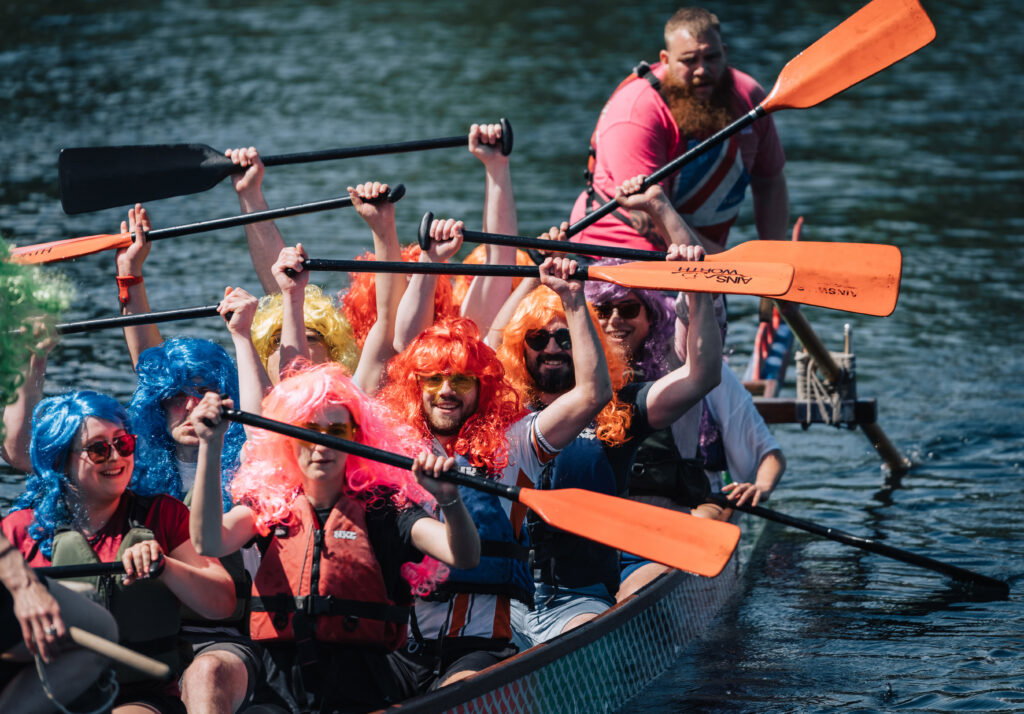
Dragon boat racing scales cleanly because each boat holds 16 to 20 paddlers, so a group of 400 fields 20 or more boats across a day of heats and finals. Every guest is on the water, everyone has a role, and the racing structure gives the day a clear rhythm. This is the format built on our dragon boat heritage and full insurance for high-risk water activities, which most competitors cannot deliver at scale.
Corporate treasure hunt
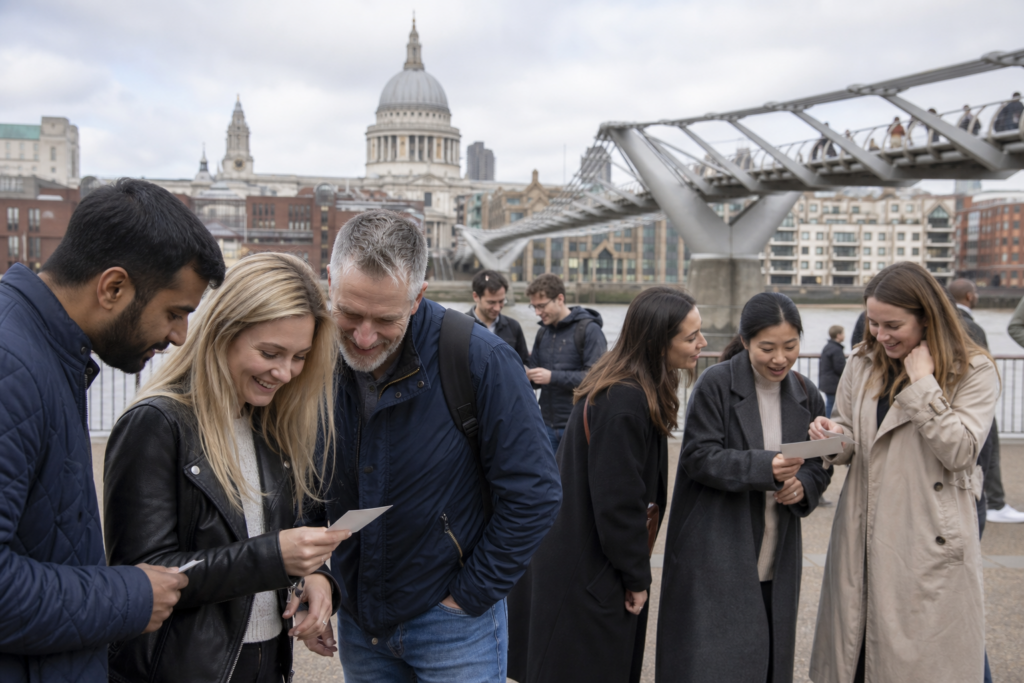
A large-scale corporate treasure hunt splits the group into teams of 4 to 8 and covers a city area, a venue, or a stretch of countryside. Because the format is built around parallel routes, adding 200 people is a matter of adding teams and clues rather than compressing the experience. Best fit is 60 to 400 guests, and it works particularly well in London, Manchester, Bath, and Bournemouth.
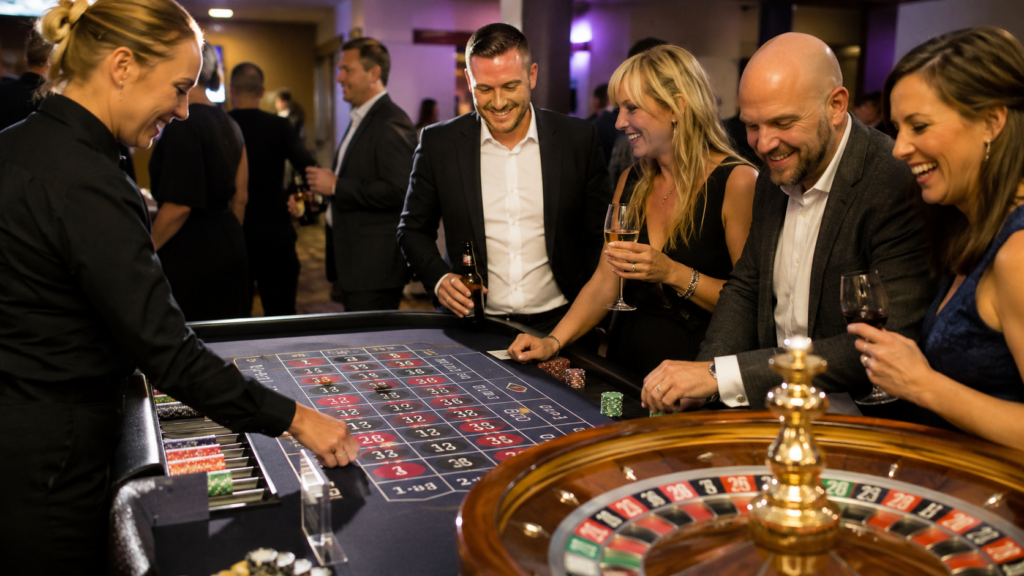
Large-scale race night or casino evening
For the evening side of a large group event, race nights and casino evenings both scale reliably to 500 and beyond. Casino evenings distribute 8 to 12 professional tables across the room. Race nights use one compere with a big screen and structured betting, so the format holds regardless of headcount. Both pair naturally with a multi-activity day earlier in the schedule.
Wave and rotation planning
At 100 people or more, the schedule is the event. Getting the wave plan right is worth more than any other single decision.
Pod sizing depends on the activity. For dragon boats, 20 people per boat sets the pod. For country pursuits or target sports, 12 to 15 works best. For drumming or a full-group session, no pod split is needed. When the day combines several activities, pod sizing has to work across all of them, so the smallest capacity activity usually sets the number.
Rotation length is the second variable. 45 to 60 minute rotations are the working range. Shorter than 45 rushes the transition. Longer than 60 loses energy in the back half of each session. Add 10 minutes buffer between rotations for travel and refreshments.
Staff ratios need to hold at every rotation. A common failure at scale is under-staffing the activities that pods will not spend as much time at, on the assumption that shorter engagement means less resource. It does not. Every rotation needs the same facilitator strength as if that were the only activity.
Venue and logistics realities at scale
Venue capacity numbers on a website rarely tell you what you need. A hotel that quotes 500 for a banquet may only handle 300 for a multi-activity day, because activity space, break-out zones, and gear storage all compete for the same floor plan.
Three practical filters help.
Does the venue have three or more distinct spaces? A large group event usually needs a main space for full-group moments, activity zones for pods, and a dedicated catering area that is not doubling as anything else.
Is there weather-proof indoor capacity for the full group? Outdoor activities at 300 people need a genuine indoor fallback for the full group, not just a marquee that seats half.
What is the parking, drop-off, and public transport picture for the size of group? A 400-person event where the coach can only fit 6 vehicles in the car park has a problem that starts at 8.30am.
Where the brief is a full-day large group event, we help clients shortlist venues alongside the activity plan rather than after it. The two decisions influence each other.
The client examples that make this real
Companies that book NewWave Events for large group team building include Google, Amazon, Sky, KPMG, IKEA, AstraZeneca, Samsung, Howdens, Berkeley Homes, and British Sugar. The formats above are the ones we run for those clients repeatedly. Not every large group event needs a bespoke build. Most of them need experienced planning applied to formats that already work at scale. See our full corporate team building events range for the wider picture.
We regularly deliver team building events for 100 to 500 people, and have run larger, up to full-company events for 1,000. Above 500 the planning becomes more like a multi-day operations exercise, and we would usually recommend a two-day format or a phased split of the group across two dates so the experience holds up for every attendee.
For 100 or more people, aim to have the brief agreed 12 to 16 weeks out. Venue capacity, activity supplier availability, and staff numbers all commit earlier for larger groups than smaller ones. Water-based and motorised activities for large groups need the longest lead time because of equipment allocation and safety planning.
Yes. Every large group we run includes attendees with different physical capabilities, and our rotation planning accounts for it. Mixed-ability formats include drumming, casino tables, quizzes, treasure hunts, and adapted target activities. We ask about accessibility at brief stage rather than the week before, so the plan reflects it from the start.
Every outdoor event at 100 or more people has a walked-through wet-weather plan that we agree with the client and venue in advance. It usually involves shifting outdoor activities to indoor equivalents run in parallel, rather than compressing everyone into one space. Because we brief this at planning stage, decisions on the day take minutes rather than hours.
Yes. We deliver nationwide from a Midlands base, with named location hubs including London, Bath, Bournemouth, Manchester, and Windsor. Large group corporate events run particularly well in countryside venues within 90 minutes of a major city, where activity space and indoor fallback are easier to secure than in central urban venues.
The quote covers activity delivery, all equipment, the facilitator team, safety documentation and insurance where relevant, and an event manager who owns the day from planning through to on-site delivery. Venue hire, catering, and any travel arrangements are usually costed separately so clients can flex those elements against internal budgets.