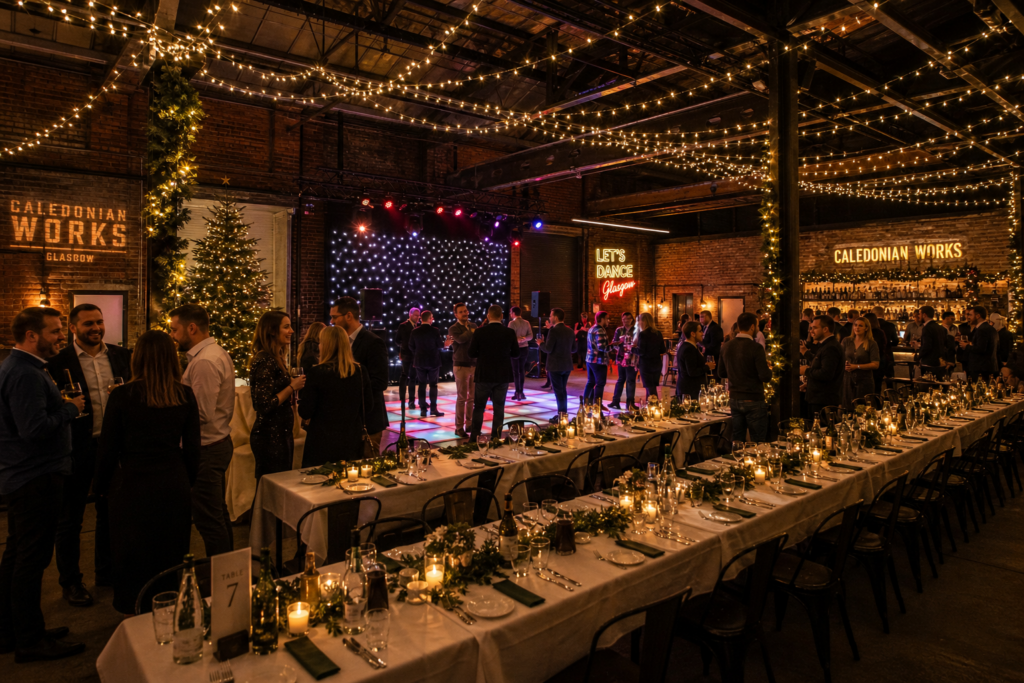
Evening team building activities give people a reason to stay, chat and join in after a full day of meetings. That matters when your team rarely shares the same room. In early 2025, 28% of working adults in Great Britain worked in hybrid arrangements, so a well-planned social can make face-to-face time feel worth it.
Choose evening team building activities around the occasion
The best format depends on what is already happening that evening. A 30-minute game between dinner courses needs a different pace from a 90-minute post-meeting social. Your group may be tired, dressed for an awards night or trying to catch a train home. Plan around that reality.
- For a conference dinner, use a 20 to 60-minute table quiz, puzzle race or interactive game show. People can take part without leaving their tables.
- For an awards night, run a short arrival game, prediction cards or audience voting before the presentations. A live finale works well after the awards.
- For an away day, choose a relaxed activity after the daytime sessions. Creative workshops, casino-style games and murder mystery formats suit a lower-energy crowd.
- For a post-meeting social, allow 60 to 90 minutes for a tasting workshop, escape-style puzzle or team game. It gives people time to settle before they head home.
Ideas that work around dinner service
Dinner gives you useful natural breaks, so you do not need to clear the room or ask everyone to stand up. A table challenge on arrival helps mixed departments start talking before the first course. Then a host can return between courses with a quick round, clue or vote.
A quiz works when you want something familiar and easy to join. An interactive game show gives a bigger group more energy, provided the room has suitable AV and sightlines. A murder mystery brings a clear story to the evening, while a collaborative charity build gives tables a shared task with a practical result.
Avoid treating drinks as the activity. Offer alcohol-free choices as standard, then make the team element a game, workshop or shared challenge. That way, people who do not drink are part of the night rather than watching it happen around them.
Keep it comfortable for the whole team
Evening events work better when people can take part in their own way. Choose seated options for guests with limited mobility and give each table several roles, such as clue reader, scorekeeper or spokesperson. Nobody should have to perform alone to contribute.
- Ask about dietary needs, faith requirements and non-alcoholic drinks before you confirm food-led activities.
- Check the venue has step-free access, accessible toilets and a quiet space for anyone who needs a break.
- Publish the finish time early, especially when colleagues need to arrange childcare or travel.
- Keep instructions short and explain the scoring before the activity starts.
- Use small teams so quieter people have room to speak without a spotlight on them.
A good evening social feels like a chance to spend time with colleagues, not another task added to the agenda.
Match the activity to the time you have
Short activities need a simple setup and a quick payoff. Use 15 to 20 minutes for table trivia, a photo mission or awards predictions. A 30 to 45-minute slot gives you room for a hosted game show or a themed team challenge.
For 60 to 90 minutes, you can run a more involved puzzle race, tasting session or creative workshop. A full evening can hold dinner entertainment and a later game, although two structured elements are often enough. People still need time for an unplanned conversation.
How to plan an evening social yourself
Start with a timetable, not an activity list. Confirm when guests arrive, when food is served, what time awards begin and when people must leave the venue. Then measure the usable slot, allowing time for guests to move, settle and hear the host.
- Count the guests and decide whether they will stay at tables, move around the room or split into smaller spaces.
- Ask the venue about room layout, sound limits, microphones, screens, power and any turnaround required after dinner.
- Check transport links and book an early, clear finish if travel home is difficult.
- Choose either a light competition or a collaborative format. Competitive games need fair team sizes and a simple prize plan.
- Brief your host, venue team and suppliers on the running order, dietary needs and who makes decisions on the night.
You can organise this yourself, but the chasing soon adds up when dinner, AV, entertainment and room timings all depend on each other. NewWave can find a venue for free and manage the venue, suppliers and entertainment end to end. You get to enjoy the build-up and be present with your team on the night.
Make the result easy to spot
An evening event will not fix engagement or workplace stress on its own. UK employee engagement was 10% in 2025, while 46% reported daily stress, so a social should sit alongside fair workloads, good management and regular contact. Still, it can give colleagues a simple opening to reconnect.
After the event, check attendance, how many people joined in and whether guests met someone new. Send a short pulse survey the next day while the details are fresh. Those answers will tell you whether to repeat the format, shorten it or try something calmer next time.
Frequently asked questions
The best choice fits the occasion and the energy in the room. Table quizzes, interactive game shows, puzzle races and murder mysteries work well after dinner, while creative workshops and tastings suit a longer social. Pick something people can join without needing specialist skills or a change of clothes.
Use a table based quiz, a hosted game show, casino-style games or a short mystery challenge. These formats work after dinner because guests can stay in the room and take part at a comfortable pace. Keep the running time clear so people can plan their journey home.
Large groups need an activity that people can see, hear and understand quickly. A live game show, team trivia, music challenge or charity build can work well when tables act as the teams. Make sure the venue has enough AV, clear sightlines and a host who can manage the room.
Small table teams, clear roles and seated activities tend to feel more comfortable than individual performances. Choose formats where people can contribute by solving clues, keeping score or sharing ideas with a few colleagues. Let guests step out for a break if they need to.
Quizzes, puzzles, creative sessions, charity challenges and food workshops all create a shared focus without alcohol. You can still offer drinks as part of the evening, including alcohol-free options, but they do not need to drive the format. This makes the social easier to include everyone in.
For a conference dinner, 20 to 45 minutes often works because food service and speeches break up the evening. A post-meeting social can run for 60 to 90 minutes when guests have more time. Build in a few minutes for instructions and a proper finish rather than filling every available gap.
Give each table a shared task on arrival, then bring the room together for short rounds between courses. Prediction cards, quiz questions, audience voting and a dessert-time reveal all work without disrupting service. Ask the venue about timings and noise limits before you confirm the plan.
Costs depend on guest numbers, the format, venue requirements, travel and AV. Using an already-booked dinner room can reduce the need for extra venue hire, although suppliers and timings still affect the final figure. Speak to the NewWave team for a bespoke quote based on your evening and group.