The Insights Discovery colour test is a workplace profiling tool that uses four colour energies to describe how people tend to communicate, make decisions and work with others. The four colours are Fiery Red, Sunshine Yellow, Earth Green and Cool Blue.
For HR teams and managers, the useful part is not putting people into neat boxes. It is giving colleagues a shared language for everyday work: how they prefer to receive information, what helps them contribute, what can frustrate them and how they may need to adapt in a mixed team.
In a team building or away day setting, the colours can be helpful when they are handled carefully. They should prompt better conversations, not become shorthand for judging someone’s ability, seniority or personality.
What the Insights Discovery colour test is
Insights Discovery is a psychometric profile based on the psychology of Carl Jung. The official product describes a person’s unique mix of four colour energies, rather than assigning them a single fixed type. If you are researching the official tool, start with the Insights Discovery product page.
Many people call it a colour test, but in workplace use it is better understood as a personal profile and feedback framework. Participants usually complete an evaluator, receive a profile and then discuss the results through a workshop or debrief.
The output can include strengths, possible blind spots, communication preferences, management style and value to the team. That is why it is often used in leadership development, team building, onboarding and away days.
What the four colour energies mean
The four colours describe preferences that can show up in working behaviour. A person may lead strongly with one colour, show a blend of two colours or draw on different colours depending on context.
- Fiery Red tends to be direct, purposeful, decisive and focused on outcomes. In a meeting, this may look like wanting clear decisions, pace and ownership.
- Sunshine Yellow tends to be sociable, enthusiastic, persuasive and open to possibilities. In a team session, this may look like energy, idea generation and a preference for interaction.
- Earth Green tends to be patient, supportive, encouraging and relationship aware. In a group setting, this may look like listening, checking how decisions affect people and keeping collaboration steady.
- Cool Blue tends to be precise, questioning, deliberate and evidence led. In a planning conversation, this may look like asking for detail, structure and time to think before committing.
These descriptions are most useful as conversation starters. They are not a full account of someone’s capability, values, culture, neurotype or lived experience.
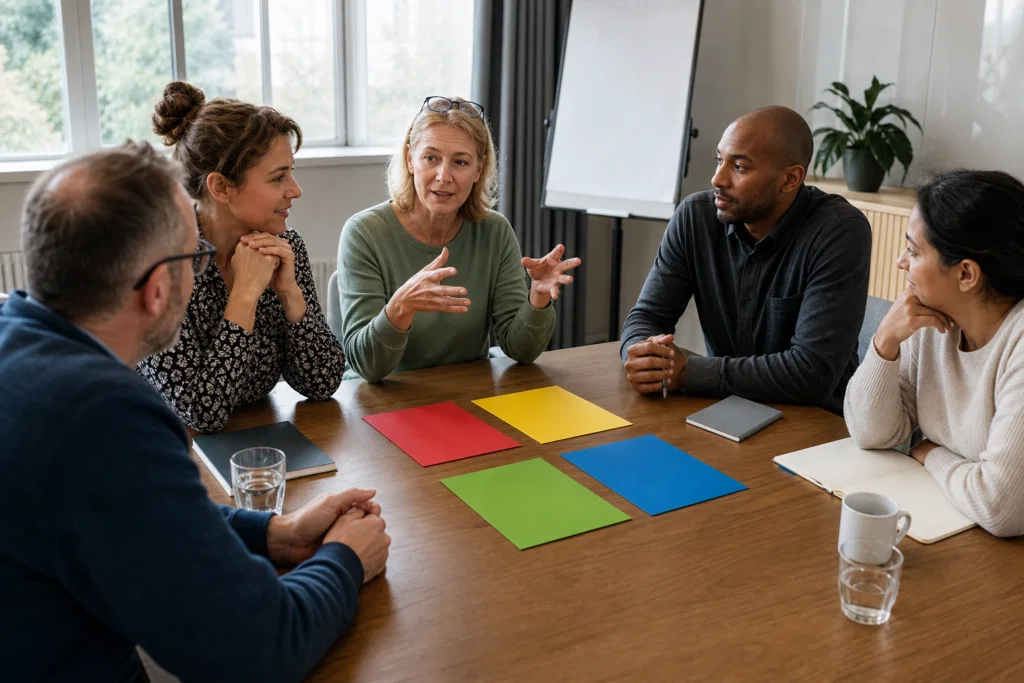
Make the colour discussion useful on the day
If your team already knows its colour profiles, NewWave Events can shape activities that help colleagues practise better communication rather than just talk about it.
How to read colour preferences without labelling people
The biggest mistake is saying someone is a colour. A better phrase is that someone may lead with or prefer a colour energy. That wording matters because it leaves room for context, development and choice.
For example, a colleague who leads with Cool Blue may still bring plenty of Sunshine Yellow energy when presenting to clients. A colleague with strong Earth Green preferences may still use Fiery Red energy when a deadline needs a firm decision.
HR teams should also be clear about the boundaries. Colour profiles are useful for development conversations, team understanding and communication practice. They should not be used as a shortcut for recruitment decisions, performance ratings or assumptions about who can lead.
Insights Discovery colour energies at a glance
Use this table as a practical workplace summary. It is deliberately simple, because the full value comes from discussion, facilitation and how people apply the learning afterwards.
| Colour energy | Typical workplace preference | What helps this person contribute | Watch-out for team events |
|---|---|---|---|
| Fiery Red | Pace, clarity, action and measurable outcomes. | Give a clear objective, decision points and ownership. | Do not let speed shut down useful challenge or quieter input. |
| Sunshine Yellow | Interaction, ideas, energy and visible involvement. | Build in discussion, creativity and chances to present. | Keep the session focused so ideas turn into decisions. |
| Earth Green | Trust, inclusion, listening and steady collaboration. | Create space for reflection, support and respectful conversation. | Avoid forcing conflict or competition without a clear purpose. |
| Cool Blue | Accuracy, structure, evidence and time to think. | Share instructions, data and criteria before asking for conclusions. | Do not rush analysis so much that quality and confidence drop. |
In practice, most people show a blend. A useful team session helps colleagues spot preferences, then practise adapting to each other.
Using colour profiles in team building and away days
Colour profiles work best in an away day when they are tied to real working situations. A session that stops at reading profiles can feel interesting on the day, then fade once people return to work.
A stronger format combines reflection with activity. For example, a team might discuss how each colour energy handles pressure, then move into a timed problem solving challenge where those patterns become visible. The facilitator can pause the activity and ask practical questions: who needed more detail, who pushed for a decision, who kept the group connected and who opened up new ideas?
This is where a well planned event helps. NewWave Events can build colour aware activities into wider corporate away days, team meetings and company events, so the profile work sits alongside collaboration, reward and shared experience.
Build the away day around real team behaviour
NewWave Events can combine profile reflection with problem solving, creative or outdoor challenges, so the learning is tied to how your team actually works.
Choosing activities for mixed colour groups
Most workplace groups include a mix of colour energies, so the activity design should not reward only one working style. A fast competitive challenge may suit some people, but others may need time to analyse, plan or check that everyone has been heard.
Good team building design gives people several routes to contribute. A business simulation can use Cool Blue planning, Fiery Red decision making, Sunshine Yellow pitching and Earth Green coordination. A creative challenge can still include structure and clear judging criteria. A physical or outdoor activity can include roles for strategy, observation, communication and support, not only speed.
If your group includes new starters, senior leaders, hybrid teams or colleagues who rarely work together, choose activities with clear instructions and low embarrassment risk. You can browse broader team building activities to match the objective before deciding how much profile content to include.
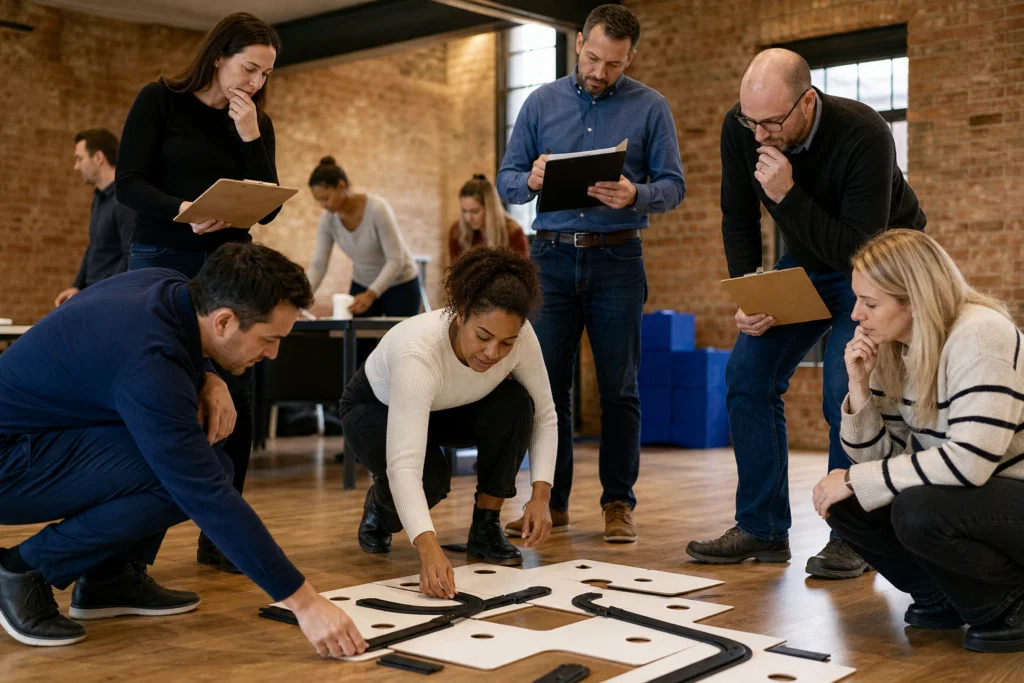
Practical tips for HR teams and managers
Before running a colour based session, decide what behaviour you want to improve. Better meetings, clearer handovers, healthier challenge and stronger cross team relationships all need slightly different event design.
Set the tone early. Tell participants that the colours are a language for preferences, not a ranking system. Make it clear that people can disagree with parts of their profile and that the most useful learning often comes from comparing the profile with real feedback from colleagues.
After the event, turn the discussion into simple team agreements. These might include how much pre reading is needed before decisions, how challenge should be raised, how quieter voices will be invited in and when a conversation needs to move from ideas to action. For more planning support, the guide to choosing team building venues can help you match the room, format and activity level to the outcome you want.
A better way to use colour profiles on an away day
The best sessions move from profile awareness to practical behaviour. This structure keeps the day useful for the team after the event ends.
Start with the work problem
Choose a clear focus, such as improving meetings, building trust after change or helping departments work together. The colour model then supports a real aim rather than becoming the whole event.
Brief the room carefully
Explain that the colours describe preferences and possible behaviours. Ask participants to stay curious, avoid nicknames and listen when colleagues describe what does or does not fit.
Use activities to make patterns visible
Pair discussion with a challenge, simulation or creative task. The facilitator can help the group notice how planning, pace, support and ideas showed up in the activity.
Agree small behaviour changes
End with team agreements people can use straight away. These might cover meeting preparation, decision rules, feedback style or how the team will include different voices.
Plan a team event that turns insight into action
If your team has used Insights Discovery, or you want an away day built around communication and collaboration, NewWave Events can help shape the right format. We design corporate team building activities and events across the UK, with the right mix of discussion, activity and follow-up.