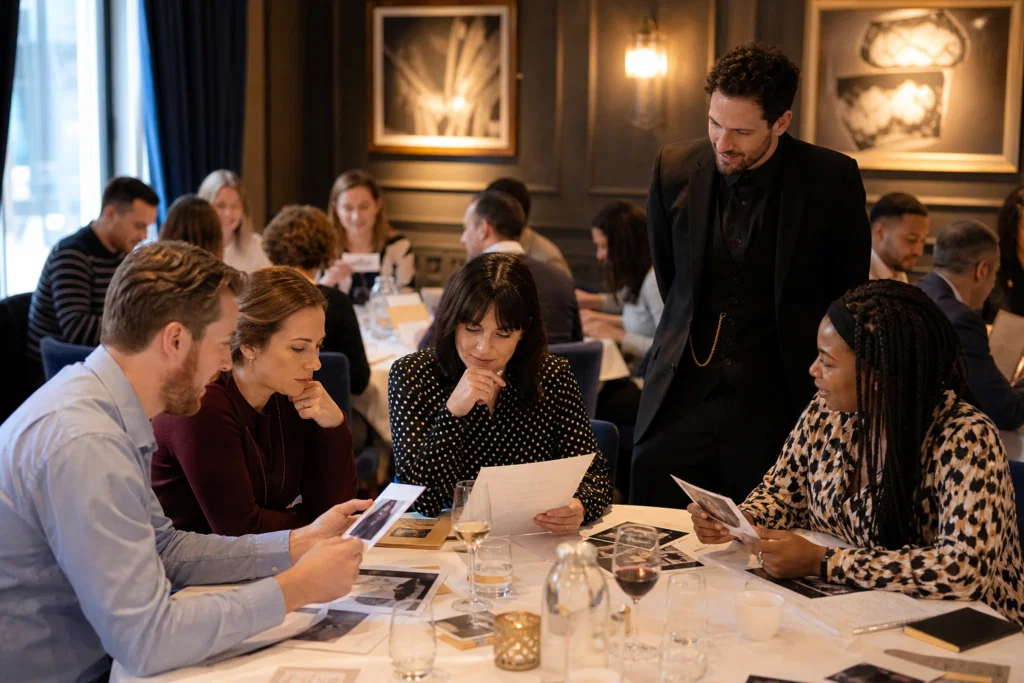
To host a murder mystery party at work, start with the reason for the event, choose a theme that fits your team, set a clear running order, brief guests properly and use a format that lets everyone take part without feeling put on the spot. The best workplace murder mysteries feel social, structured and easy to join, not awkward or overcomplicated.
For HR teams and team leaders, the main job is to balance entertainment with good event planning. That means thinking about venue layout, group size, accessibility, conduct, timings, alcohol, catering and how clues will move around the room. If you want a more polished experience, an event partner can provide the storyline, actors, props, facilitation and event management, so your team can focus on taking part.
Start with the workplace reason for the event
A murder mystery can work well as an evening social, an away day activity, a Christmas party feature, a client entertainment add-on or a reward event after a busy period. The format is flexible, but the planning choices should follow the reason for the event.
If the aim is team building, choose a collaborative format where small groups share clues, test theories and report back. If the aim is relaxed evening entertainment, a hosted dinner format may be better, with clues delivered between courses. If you are planning a larger company event, use a staged format with actors, table teams and clear facilitation so nobody has to guess what to do next.
Be honest about your audience. A team that enjoys performance, dressing up and character play may like assigned roles. A mixed office group may prefer an investigation-led format where guests stay as themselves and work through evidence. For more theme inspiration, NewWave Events has a guide to murder mystery themes for corporate events.
Decide early whether attendance is during work time, after hours or part of a wider away day. After-hours events can be harder for people with caring responsibilities, travel limits or personal commitments, so give plenty of notice and avoid making the activity feel compulsory if it sits outside normal hours.
Choose a format that suits your group size and confidence level
There are two broad ways to run a workplace murder mystery: self-hosted or professionally hosted. A self-hosted event can suit a small, informal team, but it puts more work on the organiser. You need a script, printed materials, clue timing, a host, a way to manage teams and someone confident enough to keep the room moving.
A professionally hosted event is usually the safer choice for corporate groups, especially when senior leaders, clients, multiple departments or a large guest list are involved. The host can explain the rules, keep energy in the room, prompt quieter tables, manage reveals and avoid the event drifting into confusion.
Think about confidence levels before assigning character parts. Some people enjoy playing a suspect, while others find public performance uncomfortable. A good workplace format gives people a role in the investigation without forcing them to act. Table teams, detective sheets, shared evidence packs and timed clue rounds give everyone a job to do.
For mixed teams, avoid themes that depend on in-jokes, hierarchy or embarrassing colleagues. The story can be dramatic, but the humour should not come at the expense of a real person in the room. Keep the victim, suspects and motives fictional.

Build the running order around food, clues and attention span
A murder mystery needs pace. If clues arrive too quickly, teams cannot discuss them. If the gaps are too long, the room turns into a normal dinner and the story loses momentum. A clear running order helps the host, venue and catering team work together.
For a dinner event, plan the first clue or scene soon after guests are seated. Use natural breaks between courses for witness statements, evidence drops or short interrogations. Save the final accusation round until after the main evidence has been shared and before people begin to leave the room for coffee, drinks or transport.
For an away day or afternoon activity, a 60 to 90 minute investigation often works well. The session can start with a briefing, move into team evidence review, include one or two live clue moments and finish with team accusations, scoring and a reveal. If the activity follows a long conference session, keep instructions short and visual.
Share a simple agenda with the venue or internal facilities team. Include arrival time, room access, catering service times, AV needs, any music or sound cues, actor arrival, storage space, guest registration and clear finish time. This is also the point to check first aid arrangements, fire exits, room capacity and the route people will use when moving between spaces.
Make the venue work for investigation, not just dining
The venue has a direct effect on how well the mystery runs. A room that looks good for dinner may still be difficult for clue sharing if tables are too far apart, lighting is poor or background noise is high. Visit the room if you can, or ask for a floor plan and recent photos.
For table-team formats, allow space for the host or actors to move between groups. Guests need enough table space for clue sheets, pens, drinks and plates. If evidence is displayed on boards or screens, check sightlines from the back of the room. If actors are using entrances, agree where they can wait without being seen too early.
Accessibility needs should be part of venue planning, not a late adjustment. Check step-free access, accessible toilets, hearing support, quieter break-out space, parking, public transport and seating options. Send joining instructions that make the evening feel predictable: location, dress code, timings, food arrangements and whether guests will be asked to perform.
If you are still choosing a space, NewWave Events has a practical guide to selecting team building venues. The best choice is rarely just the smartest room. It is the room that lets people hear, move, eat, talk and take part comfortably.
Plan inclusion, conduct and safety before invitations go out
A workplace murder mystery is still a work-related event. Set the tone clearly. Guests should know the activity is fictional, that participation is friendly and that normal workplace conduct standards apply. This matters even more if alcohol is available or external guests are present.
Give people enough information to opt in comfortably. Say whether there will be actors, costumes, loud moments, dark themes, assigned characters or audience participation. Avoid graphic crime content, sexualised storylines or themes that rely on stereotypes. If the event is near Halloween or Christmas, keep the tone playful rather than disturbing.
Use a sensible alcohol plan. That may mean drink tokens, good alcohol-free options, water on tables and food served early. If the event is outdoors or includes travel in hot weather, check weather advice, water access and shade. For larger or higher-risk events, review current HSE event safety guidance and agree who will handle incidents, evacuation, first aid and transport issues.
Think about neurodivergent colleagues and anyone who may find surprise interaction difficult. Send the structure in advance, allow people to observe before joining in and brief hosts not to pressure guests into public performance. Small changes like written clue sheets, clear instructions and quieter seating can make the event easier for more people.

Decide what to manage yourself and what to hand over
Before you commit to a DIY plan, list every task that must happen on the day. Someone needs to brief the room, distribute clues, watch timings, answer questions, liaise with catering, manage late arrivals, handle technical issues and keep the story on track. If the organiser is also a guest, they may spend more time fixing problems than enjoying the event.
A professional murder mystery package can take pressure off HR teams and office organisers. NewWave Events can help shape the format, theme, running order, venue requirements and facilitation, then deliver the activity as part of a wider team building day or evening event. That is useful when the event has a large guest list, senior stakeholders, a tight schedule or a venue with several moving parts.
Ask any supplier practical questions before booking: How many guests can the format support? How are teams formed? Are actors included? What props and printed materials are provided? What does the venue need to supply? How long is set-up? Can the tone be adjusted for your audience? What happens if guest numbers change?
If you are comparing murder mystery with other options, browse NewWave’s wider team building activities. A murder mystery is a strong choice when you want conversation, problem solving and shared entertainment in one indoor-friendly format.
A simple five-step plan
If you want the short version, use these five steps to move from idea to confirmed event.
Set the purpose
Decide whether the event is for team building, reward, social entertainment or a wider away day. This sets the tone and level of structure.
Pick the format
Choose between a hosted dinner mystery, table-team investigation, actor-led event or smaller DIY session.
Choose the venue
Check layout, accessibility, noise, catering flow, AV, arrival space and room access before confirming the booking.
Brief the guests
Send clear details on timing, dress code, food, participation level and what the activity involves.
Run the reveal
Use a confident host to collect accusations, announce the solution, recognise the winning team and close the activity cleanly.
Plan a murder mystery event your team can actually enjoy
NewWave Events can design and deliver a workplace murder mystery that fits your team size, venue, timings and wider event plan. If you want the storyline, facilitation, props and event management handled for you, speak to the team about your date, location and audience.