The best scavenger hunt ideas for adults help people solve problems, move around and compete lightly without putting anyone on the spot. For workplace teams, use short clues, clear boundaries, inclusive routes and simple scoring. Choose challenges that get people talking to colleagues they don’t work with every day.
A corporate scavenger hunt can work indoors, outdoors or across a venue with breakout rooms, gardens and local landmarks. That’s why it suits away days, where teams need to make decisions, divide tasks and keep an eye on time. Design it for adults, though. Use purposeful puzzles, observation, creativity and shared problem-solving rather than random running around.
Below are 25 clues and challenges to adapt for an office, conference venue, city centre, hotel or summer away day. You’ll also find practical guidance on timing, team sizes, safety and turning the activity into a well-run company event.
What makes a scavenger hunt work for adults
Adult teams respond best when the hunt has a clear reason behind it. That doesn’t mean every clue needs a formal learning objective. People should understand whether they’re practising communication, problem-solving, leadership and creativity, or simply reconnecting as a team.
Keep the brief simple. Teams should know the finish time, boundaries, answer process, scoring and anything that’s out of bounds. If the hunt is part of a wider away day, don’t let it drain energy before the next session. A corporate hunt often works best at 60 to 120 minutes, depending on the site size and group numbers.
For mixed workplace groups, use different clue types so the same people don’t dominate every task. Include logic puzzles, photo prompts, observation tasks and route choices. If every clue rewards speed, the hunt quickly becomes a race. If every clue rewards discussion, the pace can drop. Balance the two.
Give the hunt a proper finish, too. A final reveal, prize-giving or short debrief gives the activity shape and lets teams share the clever, funny or unexpected things they noticed. NewWave Events also covers broader team building activities for different team sizes and objectives.
25 clues and challenges you can adapt
Use these as a menu, not a fixed route. Pick 8 to 12 for a short office hunt, or 15 to 20 for a larger away day with optional bonus points. A full 25-task hunt needs enough space, time and facilitator support.
1. Solve a logic puzzle before moving on.
2. Find a location from an observation clue.
3. Photograph an agreed object or place.
4. Spot a detail that most people would walk past.
5. Choose between two possible routes.
6. Submit a team-only photo.
7. Find a named feature in a garden or venue.
8. Identify an architectural feature.
9. Locate a statue, bridge or piece of public art.
10. Solve a clue using a room name.
11. Use a noticeboard clue without entering a restricted area.
12. Find a feature in an approved breakout room.
13. Complete an observation task without filming people.
14. Select the best team member for a particular task.
15. Split the clue into smaller jobs and finish it together.
16. Submit evidence that meets the agreed quality rules.
17. Complete a creative photo prompt with the team only.
18. Make a decision under time pressure.
19. Find a clue within the agreed event boundaries.
20. Complete a task that rewards accuracy rather than speed.
21. Take an alternative route that suits the team.
22. Use a company value or event theme in a broad clue.
23. Return before the finish time.
24. Earn a creativity bonus for an original solution.
25. Earn a teamwork bonus by showing how the team shared the task.
Before using any photo or video task, tell teams not to film members of the public, confidential work material, readable badges, screens, number plates or anything containing personal data. If you’re unsure, ask for objects, locations or team-only photos instead.

How to choose clues for your venue
Let the venue shape the hunt. In an office, use meeting rooms, communal areas, noticeboards, stairwells and shared facilities. Avoid desks, lockers, HR areas and live workspaces where confidential material may be visible. In a hotel or conference venue, stick to approved spaces such as foyers, gardens, breakout rooms and private function areas.
For an outdoor hunt, walk the route before the event. Check road crossings, uneven surfaces, lighting, mobile signal, toilets, shelter and wet-weather options. Public spaces can add energy, but they need tighter boundaries. Tell teams whether they may enter shops, speak to venue staff, use public transport or leave the site.
Indoor routes suit winter events, evening sessions, city-centre offices and groups with accessibility needs. Outdoor routes suit summer away days, multi-activity events and larger groups that need more space. If you’re weighing up the setting, this guide to indoor vs outdoor team building activities can help with the early decision.
For a company away day, connect some clues to the setting. A country house venue might use gardens, historic features and room names. A city route might use architecture, statues, bridges or public art. A conference venue might use departments, company values or event themes. Keep references broad enough for new starters and cross-functional teams.
Timing, teams and scoring
Teams of four to six usually work well. Smaller teams can struggle to divide tasks, while larger teams make it easier for quieter people to disappear. If senior leaders are taking part, spread them across teams rather than grouping them together. Give each team a named captain, then rotate who reads clues or submits answers.
Scoring should reward more than speed. Try 10 points for a correct clue, 5 bonus points for creativity and 5 bonus points for teamwork or evidence quality. Penalise late returns, but keep it proportionate. A small deduction per minute is usually enough to keep people moving without creating panic.
Avoid tasks that rely on embarrassment, drinking, physical dares or approaching strangers. They can exclude people quickly. Better challenges come from solving a tricky clue under time pressure, choosing between two routes or deciding which team member suits a task.
Build in a buffer at the end. If the hunt is due to finish at 3pm, design the route so most teams return by 2.50pm. You’ll then have time to check scores, display photos if appropriate and move people into the next part of the agenda.
Safety, accessibility and workplace considerations
A scavenger hunt still needs sensible event planning. For outdoor or public-space routes, prepare a route plan, risk assessment, contact number, wet-weather option and clear emergency process. If you’re using council land, parks or public spaces, the local authority may ask for an event management plan, risk assessment and public liability insurance details. Requirements vary by location, so check early.
Build accessibility in from the start. Offer step-free routes where possible, avoid clues that rely only on sight or hearing, provide clear written instructions and allow extra time or alternative tasks where needed. Employers must consider reasonable adjustments for disabled employees. Ask practical access questions during planning, not in front of the group on the day.
Think about psychological safety, too. Some adults dislike role play, public performance or being photographed. Give people choices, so they can contribute through navigation, puzzle-solving, timekeeping, evidence checking or creative ideas. A good hunt lets different strengths show without forcing anyone into a performance.
Set firm rules for photo submissions. Use team-only photos and avoid close-ups of bystanders, confidential documents or screens. Agree how long the organiser will keep event images. If photos may be used after the event, tell participants beforehand and give them a clear way to opt out.
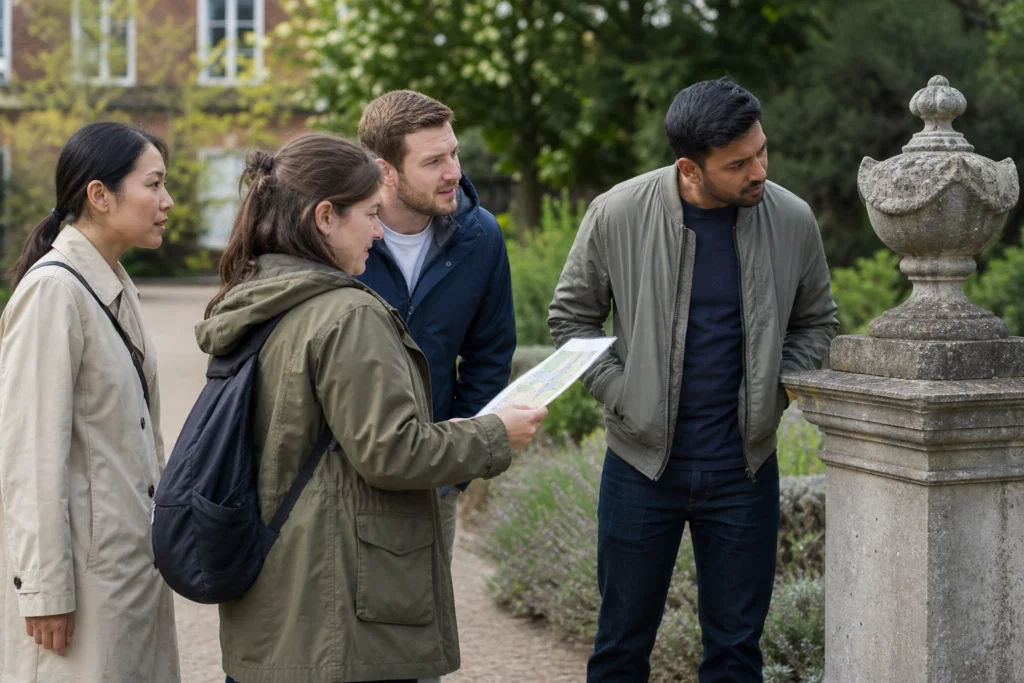
How NewWave Events can shape your scavenger hunt
A DIY scavenger hunt can work for small teams, but larger corporate groups usually benefit from professional design and facilitation. The difference isn’t only better clues. It includes route planning, pacing, team allocation, scoring, the event briefing, equipment and contingency planning.
NewWave Events designs and delivers team building activities and corporate events across the UK. Our formats can fit into away days, summer parties, conferences and multi-activity programmes. A scavenger hunt can run as a stand-alone challenge, a city or venue-based route, or one part of a wider team event.
If your group includes multiple departments, new starters, remote workers or senior leaders, a facilitated hunt can remove the awkwardness of self-organised team building. The brief is clearer, scoring stays impartial and the event team can adapt the activity if weather, venue access or timings change.
If you’re planning a wider programme, the guide to corporate away day ideas for UK teams may help you decide where a scavenger hunt fits. It can work as an energiser after lunch, a morning icebreaker, a competitive finale or a route-based way to explore a venue.
A simple scavenger hunt format for a team day
Use this five-step structure if you’re building a scavenger hunt into an away day, conference or company social.
Set the purpose
Decide whether the hunt is mainly social, competitive, creative or linked to a team objective. That choice shapes the clue style and scoring.
Brief the teams
Explain the boundaries, finish time, evidence rules, safety points and how to contact the event lead. Keep the brief short and write it down.
Run the hunt
Release teams at staggered times if space is tight. Keep facilitators visible at key points and track whether any team is running late.
Score fairly
Use a clear points system and keep bonus points limited. Reward accuracy, teamwork and creativity, not only the team that runs fastest.
Finish with a debrief
Announce the results, share appropriate highlights and connect the hunt back to the day’s purpose before people move on.
Plan a scavenger hunt that fits your team
If you want a scavenger hunt designed around your venue, timings and team objectives, NewWave Events can plan and deliver it as part of a corporate away day, conference or team building programme.
Share your group size, location and event date, and the team can suggest a format that suits your people rather than a generic set of clues.