Office party games work best when they give colleagues a shared reason to talk, laugh and take part without putting anyone under pressure. For UK companies, the strongest options are simple to explain, inclusive, easy to run in a real venue and suitable for a work setting.
This guide covers 25 office party games for Christmas parties, summer socials, away days, team celebrations and informal office events, plus practical planning advice for HR teams and managers.
What makes office party games work
Good office party games give people something to do together without making the room feel forced. The best options are quick to explain, easy to join at different confidence levels and flexible enough for mixed teams.
That matters because work social events are common, but not everyone arrives with the same appetite for organised fun. In the CIPD’s 2026 reward survey, Christmas or other free or subsidised work social events were among the common benefits offered by UK organisations. A party game can help those events feel less dependent on loud music, alcohol or existing friendship groups.
For HR teams and team leaders, the aim is simple: create shared moments that feel safe, sociable and worth leaving the desk for. Games should support the celebration, not dominate it. If you are planning a bigger away day or company event, the same principles apply to broader team building activities: match the activity to the people, the venue and the purpose.
Need games that suit the whole room?
If you are choosing games for a mixed office group, NewWave Events can help you shape the format around numbers, venue space and the tone of the celebration.
Office party games for different celebrations
Use this list as a menu rather than a running order. A 45-minute drinks reception might need three light games. A half-day celebration can use several rounds, with quieter options between high-energy moments.
- Office bingo. Give each guest a bingo card with work-safe prompts such as “has worked in another department”, “owns a dog” or “has been with the company for more than five years”. It gets people moving and talking without asking them to perform.
- Desk object detective. Ask teams to identify mystery objects photographed in close-up from around the office or event space. Keep clues fair and avoid anything personal, confidential or embarrassing.
- Company quiz. Mix general knowledge with light company facts, such as office locations, milestone dates or charity totals. Avoid questions that only senior staff would know.
- Name that tune. Play short instrumental clips or a few seconds of familiar tracks, then ask teams to write down the title and artist. Keep the playlist varied so it does not favour one age group.
- Human scavenger hunt. Set conversation prompts rather than object collecting tasks. For example, “find someone who speaks more than one language” or “find someone who has completed a charity challenge”.
- Speed charades. Teams act out simple phrases, films or office-safe scenarios against the clock. Keep rounds short and allow people to pass if they prefer not to act.
- Pictionary relay. One person draws while the team guesses, then the next person takes over. Use a flipchart or tablet and choose prompts that do not need artistic skill.
- Two truths and a work myth. Each person writes two true facts and one false one. This works best in smaller groups where people have time to hear the answers.
- Guess the baby photo. Ask for voluntary submissions well in advance and make clear that participation is optional. It can be warm and funny, but only if nobody is pressured.
- Silent line-up. Ask teams to line up by birthday month, length of service or commute time without speaking. It is quick, visual and useful as a reset between seated activities.
- Office awards with a twist. Create positive categories such as “best problem solver” or “calmest under pressure”. Avoid joke awards about lateness, appearance, drinking or personality traits.
- Who said it? Use voluntary, harmless quotes from team chats, meeting notes or company values workshops, with names removed. Keep it light and never use complaints or sensitive comments.
- Minute-to-win-it challenges. Run short physical tasks such as cup stacking, ping-pong bounce or paper plane distance. Check the space first and offer seated alternatives.
- Pub quiz picture round. Use images of landmarks, album covers, food, films or famous inventions. Picture rounds suit noisy rooms because teams can keep playing while the event continues around them.
- Guess the intro. Similar to name that tune, but based only on the opening seconds. It works well as a stage game if the facilitator keeps the pace tight.
- Emoji film titles. Show emoji sequences that represent well-known films, songs or phrases. It is accessible, low pressure and easy to brand around a seasonal theme.
- Build the playlist. Each table submits one song for a shared party playlist, then teams guess which table chose which song. Set ground rules on lyrics and volume if the event is in the office.
- Balloon pop questions. Put a light prompt or challenge inside each balloon and let teams choose one at a time. Use this only where noise and latex are suitable for the group and venue.
- Festive wrapping relay. Teams wrap awkwardly shaped objects against the clock. This is ideal for December parties, but it also works with themed props for launches or summer events.
- Casino-style fun money games. Set up roulette or blackjack-style tables with play money and no cash gambling. A professional host helps guests join without needing to know the rules.
- Murder mystery mini-round. Give guests character clues, witness statements and a short deadline to solve the case. It suits evening parties where people want a shared storyline rather than a loud icebreaker.
- Race night. Guests cheer on pre-recorded races and back their choices with tokens or charity points. It creates a lively atmosphere without asking individuals to be the centre of attention.
- Team photo challenge. Set creative but safe photo prompts around the venue, such as “best album cover pose” or “most convincing celebration shot”. Avoid sharing images publicly unless you have permission.
- Office Olympics. Run light events such as chair-free relay puzzles, beanbag target throws and reaction tests. Keep physical tasks optional and suitable for the venue.
- Charity points challenge. Teams earn points through small games, with the winning team’s charity receiving a donation. It gives the competition a purpose and can suit end-of-year celebrations.
How to choose the right games for your venue and group size
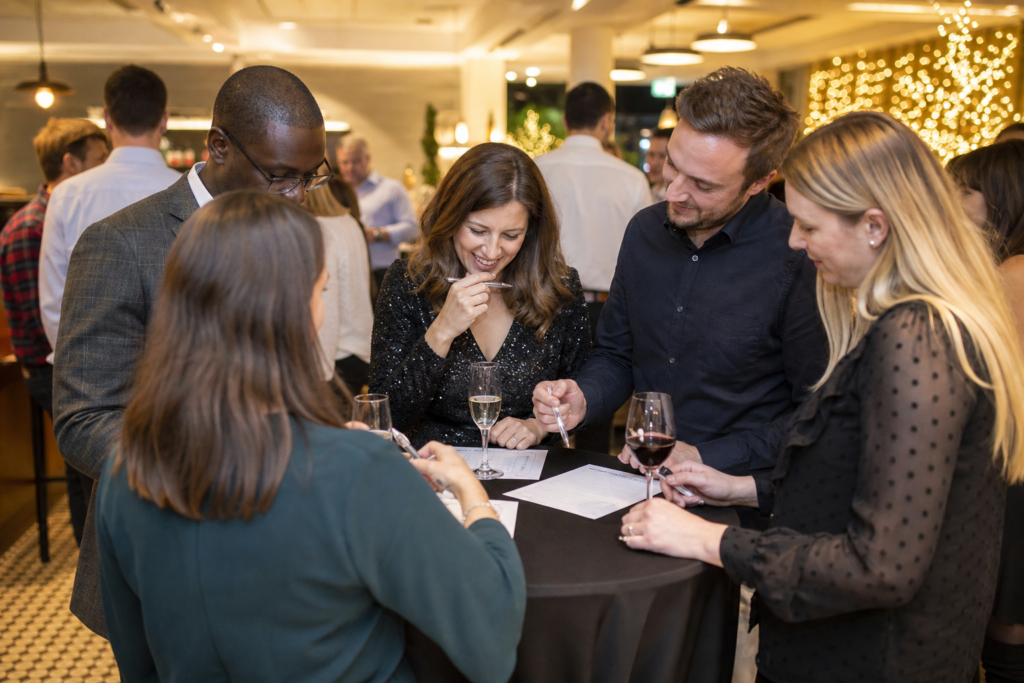
Start with the room, not the game. A busy bar area suits short table challenges, picture rounds and hosted casino-style tables. A conference room can handle quizzes, murder mystery clues and structured team rounds. A larger venue gives you more room for relays, activity stations and movement-based games.
Group size also changes the choice. For fewer than 20 people, conversation-led games work well because everyone can be heard. For 50 to 150 guests, split the room into teams and use a host, screen or rotation format. For larger groups, avoid games where one person at a time has to perform while everyone else waits.
Think about energy across the event. A party that starts straight after work usually needs a gentle opener. Once people have eaten and settled, you can introduce livelier rounds. If the event includes speeches, awards or a meal, games should sit between those moments rather than fight for attention.
If your celebration is seasonal, choose games that fit the tone rather than forcing novelty props into the plan. A Christmas event might use festive wrapping, music rounds and awards. A summer party could use outdoor activity stations if the venue allows. For broader planning, NewWave’s guide to corporate event ideas can help you think beyond a single room format.
Keep games inclusive, safe and work-appropriate
Office party games should make people feel included, not exposed. Keep participation flexible where you can. Team-based play is usually safer than putting individuals on the spot, especially in mixed groups with new starters, senior leaders and people who do not know each other well.
Plan for different access needs before the day. That may mean providing seated versions of physical games, keeping instructions clear, avoiding flashing lights or sudden loud noises, and offering quieter spaces where people can step away. If a game relies on hearing, movement or quick reading, have an alternative way to contribute.
Work social events still sit within the wider responsibilities of the employer. Recent Acas guidance on workplace events and conduct highlights the need to plan ahead and set expectations for behaviour, time off, sickness absence and alcohol where relevant. Harassment responsibilities also apply beyond the desk, and Acas guidance on harassment law changes specifically recognises conferences and events as work-related settings involving third parties.
In practice, this means avoiding drinking games, humiliating forfeits, overly personal questions and awards that make fun of someone’s appearance, age, accent, relationship status or working style. The safest humour is shared, not targeted.
Make the running order easier to manage
A hosted format can keep timings, rules and scoring under control, especially when your event includes food, speeches or multiple departments.
How to run the games on the day
A good running order gives people enough structure to join in, but not so much that the event feels like another meeting. Build in space for arrivals, food, informal conversation and comfort breaks. Games should have clear start and finish points, particularly if people will be joining late after shift patterns or travel.
For most office parties, one lead host is better than several competing voices. The host explains the rules, keeps score, deals with ties and reads the room. If the atmosphere dips, they can move on. If a game lands well, they can add a bonus round.
Brief managers before the event. They should know whether attendance is expected or optional, what behaviour standards apply, who to contact if there is a concern, and how alcohol is being managed. None of this needs to be heavy-handed on the night, but it helps prevent confusion.
Equipment should be simple and tested. Print spare answer sheets, charge microphones, check the screen, tape down cables and confirm whether the venue permits balloons, props, music or movement-based games. Small details are often what make a party feel organised.

When to bring in a professional events team
Office party games are easiest to plan when you start with the outcome. Do you want people to mix across departments, celebrate a company milestone, thank staff after a busy period or add energy to a formal dinner? Each aim points to a different mix of games.
NewWave Events designs and delivers corporate events and team activities across the UK, including hosted party games, race nights, casino-style entertainment, murder mystery formats and bespoke team challenges. If you want a celebration that feels relaxed but properly managed, the planning should cover the games, timings, facilitation, venue fit and guest experience together.
For office-based teams, games can sit within a short afternoon celebration, an evening party or a full away day. If you are still deciding between indoor and outdoor formats, this guide to indoor vs outdoor team building activities can help you narrow the options before you brief a supplier.
The practical next step is to choose the style of celebration, estimate guest numbers and decide how much structure the group will welcome. From there, an experienced events team can shape the activities around the people in the room.
A simple way to plan office party games
You do not need a complicated format to make office party games land well. A clear planning sequence helps you choose activities that suit the group and the setting.
Set the purpose
Decide whether the event is mainly a thank-you celebration, a mixer, a seasonal party or part of a wider team day. The purpose affects the game choice.
Map the practical details
Check guest numbers, room layout, timings, noise limits, accessibility needs and whether people will be seated, standing or moving between spaces.
Build the game mix
Choose a blend of low-pressure starters, team rounds and one or two higher-energy moments. Avoid asking every guest to perform individually.
Cover duty of care
Confirm behaviour expectations, alcohol arrangements, reporting routes, first aid, access needs and any venue restrictions before the event starts.
Run it with pace
Use a confident host, clear instructions and tested equipment. Keep rounds short and be ready to adapt if the room needs more time to talk.
Plan office party games people will actually join in with
Planning an office party, away day or team celebration? NewWave Events can help you choose and deliver office party games that fit your group, venue and timings, from light hosted games to full corporate event formats.