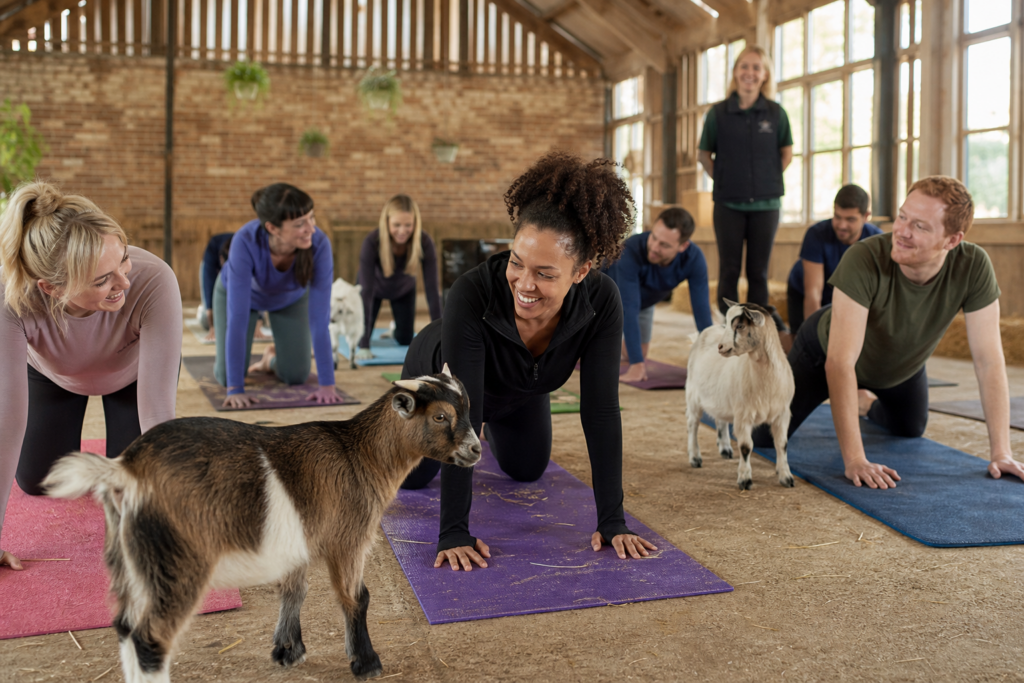
Yoga with animals can give your team a proper pause after a busy spell. You get a light, sociable session with plenty to laugh about, without asking anyone to be sporty or experienced. For a company event, goat yoga works best when the animals’ welfare comes first and every person has a genuine choice to join in.
What yoga with animals actually is
Yoga with animals is a broad term for gentle classes where animals share the space. Goat yoga is the format most people picture, with goats moving around a supervised session. Puppy yoga, kitten or cat yoga, dog owner yoga, often called doga, and some farm based formats also exist.
Expect a beginner friendly instructor, simple poses and a less focused practice than a normal yoga class. Animals may approach a mat, wander away or settle with a handler. That unpredictability is part of the appeal, so book it as a fun wellness break rather than a serious yoga workshop.
What happens at a goat yoga session
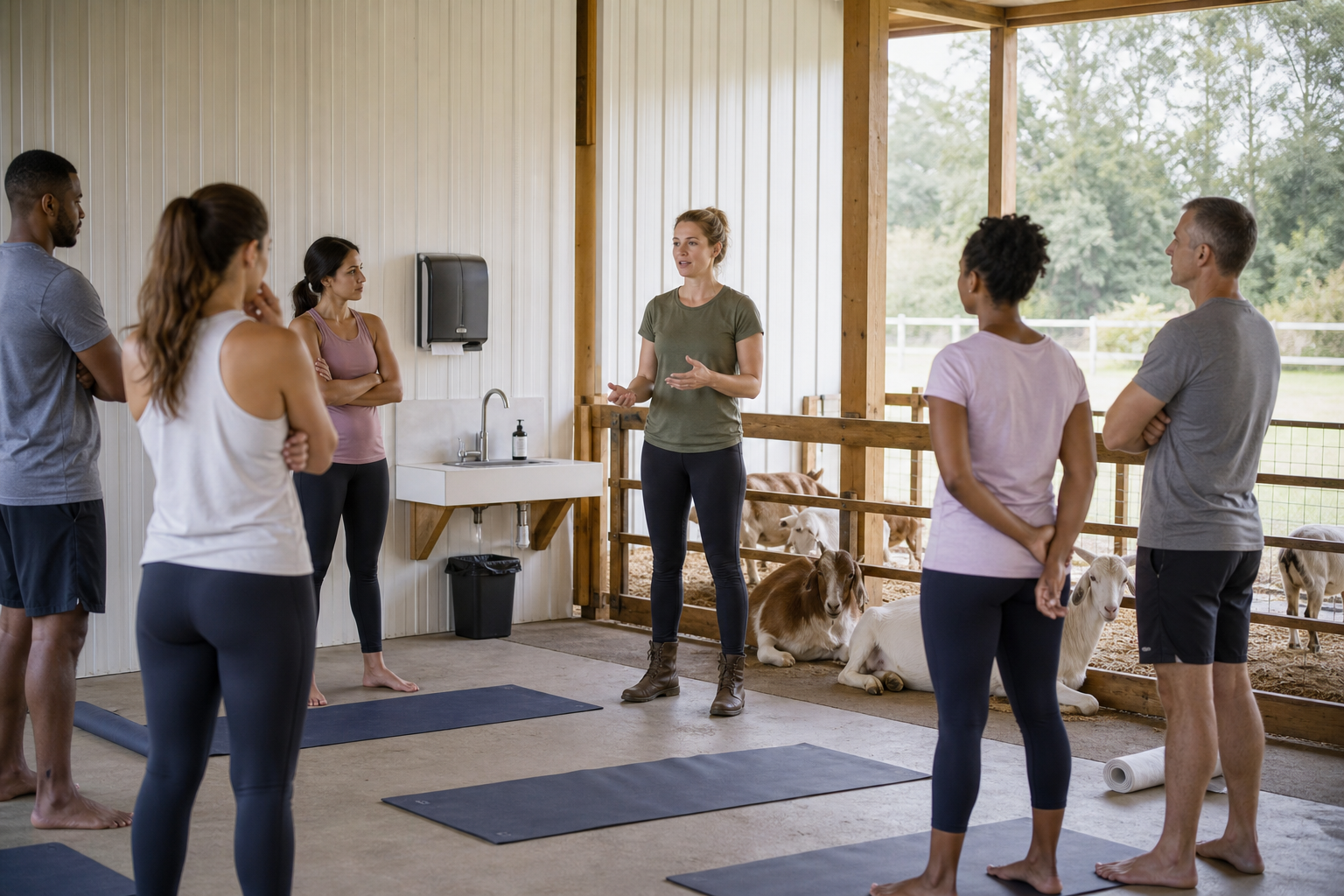
A responsible session starts with a short briefing. Your team should hear how to move around the animals, when to give them space and why nobody should pick one up or encourage it onto a person. Then the instructor leads gentle stretches, balance work and breathing while a trained handler watches the goats.
The goats need a clear route away from people, water and a quiet rest area. They should be free to opt out. If a goat avoids contact, the group leaves it alone. A good provider will never turn a reluctant animal into the entertainment.
- Wear comfortable clothes that let you stretch, plus layers if the session is outdoors or in a barn.
- Ask whether mats are supplied. If you bring your own, check the cleaning arrangements afterwards.
- Use handwashing facilities before and after contact, and keep food away from the session space.
- Tell the organiser early about allergies, pregnancy or a health condition that affects animal contact.
- Offer a separate, enjoyable option for anyone who does not want to take part.
When goat yoga suits a company event
Goat yoga suits a small group that wants a low pressure shared activity. It can work well as a daytime reward, a quieter part of an away day or an optional addition beside lunch. The best groups arrive open to a little silliness and do not mind that the goats set part of the pace.
It will not suit every brief. Choose something else if you need a high energy team challenge, have a large group to move through quickly or cannot offer a meaningful alternative to people with allergies, phobias, cultural preferences or mobility needs. Inclusion means nobody has to explain why they are sitting it out.
Dogs are familiar to many people, with an estimated 11.1 million pet dogs in the UK in 2025. Even so, familiarity is not consent. A social media friendly photo tells you nothing about whether an animal is comfortable in a busy class.
Goat yoga, puppy yoga and other animal formats
Goat yoga and puppy yoga may look similar online, but the welfare questions differ. Goats are herd animals with specific needs around handling, feed, grazing, housing and health. They need calm management, room to retreat and no pressure to climb or jump on people when they show avoidance.
Puppy and kitten sessions need extra caution. UK animal welfare bodies and a parliamentary committee have raised concerns about stress, hygiene, disease control and repeated exposure to groups of strangers. Claims that puppy yoga socialises puppies are disputed because good socialisation needs predictable, structured experiences rather than constant uncontrolled contact.
Dog owner yoga is often a more straightforward option because people attend with their own adult dog. A rescue centre fundraiser with optional contact, or a farm visit where guests do not handle animals, may also fit a team that wants an animal connection with less pressure on the animals.
How to check an animal yoga provider properly
You can book this yourself, but ask direct questions before you pay a deposit. In England, keeping or training animals for entertainment or exhibition can need a local authority licence. Ask the provider for their council licence status and check the relevant council requirements for the venue and activity.
- Where do the animals come from, and what is their long term home or retirement plan?
- What are the animals’ ages, health checks and vaccination protocols?
- Who is the qualified handler on site, and how many animals do they supervise?
- How long is each session, and where can animals rest away from guests?
- Can an animal leave the session at any point, without anyone coaxing it back?
- What is the plan for waste, handwashing, mat cleaning and allergy information?
- Will the provider avoid on the day sales pressure or impulse adoption decisions?
This is where arranging it can become time consuming. You are checking welfare policies, venue rules, insurance, handlers and the practical details that can get missed until the day. NewWave manages venues, suppliers and entertainment end to end, so you can focus on giving your team a day they will enjoy rather than chasing every answer.
Make animal contact optional
Tell your team beforehand that animal contact is optional. Set up a quiet seating area, a separate refreshment break or another low key activity nearby. People who would rather watch, chat or skip the session should still feel included in the event.
Keep the welfare brief simple and clear on the day. Hands off unless an animal approaches, wash hands afterwards and give it space when it walks away. That approach makes goat yoga lighter for your team and kinder to the animals involved.
Frequently asked questions
Yoga with animals is a gentle yoga session where supervised animals share the space. Goat yoga, puppy yoga, cat or kitten yoga, and dog owner yoga are common versions. The animal interaction is usually part of the fun, so it is less like a quiet studio class.
Goat yoga pairs a beginner friendly yoga class with goats that can move freely around the session under a handler’s supervision. They may approach people or choose to rest elsewhere. A responsible provider gives goats water, rest space and the freedom to leave the group.
Yes, it is usually designed for beginners and the yoga tends to be gentle. Your team does not need to be flexible or know pose names. Check the venue access and the class format first if someone has a mobility concern or injury.
It can raise serious welfare concerns when puppies face long sessions, repeated handling, poor hygiene or no chance to rest. Animal welfare groups have challenged the idea that busy classes automatically socialise puppies. Ask detailed questions about age, session limits, handler supervision and withdrawal space before considering it.
There is no single UK wide law that bans puppy yoga. In England, activities involving animals for entertainment or exhibition may need a local authority licence, and animal welfare duties still apply. Check the provider’s licence status with the relevant council and ask how they meet welfare conditions.
They should not be. Ethical sessions allow animals to move away, rest and refuse contact at any time. If a provider encourages guests to chase, hold or repeatedly lure animals back into the class, it is not a good fit.
Wear clothes you can stretch in and bring layers if the venue is cool or outdoors. Some providers supply mats, while others ask guests to bring their own, so confirm this before the event. You should also ask what cleaning facilities are available afterwards.
People with animal allergies may react to fur, dander, hay or dust at a farm venue. Give attendees the details in advance and provide a non animal alternative without making anyone justify their choice. Someone with a severe allergy should seek medical advice before attending.