Sports team building activities work best when the competition feels energetic, fair and easy to join. For most UK workplace groups, that means choosing activities with clear rules, short rounds, mixed teams and enough variety for people who are sporty, cautious, new to the company or simply there to enjoy the day.
This guide gives HR teams and team leaders 12 competitive sports ideas, plus practical advice on format, inclusion, safety and event flow. The aim is not to find the fittest team in the business. It is to create a shared experience where people communicate, encourage each other and leave with better working relationships.
What makes sports team building work for company groups?
The best sports team building activities feel competitive without becoming intimidating. A good event gives people a reason to talk, plan, cheer and recover from small mistakes together. It should reward teamwork as much as speed, strength or accuracy.
For corporate groups, the format matters as much as the activity. Short games keep energy high. Rotating teams help departments mix. Scoring should be visible enough to create interest, but not so serious that it puts quieter colleagues off taking part.
Sports activities are especially useful for away days, summer parties, company fun days and leadership events because they bring people out of normal office roles. A senior manager may be brilliant at archery but hopeless in a relay. A new starter might become the best tactician in a dodgeball round. Those small role reversals are often where the value sits.
If you are planning a wider event, it can help to compare sports with other formats on the main team building activities page before you settle on the final mix.
12 competitive sports team building activities
Use these ideas as a menu rather than a fixed programme. For a half-day event, three to five activities is usually enough. For a full company fun day, you can run several zones at once and rotate teams through each one.
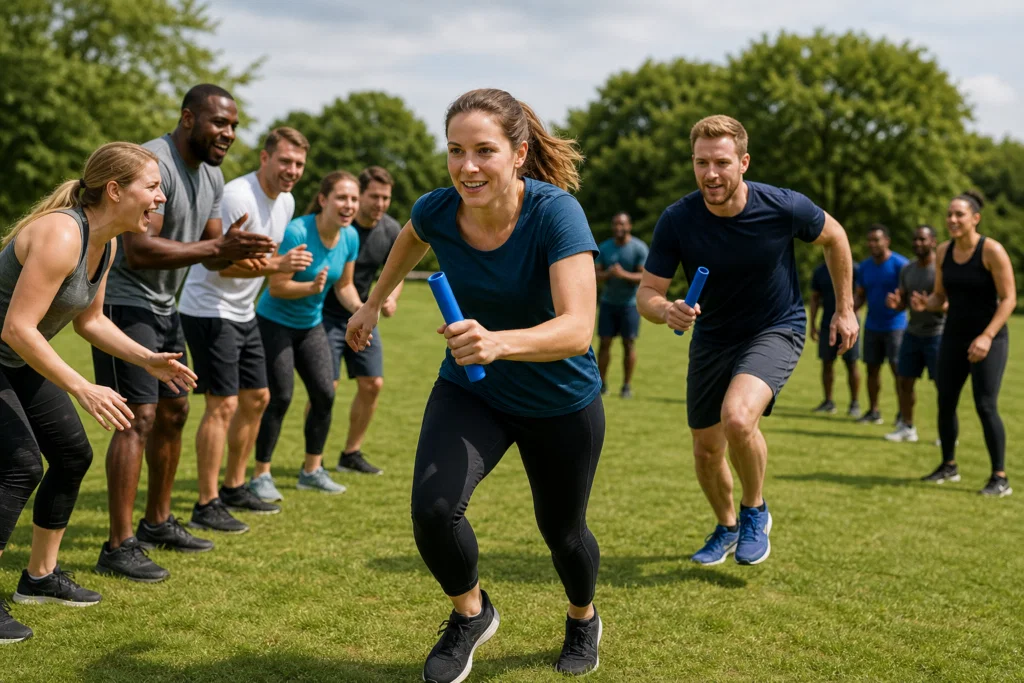
- Company sports day relays. Classic relay races still work because the rules are simple and the crowd can follow what is happening. Sack races, egg and spoon, space hopper relays and baton runs can be adjusted for different fitness levels. Keep distances short and include at least one skill-based leg so the fastest runners do not decide every result.
- Rounders tournament. Rounders suits mixed groups because it combines batting, fielding, quick decisions and plenty of team chat. Run short innings, use soft balls where needed and rotate fielding positions so everyone has a role. It is a strong choice for summer away days and outdoor venues with open space.
- Dodgeball challenge. Dodgeball brings fast energy without needing advanced sporting skill. Use soft foam balls, clear safety rules and short rounds. Add bonus points for teamwork, such as successful catches or bringing eliminated players back in, so the game rewards awareness as well as throwing.
- Five-a-side football. Football is familiar to many teams, but it needs careful framing so it does not become dominated by confident players. Smaller pitches, mixed teams, time-limited matches and rule variations, such as everyone touching the ball before a goal counts, make the activity more inclusive.
- Tag rugby or touch rugby. This gives teams the movement and tactics of rugby without tackling. It encourages passing, spacing and communication. It works well when an instructor explains the rules clearly and starts with a short practice round before scoring begins.
- Inflatable obstacle relay. Inflatable runs add spectacle and humour to a company sports day. Teams can compete on time, but the activity should be supervised and paced carefully so people are not pushed beyond what feels comfortable. It is best used as one station within a varied outdoor event.
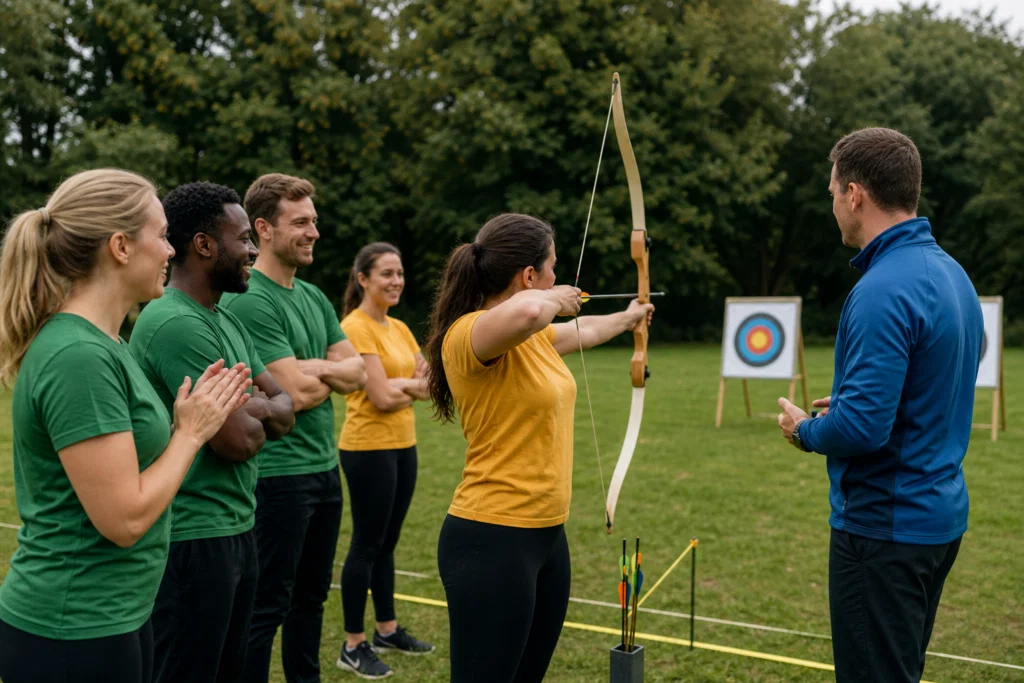
- Archery competition. Archery is useful when you want a calmer competitive activity that still feels like a sport. It rewards focus, listening and technique rather than fitness. Team scoring can combine individual points with group targets, which helps beginners contribute.
- Football darts. Football darts uses a large inflatable dartboard and Velcro footballs, so it has the look of sport with the accessibility of a target game. It is easy for spectators to understand, works in quick rounds and can be used as a lower-intensity station between more physical activities.
- Pedal kart grand prix. Pedal karts give teams a race format without relying on driving licences or specialist experience. Build in pit-stop changes, team strategy and safety briefings. The best versions use short heats so everyone gets a turn without long waiting periods.
- Volleyball or beach-style volleyball. Volleyball encourages quick support and communication because players need to cover each other. It can be adapted with a softer ball, larger teams and relaxed serving rules. It works outdoors in summer or indoors in suitable sports halls.
- Dragon boat racing. Dragon boat racing is a strong option for teams that want something memorable and water-based. Success depends on rhythm, listening and coordinated effort rather than individual fitness alone. It needs a suitable venue, safety cover and clear participant information in advance.
- Multi-sport team Olympics. A mini Olympics lets you combine short challenges such as javelin-style throwing, standing long jump, target shooting, relay races and balance tasks. This format is useful for larger groups because teams can rotate through stations and collect points across several different skills.
If you are leaning towards a sports day format, NewWave Events has more detail in its company sports day games planning guide.
Need help narrowing the activity list?
If the 12 options have given you too many possibilities, NewWave Events can help build a balanced sports programme for your group size, venue and appetite for competition.
How to choose the right format for your team
Start with the people, not the activity list. A sales team that already competes every day may enjoy a high-energy tournament. A newly merged department may need lighter competition with more time for conversation. A mixed seniority group may benefit from random teams so people are not stuck in their usual circles.
Group size also affects the choice. For 20 people, one instructor-led tournament can work well. For 80 or more, rotation zones are usually better because they reduce waiting time and make scoring easier. For 200 people, you may need a festival-style layout with several activities, food, seating and a clear event host.
Think about the setting early. Grass fields, hotel lawns, sports halls, conference centres and car park event spaces all create different possibilities. If venue choice is still open, the guide to choosing a team building venue may help you narrow the options.
- Choose outdoor activities for space, atmosphere and larger team rotations.
- Choose indoor sports or target games when weather risk, accessibility or travel time matters more.
- Choose a multi-activity format if the group includes a wide range of ages, fitness levels and confidence levels.
- Choose a tournament if the team already enjoys sport and wants a clear winner.
Plan for safety, weather and inclusion from the start
Sports events need a practical plan. That does not mean removing all challenge. It means matching the activity to the group, the venue and the conditions on the day.
Ask for access needs, injuries, health considerations and confidence levels before the event, and give people a simple way to respond privately. Some adjustments are straightforward, such as shorter distances, seated options, lower-impact roles, extra breaks, alternative scoring duties or a choice between physical and target-based activities.
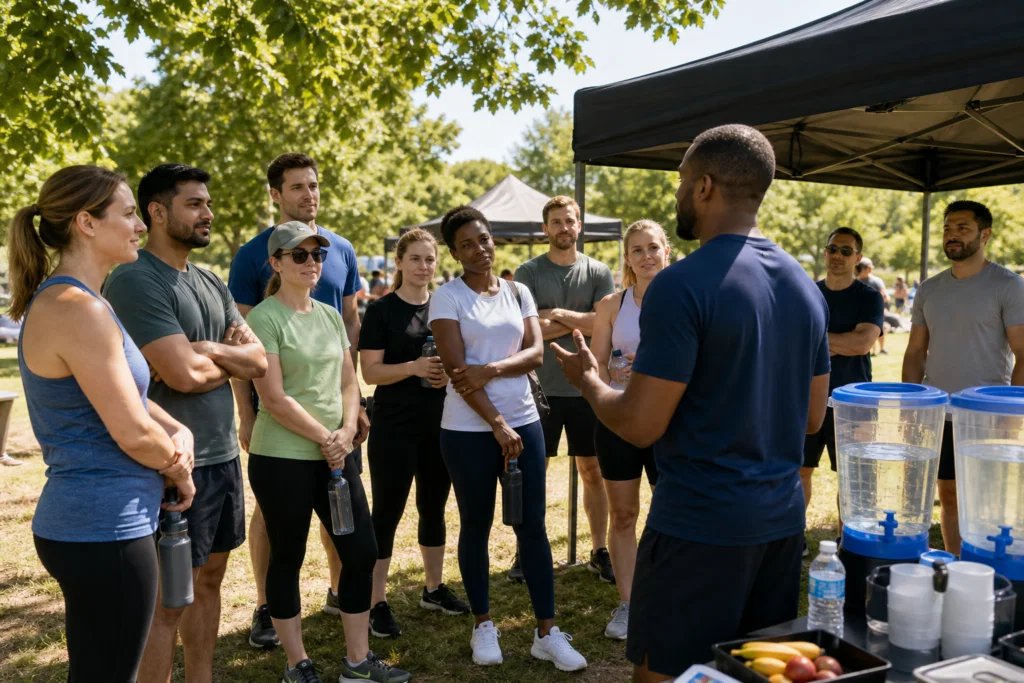
Weather needs the same attention. For summer events, plan shade, water, rest points and a wet-weather alternative. For autumn or winter events, think about ground conditions, lighting, warm clothing and the distance between activity zones. If the forecast turns against the original plan, it is better to adapt the event than push through a format that no longer suits the group.
Briefing is part of the experience, not an interruption. People should know the rules, the boundaries, what to do if they feel unwell and who to speak to if something feels wrong. Clear instructions help nervous participants relax and help competitive participants understand the limits.
Want the safety and access details handled?
NewWave Events can plan briefings, rotations, weather options and inclusive activity choices so your team can focus on taking part.
How to keep competition positive
A competitive team building event should give people a reason to try, laugh and support each other. It should not create a league table that embarrasses the least sporty team in the company.
Use scoring that rewards more than first place. You might include points for teamwork, best communication, most improved team, fair play or creative tactics. These awards can sound light, but they change the tone of the day. People notice that the event values behaviour, not just results.
Hosts and facilitators also make a difference. A good host keeps rules clear, explains scores without dragging out the admin and spots when an activity needs more pace or a calmer reset. They can also stop one confident group from taking over and bring quieter teams back into the event.
Mixing teams carefully helps too. Avoid putting departments against each other if there is already tension. For cross-company events, create balanced teams with a mix of roles, seniority and confidence levels. If people arrive with their usual colleagues and leave having spoken properly to people from other parts of the business, the event has done its job.
Turn the activity day into a proper company event
The activity is only one part of the day. Arrival, food, timings, announcements, breaks and the close all affect how people remember the event.
Build a simple running order. Give people time to arrive, change footwear if needed, hear the briefing and warm up. Keep food and drink close enough that people use it. If the day includes presentations or awards, keep them short and place them when energy is still good.
For larger events, use clear zones and a central meeting point. People should know where to go next without needing to ask three different organisers. For smaller events, allow more time for reflection and conversation, especially if the event is linked to team goals, leadership or a department reset.
NewWave Events designs and delivers sports team building activities and wider corporate events across the UK. If you want a competitive event that suits your people, venue and objectives, the next step is to plan the format, timings and activity mix with an experienced event team.
A practical planning flow for competitive sports events
A good sports team building event needs more than a list of games. These five planning steps help turn the competition into a well-run company day.
Set the purpose
Decide whether the event is mainly for morale, reward, communication, leadership or a company celebration. That choice should shape the activity mix and tone.
Match activities to the group
Check group size, confidence levels, access needs and likely energy levels. Build variety so people can contribute through speed, tactics, accuracy or encouragement.
Choose the right setting
Confirm whether the event needs a field, sports hall, waterside venue, hotel grounds or mixed indoor and outdoor space. Plan a weather option early.
Keep scoring simple
Use short rounds, clear points and visible progress. Add fair play or teamwork awards so the event rewards the behaviours you want back at work.
Close the day properly
Bring everyone together for results, thanks and a short wrap-up. The finish should feel organised, not like the event simply ran out of time.
Plan a competitive sports team building event
NewWave Events can help you choose the right sports team building activities, plan the format and deliver the event on site. Share your group size, location, date and objectives, and the team will shape a competitive day that works for your people.