



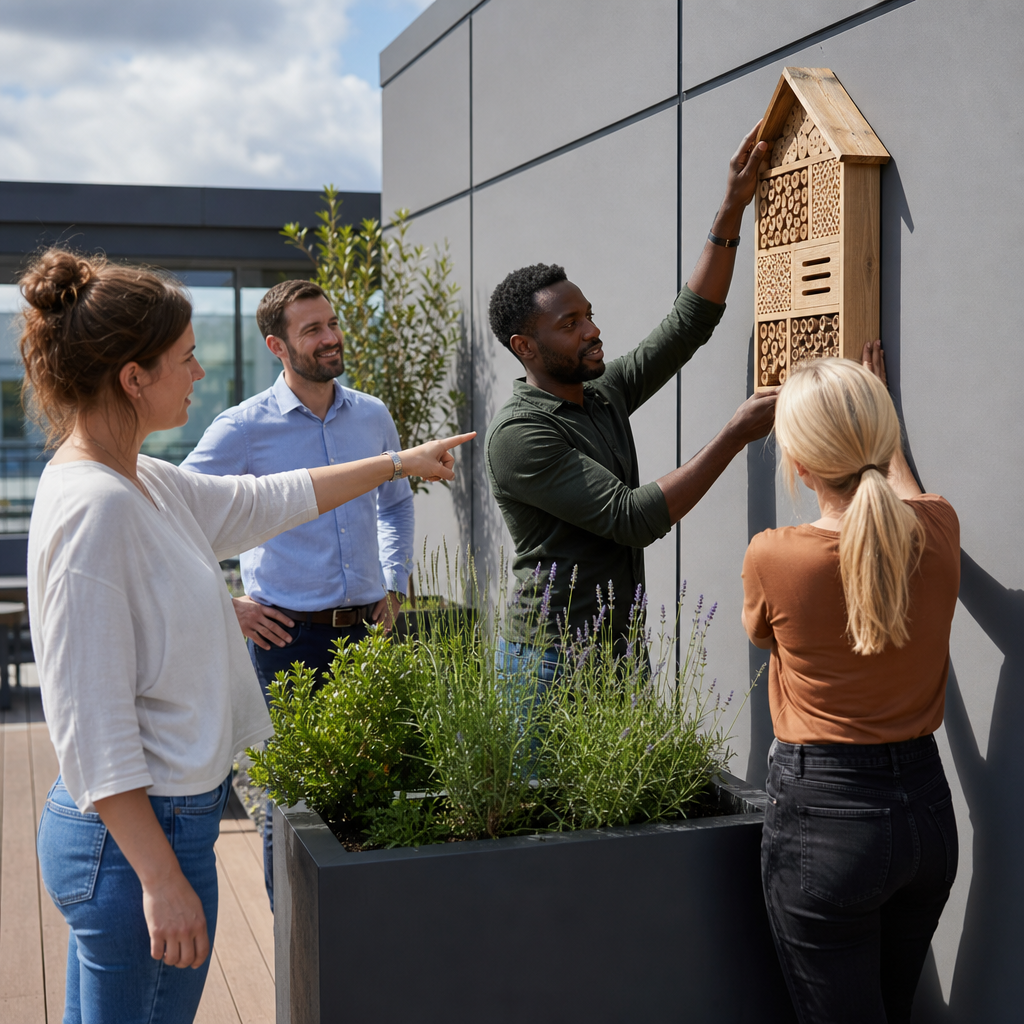
Your session starts with a short, plain English briefing on pollinators, solitary bees and what a bee hotel can actually do. We cover the difference between honeybees, bumblebees and solitary bees, because that one catches plenty of people out.
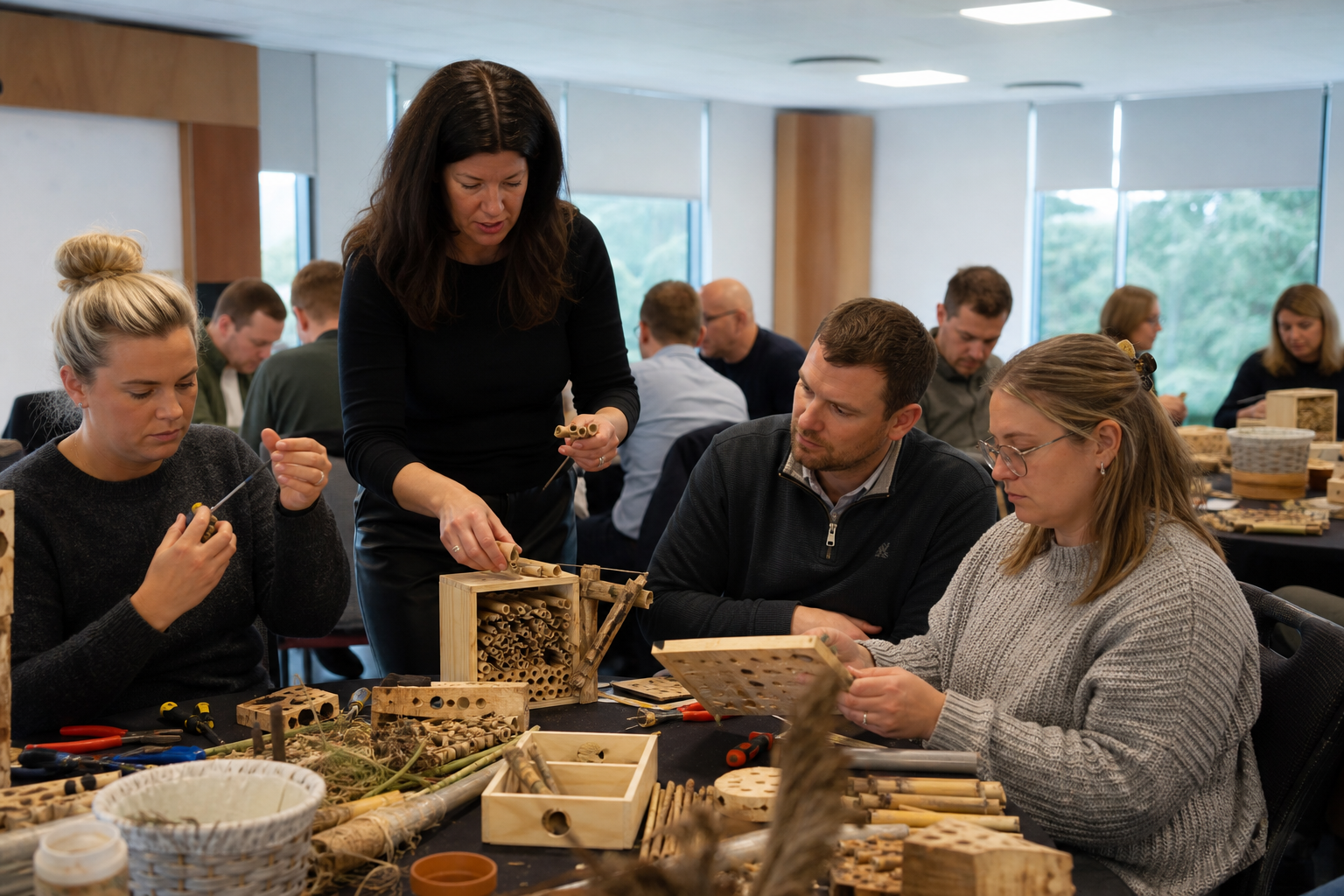
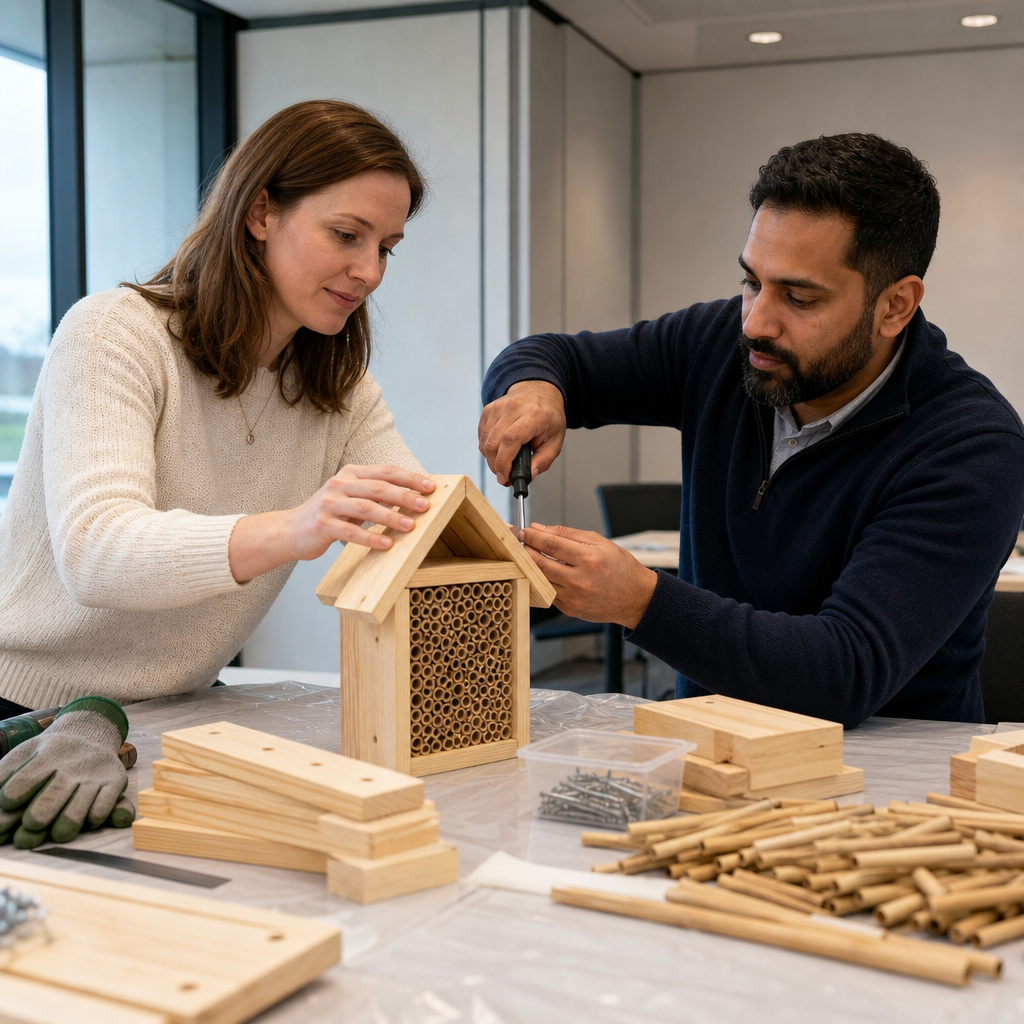
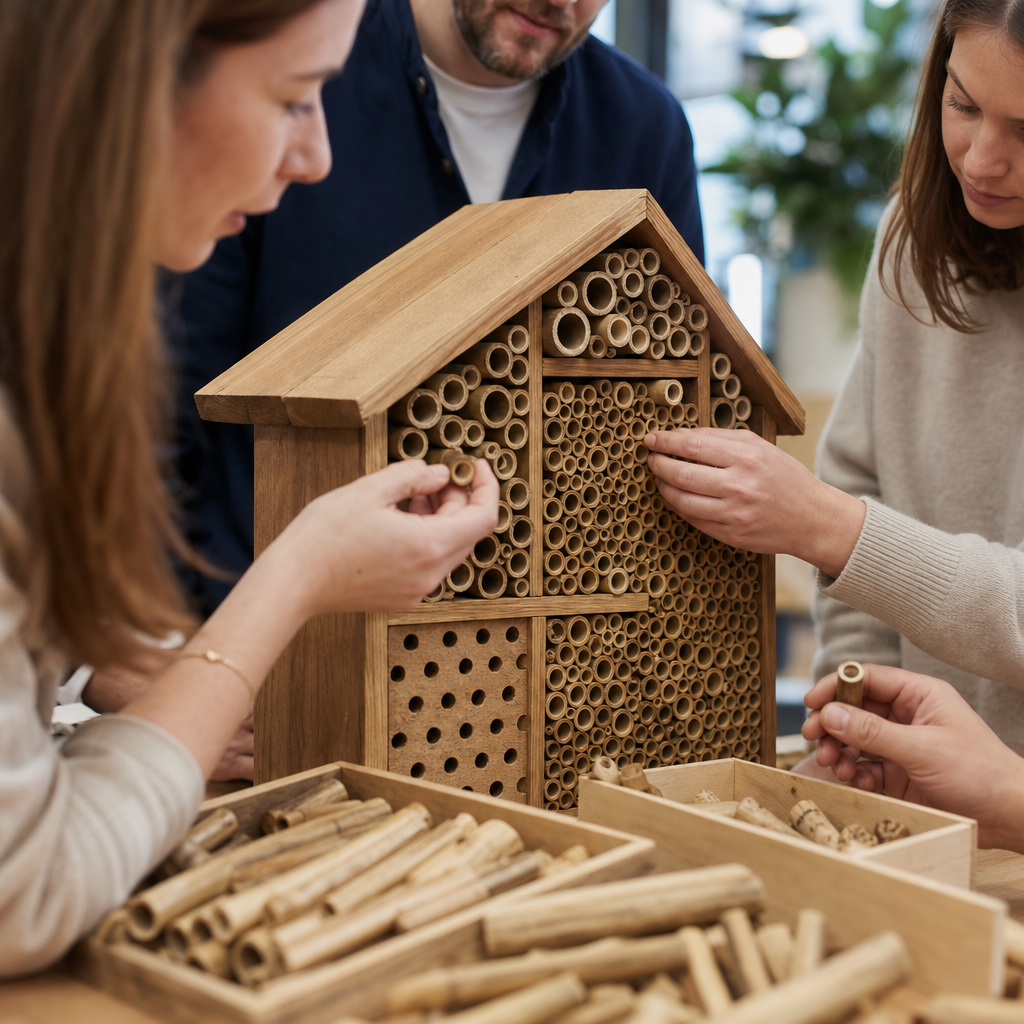
Each team receives a pre cut wooden frame or flat pack kit, plus hollow stems, bamboo, reed or cardboard tubes, fixings and decoration materials. The aim is to create a small, repairable nesting shelter with the right tube sizes, smooth openings and closed backs.
The build is simple enough for non gardeners, but it still needs care. Teams divide up the jobs, check each other’s work, pack the tubes firmly and think about rain protection, sunlight and long term maintenance. It is hands on without being frantic.
We add a light learning layer through pollinator quiz questions, bee identification cards or a plant matching challenge. It keeps the pace lively and gives your team proper takeaways, not just a craft item on a table.
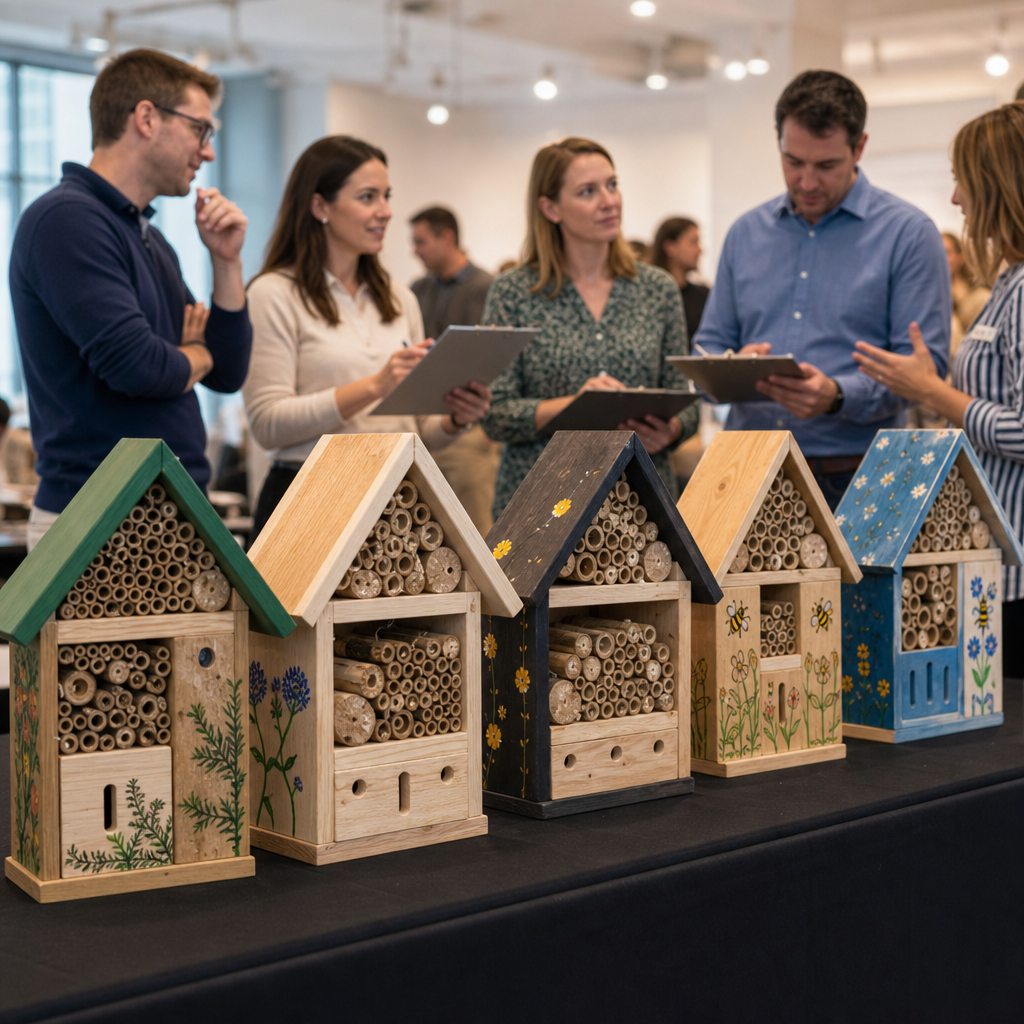
If you want a competitive edge, we can judge the finished hotels on habitat function first, then build quality, repairability, design and team story. Pretty matters, but useful matters more. That is where the best conversations tend to happen.
This workshop suits mixed seniority groups, hybrid teams meeting in person, wellbeing days, sustainability weeks, away days and CSR programmes. It is seated, sociable and low pressure, so quieter team members have space to contribute.
The event works indoors in a meeting room, conference space, atrium or canteen. If you have a terrace, courtyard, roof garden or venue grounds, we can add an outdoor siting discussion or green space walk to help your team choose sensible locations.
NewWave provides the facilitator, kits, natural materials, tools, fixings, table protection, quiz content and installation cards. Your venue needs tables, chairs, a waste or recycling point and access to water if paints or glues are used.
Every finished hotel comes with clear care guidance. A good bee hotel is not maintenance free. Tubes may need replacing or cleaning, and the hotel should sit in a sunny, sheltered spot, ideally facing south east, with flowers nearby for pollen and nectar.