The best IT team building activities give technical teams a problem worth solving together, without turning the day into another meeting. For software developers, cyber teams, helpdesk staff, infrastructure specialists and digital product groups, the right activity should test communication, prioritisation and decision making as much as technical knowledge.
That does not mean every idea needs laptops, code or a simulated security breach. Some tech teams need a proper break from screens. Others respond well to a challenge that mirrors real work in a safe, lower-pressure setting. A good event brief decides which route fits the team before anyone books a venue or chooses an activity.
Why IT teams need a different kind of team day
IT teams often work with complex systems, urgent tickets and a mix of planned and unplanned work. A generic away day can fall flat if it ignores that reality. The activity needs enough structure to keep analytical people engaged, but not so much process that it feels like a workshop with snacks.
Strong formats for tech teams usually have three practical features:
- a clear problem, with enough ambiguity to make discussion necessary
- visible roles, so quieter specialists can contribute without being pushed into performance
- a useful debrief, where the group can connect the activity to real habits such as handovers, escalation and documentation
The aim is not to make everyone behave the same way. It is to help the team understand how different working styles affect delivery when time is tight, information is incomplete or priorities change.
If you are comparing broader options, NewWave Events also has a guide to team building activities that can help you shape a wider shortlist.
Need a format that suits technical personalities?
If your IT team includes a mix of developers, support staff, infrastructure specialists and managers, NewWave Events can help shape an activity that gives everyone a useful role.
15 IT team building activities for tech teams
Use these ideas as a starting point for a team event, away day or internal conference breakout. Some work best indoors, some suit outdoor settings, and several can be adapted for mixed technical and non-technical groups.
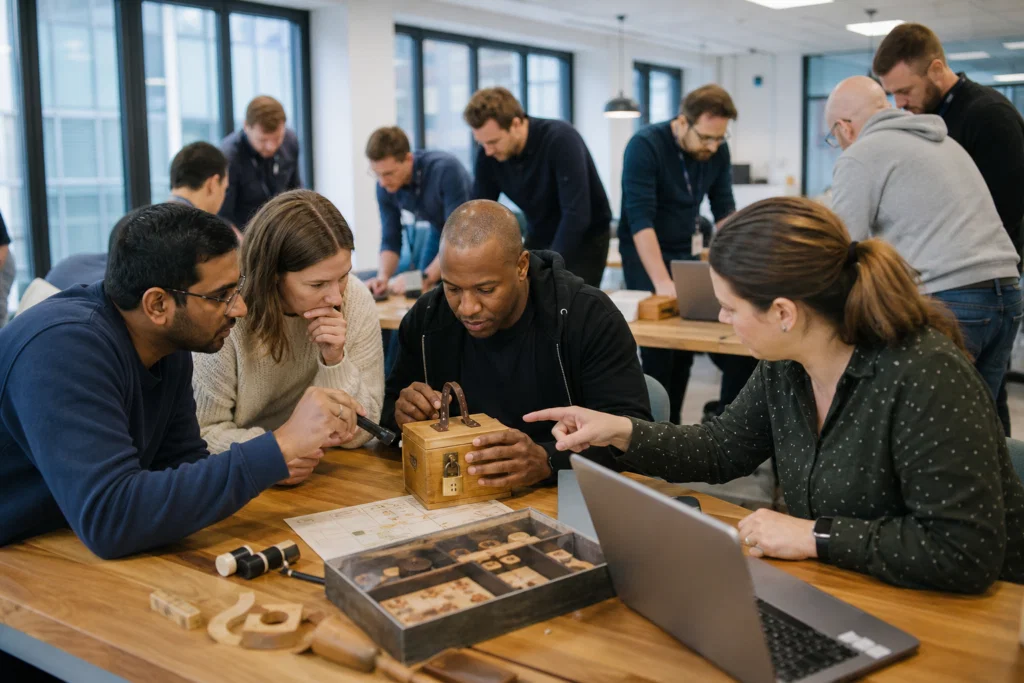
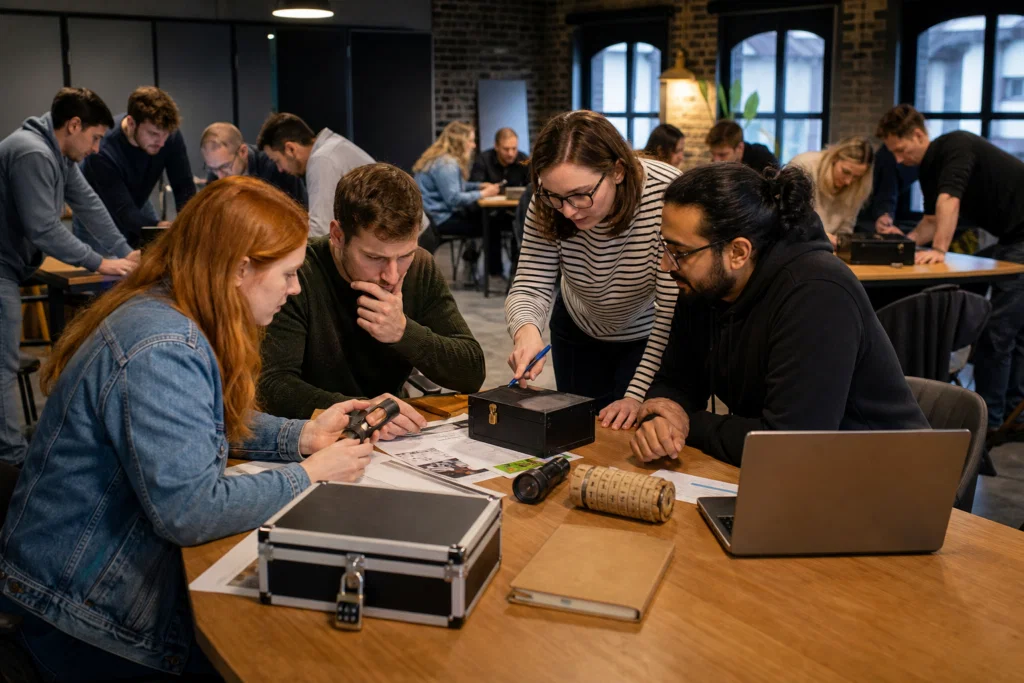
- Cyber escape room. Teams solve a fictional security incident by decoding clues, spotting suspicious behaviour and sharing information under time pressure. It works well for IT groups because the task feels relevant without requiring anyone to expose real systems, passwords or internal procedures.
- Incident response tabletop. A facilitator gives the group a staged scenario, such as a ransomware warning, supplier outage or data access issue. Participants decide who does what, what gets escalated and how messages should be handled. Keep it fictional, clearly labelled and focused on communication rather than blame.
- Hackathon for a good cause. Small groups build a simple prototype, automation idea or process improvement for a charity, community project or internal staff need. The strongest versions include product, design and operations voices, not just developers, so the team has to balance usefulness with feasibility.
- Product rescue challenge. Teams inherit a troubled fictional product with bugs, stakeholder pressure and a limited release window. They must prioritise fixes, negotiate scope and explain their decision. This suits software, QA, product and delivery teams because it tests judgement rather than speed alone.
- Code review role swap. Participants review a short, deliberately imperfect piece of pseudo-code or process logic from different viewpoints: security, user experience, maintainability and support. The exercise helps technical teams practise constructive feedback without making anyone’s real work the subject of the room.
- Agile sprint simulation. Groups plan and deliver a hands-on task across short rounds, with changing requirements introduced between rounds. The point is to show how assumptions, work in progress and unclear acceptance criteria affect delivery. It is especially useful for teams moving between project and product ways of working.
- Bug bash quest. Teams test a mock app, process map or physical challenge for faults, then rank what they find by impact. This gives QA, support and engineering colleagues a shared language for severity, customer impact and evidence quality.
- Data detective challenge. Participants receive a messy fictional dataset and a business question. They must clean the information, identify patterns and present a recommendation. It suits data, analytics and IT leadership teams because the winning answer depends on asking better questions, not just finding a number.
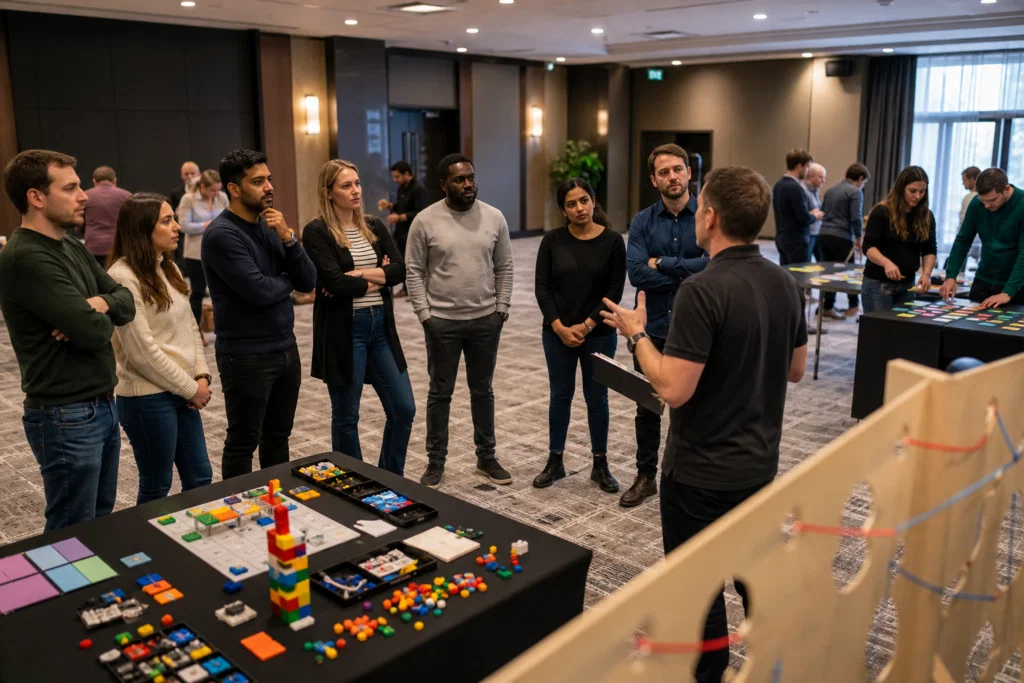
- Cloud architecture build. Teams design a resilient service using cards, tiles or physical components to represent systems, dependencies and constraints. Facilitators can introduce budget limits, compliance needs or sudden traffic spikes. This makes architecture trade-offs visible to technical and non-technical colleagues.
- UX empathy lab. Groups complete tasks while dealing with constraints such as limited instructions, time pressure or accessibility barriers. The debrief can connect directly to service design, internal tooling and support tickets. It is a useful reminder that technical success and user success are not always the same thing.
- Security awareness game. Teams identify phishing signs, password risks and reporting routes through a quiz, puzzle trail or interactive challenge. Keep the tone practical. The activity should make safer behaviour easier to remember, not embarrass people for getting a trick question wrong.
- Tech scavenger hunt. Colleagues solve clues linked to systems thinking, company knowledge or event locations. This can work indoors across a conference venue or outdoors as part of an away day. It is a good option when you want movement, mixed teams and light competition without heavy technical content.
- Robot or drone challenge. Teams programme, guide or navigate small devices through a controlled course. The activity gives technical teams a hands-on task with immediate feedback, but it also exposes planning gaps, unclear instructions and the difference between a clever solution and a reliable one.
- Retro arcade social. A relaxed gaming zone with arcade games, consoles or reaction challenges can give IT teams a lower-pressure way to mix. Add team missions or rotating pairs if you want more interaction, but leave enough free play for people who need a lighter social format after a demanding quarter.
- Outdoor problem-solving trail. Teams move through a sequence of logic, navigation and practical challenges in a park, hotel grounds or activity venue. This is a good screen-free choice for teams that spend most of the week at desks. Choose accessible routes and offer an indoor backup for poor weather.
How to choose the right format
Start with the reason for the event, then choose the activity. If the team has been through a major incident or delivery push, a competitive technical challenge may not be the best first step. A relaxed social format, creative activity or wellbeing-led session may do more for morale.
If the aim is better collaboration between engineering, support and product, choose an activity with mixed roles and shared decisions. A product rescue challenge, data detective exercise or cloud architecture build can make handovers and trade-offs easier to discuss.
If the aim is readiness, a simulated incident or tabletop exercise can be useful, but it should be handled carefully. Use fictional details, agree the boundaries, and separate the exercise from any live operational review. People take part more openly when the session is clearly about learning, not catching someone out.
For a full away day, combine one higher-focus activity with a lighter social element. A morning problem-solving challenge followed by informal food, awards or entertainment often works better than a packed agenda with no breathing space. For wider planning ideas, see NewWave Events’ guide to corporate away day ideas for UK teams.
Not sure which idea will work for your team size?
NewWave Events can help you compare technical, creative, social and outdoor options against your venue, timings and team objectives.
Planning details HR and technical leads should agree
The best IT team building events are planned jointly. HR or people teams know the wider engagement goals. Technical leads understand delivery pressures, on-call cover and the subjects that may feel sensitive. Bring both views into the brief before the event is designed.
Agree the following before confirming the format:
- team size, locations and whether remote colleagues need a parallel option
- the balance between technical and non-technical participants
- accessibility, dietary requirements and any sensory considerations
- on-call rotas, service desk cover and blackout dates around releases
- whether the day should feel competitive, collaborative or mainly social
- what the debrief should cover, and what should stay outside the room
For physical events, planning should also cover proportionate safety arrangements, emergency procedures, first aid, venue access and weather contingencies where relevant. These details rarely make the event more complicated for participants. They make the day feel calm and well run.
Making the day inclusive for hybrid and specialist teams
IT departments often include people with very different working patterns, seniority levels and communication preferences. A team day should not only reward the loudest troubleshooters or the people who enjoy public performance.
Design the format so contribution can happen in several ways. Some people will lead discussion. Others will spot patterns, document decisions, test assumptions or notice risks. When the activity recognises those roles, it reflects how good technical work actually happens.
For hybrid teams, avoid treating remote colleagues as an afterthought. If they cannot attend in person, give them a proper hosted online activity or choose a format where remote and in-room groups can compete or collaborate fairly. Flexible working can include homeworking, remote working and hybrid working, so event plans need to account for where people actually are, not where the organiser wishes they were.
It also helps to vary the social pressure. Not everyone wants a late evening, alcohol-led event or a high-energy performance task. Daytime formats, food-led socials, creative sessions and indoor events can make participation easier for a wider group.
Turning one event into better day to day teamwork
An IT team building activity has more value when the learning is specific enough to use afterwards. Keep the debrief short, practical and linked to normal work. Ask what helped the team make decisions, where information got stuck and what the group would change next time.
Good follow-up actions are usually small. They might include clearer escalation routes, a better handover template, a shared glossary between technical and non-technical teams, or a regular cross-team problem-solving session. Avoid turning the event into a long list of actions that nobody owns.
Capture two or three commitments, assign owners and revisit them after a month. That keeps the energy of the day connected to real working habits, without pretending a single event can fix every process issue.
A practical planning process for IT team events
A good IT team event needs a clear brief, not a long agenda. NewWave Events can help shape the activity around your people, your venue and the outcome you want.
Define the purpose
Decide whether the event is about morale, collaboration, problem solving, incident readiness or reward. One clear purpose makes the activity easier to choose.
Map the team
Look at roles, seniority, locations, accessibility needs and on-call cover. This helps avoid formats that exclude remote staff or put pressure on the wrong people.
Choose the activity style
Pick the right balance of technical relevance, social time, movement and competition. IT teams often respond well when the challenge feels useful but still enjoyable.
Plan the delivery details
Confirm venue, timings, facilitation, equipment, safety arrangements and the debrief. Small operational details make a big difference to how relaxed the team feels.
Review and follow up
Capture a few practical lessons after the event and agree who owns them. The best outcomes are usually simple changes the team can use straight away.
Plan an IT team building event that fits your team
NewWave Events designs and delivers team building activities and corporate events across the UK. If you are planning an away day, conference breakout or team reward for an IT department, we can help you choose a format that suits your people and your objectives.