A good leader gives people clear direction, earns trust through consistent behaviour and creates the conditions for others to do their best work. In a workplace setting, that means more than confidence or charisma. It means communicating well, making fair decisions, listening properly, delegating with care and taking responsibility when things get difficult.
For HR teams and managers planning development days, the useful question is not whether someone looks like a leader in a workshop. It is whether they can practise the behaviours their team needs back at work. A well-designed team building event can help, but only when the activity has a clear purpose and a proper debrief.
Good leadership starts with behaviour people can trust
What makes a good leader is visible in everyday moments: how they handle pressure, explain decisions, respond to mistakes and treat people who disagree with them. Teams do not judge leadership only by presentations or strategy documents. They judge it by repeated behaviour.
Trust is especially important during change. Employees are more likely to stay engaged when leaders explain what is happening, why it matters and what it means for the team. Silence leaves space for rumour. Over-polished messages can sound evasive. Good leaders are clear without pretending every answer is known.
For team leaders, trust also comes from consistency. If priorities change every week, if rules apply differently to different people, or if feedback is saved until something has gone wrong, people start working defensively. A good leader reduces that uncertainty. They set standards, explain trade-offs and keep promises realistic.
The 15 qualities that actually matter
Leadership qualities matter most when they show up as practical habits. These are the qualities worth building into leadership training, team building activities and manager development plans.
- Clarity. Good leaders explain the goal, the reason behind it and what success looks like. People should leave a briefing knowing what to do next, not just feeling that something sounded impressive.
- Integrity. Integrity means doing what you said you would do, admitting when you cannot and applying standards fairly. Teams watch this closely.
- Accountability. A good leader owns decisions and does not pass blame down the chain. Accountability also means following up after meetings, reviews and away days.
- Empathy. Empathy is not lowering standards. It is understanding what people are dealing with so that support, workload and expectations are sensible.
- Listening. Good leaders listen for information they do not already have. They ask better questions, allow disagreement and avoid treating feedback as a personal attack.
- Decisiveness. Teams need leaders who can make a call when enough information is available. Delayed decisions can drain confidence just as much as poor decisions.
- Adaptability. Plans change. Good leaders adjust without creating panic, and they help the team understand what has changed and what has not.
- Communication. Good communication is plain, timely and matched to the audience. It includes one-to-one conversations, team updates and honest explanations during change.
- Fairness. Fair leaders make expectations visible. They do not let louder voices dominate opportunities, recognition or decision-making.
- Delegation. Delegation gives people ownership, support and boundaries. It is not simply handing over unwanted tasks. If delegation is a development area, this guide on why delegation is important may help frame the conversation.
- Self-awareness. Leaders need to understand how their style lands with others. A fast pace, blunt tone or constant availability can affect the team in ways the leader does not intend.
- Resilience. Resilience is the ability to stay steady under pressure, not the expectation that people should absorb endless workload. Good leaders protect focus where they can.
- Coaching. Coaching helps people improve through questions, feedback and practice. It works best when leaders make time for it before performance problems become serious.
- Inclusion. Inclusive leaders design conversations so different people can contribute. That means noticing who is silent, who is interrupted and who is repeatedly overlooked.
- Follow-through. Teams lose faith when workshops, surveys or strategy sessions create action lists that disappear. Good leaders close the loop and show what has changed.

Turn leadership qualities into a practical session
If your managers need to practise delegation, listening or decision-making, a facilitated activity can make those behaviours visible without turning the day into a lecture.
How good leaders improve team performance
Good leadership improves performance by making work easier to understand and safer to discuss. People can move faster when priorities are clear, decision rights are known and problems can be raised early.
Planning is a useful example. A leader who plans work well is not micromanaging. They are helping the team see deadlines, risks, dependencies and capacity before pressure builds. This is where leadership and management overlap. Vision without planning can leave people inspired but confused.
Strong leaders also create a better rhythm for feedback. They do not rely on annual reviews or last-minute corrections. They make feedback part of normal work, with enough specificity for people to act on it. Recognition matters too, but it needs to be connected to real behaviour: good judgement, teamwork, customer care, creativity or persistence.
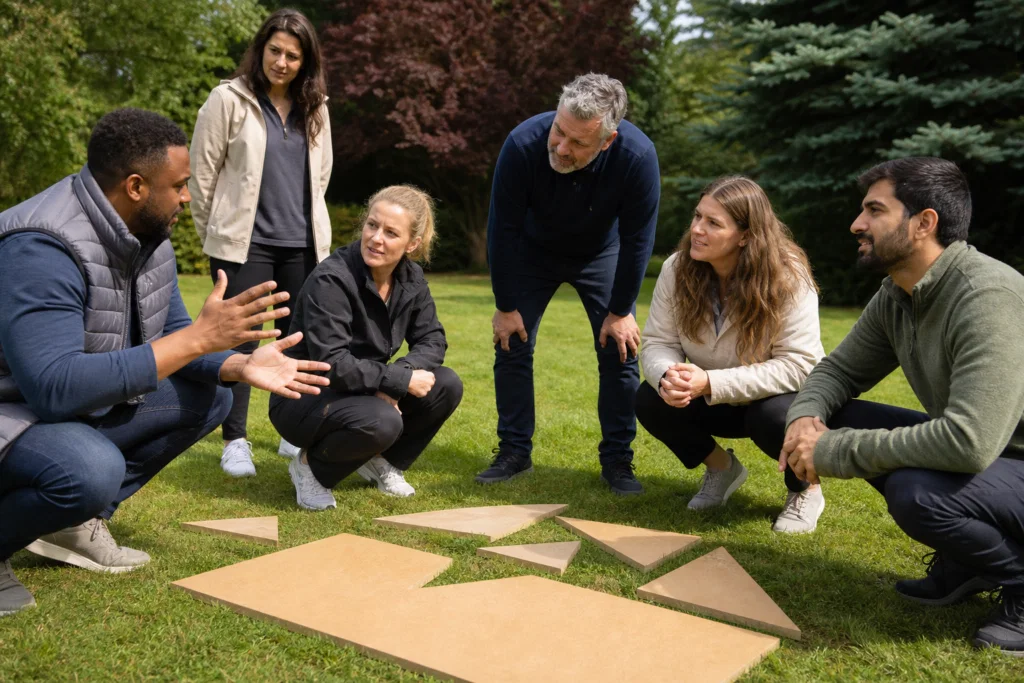
In team building settings, performance improves when activities make these behaviours visible. A problem-solving challenge can show who clarifies the brief, who notices quieter contributors and who rushes into action without checking assumptions. The value comes from the facilitated discussion afterwards, not from declaring a winning team.
Why leadership needs practice, not posters
Leadership values often sit on office walls, intranet pages and onboarding slides. They only become useful when people practise them. A leader who wants better collaboration needs more than a statement about collaboration. They need shared behaviours that the team can recognise and repeat.
This is where a leadership away day can work well. The event should not feel like a lecture with a short icebreaker attached. It should give people a shared task, a bit of pressure, a reason to communicate and time to reflect on what happened.
For example, a leadership activity might ask managers to solve a time-limited challenge with partial information. The debrief can then explore how they handled uncertainty, whether they listened before deciding and how they communicated changes. Another format might focus on delegation, asking leaders to brief a team clearly without stepping in too early.
NewWave Events designs leadership team building activities that can be shaped around these outcomes. The activity should fit the point you want to make, rather than forcing your team into a generic exercise.
Use the away day to surface real working habits
A well-briefed facilitator can help your team discuss what happened in the activity and connect it to meetings, projects and handovers back at work.
How to spot leadership gaps before they damage the team
Leadership gaps are often visible before they become major problems. HR teams may see rising absence, lower survey scores, repeated conflict between departments or a pattern of good people leaving one part of the business. Team leaders may notice quieter meetings, slower decisions or more work being escalated than before.
It helps to separate skill gaps from behaviour gaps. A new manager may need support with delegation, performance conversations or planning. A more experienced leader may know the process but still avoid difficult conversations, dominate meetings or fail to act on feedback. The response should match the problem.
Useful signals include unclear ownership, missed follow-ups, defensive reactions to challenge, uneven opportunities, poor handovers and a lack of honest discussion after mistakes. None of these proves someone is a bad leader on its own. Together, they show where development should focus.
Team events can surface these patterns without turning the day into an assessment centre. The tone matters. People need to know the purpose is learning, not catching someone out. A skilled facilitator can help the group discuss real behaviours without making the room feel unsafe.

Choosing leadership team building that transfers back to work
The best leadership team building has a clear before, during and after. Before the event, agree the leadership behaviours you want to practise. During the event, choose activities that reveal those behaviours naturally. After the event, turn the learning into actions that managers can use in team meetings, one-to-ones and project work.
For UK companies planning an away day, practical choices matter. Venue, group size, accessibility, indoor or outdoor format, timing and energy levels all affect the result. A senior leadership group may need a different format from a cohort of new managers. A mixed department away day may need activities that build trust before asking for open challenge.
If you are planning a wider event, this guide to corporate away day ideas for UK teams can help you compare formats. For leadership development, start with the outcome: clearer communication, better delegation, stronger trust, more confident decision-making or improved collaboration between teams.
A good leader is not made in one afternoon. A well-run event can still give leaders a shared language, a memorable reference point and a practical next step. That is often enough to start better habits.
A simple way to turn leadership qualities into team behaviour
Use this five-part structure when planning a leadership away day or team building event. It keeps the focus on behaviours people can use when they return to work.
Choose the leadership behaviour
Pick one or two behaviours to practise, such as clearer delegation, better listening or more confident decision-making. Too many objectives can make the event vague.
Match the activity to the outcome
Use a challenge that naturally brings the behaviour into view. A communication task, problem-solving activity or leadership rotation can all work when the purpose is clear.
Brief the facilitators properly
Tell the delivery team what you want to observe and discuss. The best debriefs connect the activity to real workplace situations.
Make reflection specific
Ask what happened, what helped, what got in the way and what the team would do differently next time. Keep the conversation practical rather than abstract.
Agree the follow-up
Finish with visible actions, owners and dates. Leadership development loses impact when the event ends with good intentions but no next step.
Plan a leadership team building event that fits your team
If you want to build clearer communication, stronger delegation or better collaboration between managers, NewWave Events can help you shape the right format. Share your goals, group size and preferred location, and the team will suggest activities that support the leadership behaviours you want to develop.