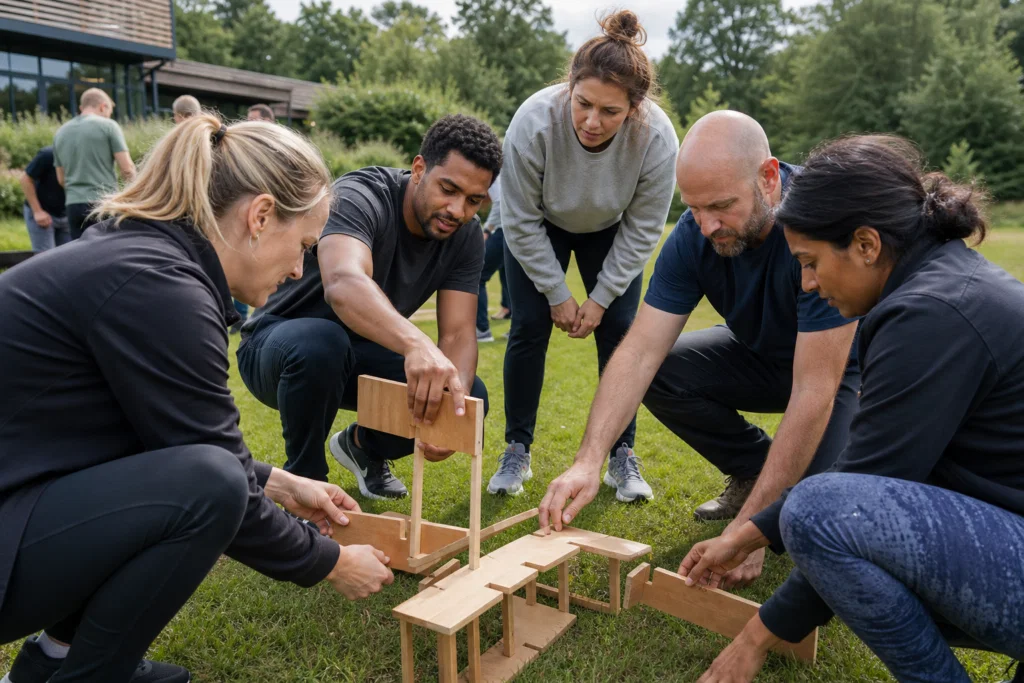
Why is team building important? Because most workplace problems are rarely caused by one person working alone. Missed handovers, unclear priorities, weak relationships, low morale and avoidable conflict all happen between people. Team building gives colleagues structured time to practise how they communicate, make decisions, solve problems and support each other.
That does not mean every activity works. A forced icebreaker with no purpose can make people switch off. A well-planned team building event, however, can help a team reset how it works together, especially after growth, restructure, hybrid working changes, leadership shifts or a busy trading period.
For HR teams and team leaders, the strongest case for team building is practical: work depends on trust, clarity, cooperation and energy. Those conditions need deliberate attention, not the occasional all-staff email.
Team building works when it is treated as work, not a perk
Team building is often filed under reward, social activity or morale. It can include those things, but the best events have a sharper purpose. They give people a shared task, clear constraints and a chance to notice how they behave as a group.
That matters because many teams spend their normal week moving quickly between calls, deadlines and messages. They rarely pause to ask whether information is travelling properly, whether quieter colleagues are being heard, or whether teams are making decisions in a way that everyone understands.
A good event slows the room down enough for people to practise those behaviours. It can be a problem-solving challenge, an outdoor activity, a charity build, a creative task, a company sports day or a hosted away day. The activity is the format. The purpose is better teamwork back at work.
For a practical starting point, NewWave Events has a wider range of team building activities that can be shaped around communication, collaboration, leadership, morale or reward.
Reasons 1 to 4: communication, collaboration, clarity and trust
The first reason team building is important is that it improves communication habits. People often assume communication means talking more, but teams usually need clearer listening, shorter handovers and better questions. An activity with a time limit makes those habits visible very quickly.
The second reason is collaboration. Hybrid and distributed work can be effective, but recent UK research points to familiar difficulties: coordination, staff development and informal interaction need management, training and infrastructure. A team event cannot fix a poor hybrid policy, but it can give colleagues planned time together with a clear reason to collaborate.
The third reason is role clarity. In a well-designed challenge, teams learn who naturally organises, who spots risks, who keeps morale steady and who asks the awkward question that prevents mistakes. Leaders can use those observations to talk about responsibilities and decision making without turning the day into a lecture.
The fourth reason is trust. Trust is built through repeated behaviour, not slogans. When colleagues complete a shared task, rely on each other and see different working styles in action, they get useful evidence about how the team behaves under pressure.
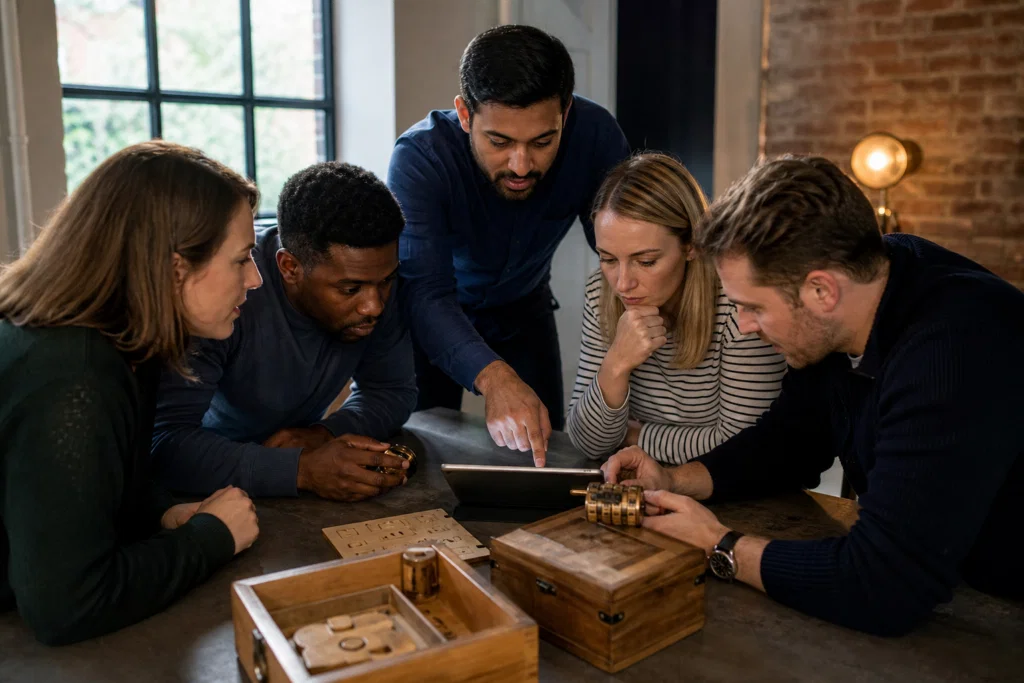
Reasons 5 to 8: engagement, belonging, wellbeing and retention
The fifth reason is engagement. UK engagement remains a live concern for employers, and team building helps when it gives people a genuine connection to colleagues and purpose. It should not be used to gloss over workload, pay or management problems, but it can help teams feel less detached from each other.
The sixth reason is belonging. Workplace loneliness and low connection are not soft issues when they affect confidence, cooperation and the willingness to ask for help. Events that mix departments, locations and seniority levels can help people build relationships they would not form in their usual working pattern.
The seventh reason is wellbeing. Recent UK workplace health data shows stress, depression, anxiety and sickness absence remain major issues for employers. Team building is not a mental health intervention on its own, but a well-run event can reduce isolation, recognise effort and give teams a healthier shared experience away from routine pressure.
The eighth reason is retention. People are more likely to stay where they feel fairly treated, supported and connected to the work. A single away day will not retain someone who is badly managed, but regular, thoughtful team events can form part of a broader employee experience strategy.
Reasons 9 to 12: leadership, problem solving, inclusion and change readiness
The ninth reason is leadership development. Team activities allow emerging leaders to practise briefing, delegation, listening and decision making in a lower-risk setting. They also help senior leaders observe how teams work, rather than relying only on reports and dashboards.
The tenth reason is problem solving. When teams work on a timed challenge, they have to test ideas, adjust quickly and use different strengths. That is close to real work, especially for project teams, operational teams and client-facing groups that need to make decisions with incomplete information.
The eleventh reason is inclusion. An event can be designed so more people can contribute, not just the loudest, fittest or most senior. That means thinking about accessibility, neurodiversity, dietary needs, religious considerations, caring responsibilities, alcohol-free options and physical demands before the activity is chosen.
The twelfth reason is change readiness. Teams facing restructure, rapid growth, AI adoption, office moves or new leadership need shared language and practical confidence. Team building gives people a constructive setting to practise working through uncertainty together.
What separates a useful event from an awkward one
Useful team building starts with a clear outcome. If the aim is to improve communication, the event should create moments where teams must listen, brief and debrief. If the aim is morale, the event should feel generous and inclusive, not like more work in disguise. If the aim is leadership, the brief should give people room to take responsibility.
The choice of activity should match the team. A competitive sports day may suit one group, while a creative indoor event, charity challenge or evening entertainment format may suit another. The planning should account for travel, venue layout, timings, accessibility, food, weather, energy levels and whether senior leaders are joining as participants or observers.
Follow-up also matters. The most useful events end with two or three practical observations that the team can apply afterwards. That might be a better meeting rule, a new project handover habit, a clearer escalation route or a commitment to involve quieter colleagues earlier.
If you are planning a full day away from the office, this guide to corporate away day ideas for UK teams can help you compare formats before you choose a venue or activity.
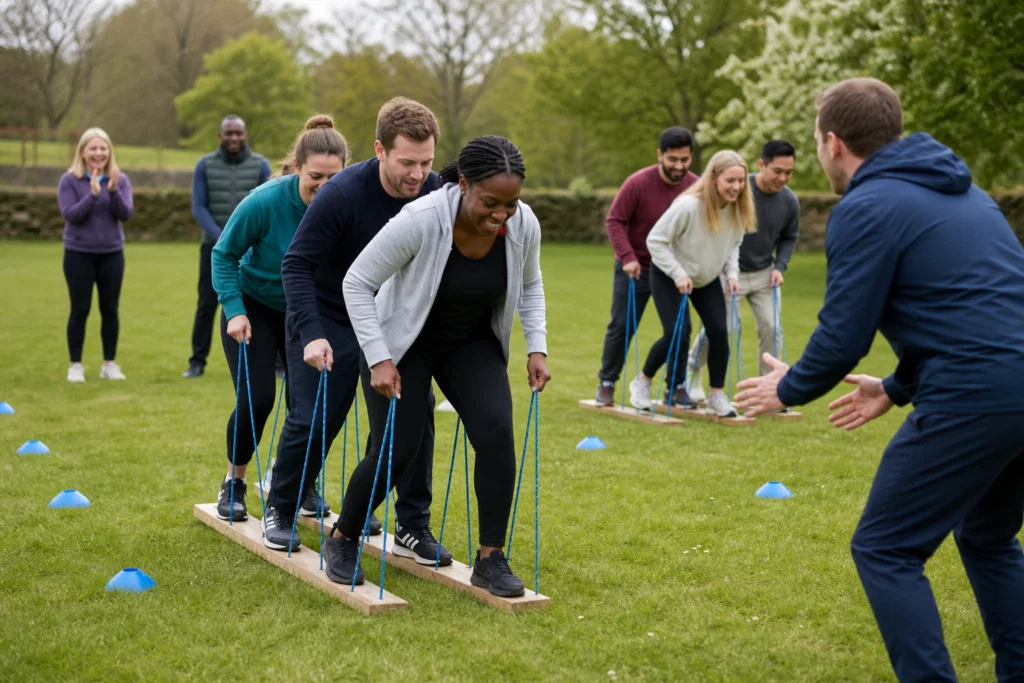
How to decide what your team needs next
Start by asking what is getting in the way of performance. If the answer is unclear priorities, choose a challenge with planning and delegation. If the answer is low morale, choose something social, varied and low pressure. If the answer is siloed departments, create mixed teams and give them a shared objective.
Then decide whether the team needs indoor, outdoor, evening, wellbeing-led, creative or multi-activity formats. Venue matters too. A poor room layout, long queue for food or difficult travel plan can undo good event design. If location is still open, NewWave Events has advice on choosing team building venues that fit the purpose of the day.
Measure the event simply. Ask people before and after what they need from the team, what worked during the activity and what one behaviour should change afterwards. The aim is not to prove that one event has solved everything. The aim is to turn a shared experience into better habits at work.
A simple planning process for a better team event
NewWave Events plans team building around the outcome first, then the activity. That keeps the event useful for HR teams, managers and the people taking part.
Define the reason
Decide whether the event needs to improve communication, morale, leadership, collaboration, reward or cross-team relationships.
Choose the right format
Match the activity to the team size, location, energy level, accessibility needs and time available.
Design the agenda
Plan timings, teams, breaks, food, travel, venue flow and any debrief moments before the day.
Deliver the experience
Use experienced facilitators so the event feels organised, inclusive and paced properly.
Turn it into action
Capture a few practical takeaways that managers can use in meetings, projects and everyday teamwork.
Plan a team building event with a clear purpose
If your team needs better communication, stronger relationships or a well-earned reset, NewWave Events can help you choose and deliver the right format. Tell us about your team size, location, goals and preferred dates, and we’ll shape an event that fits the brief.