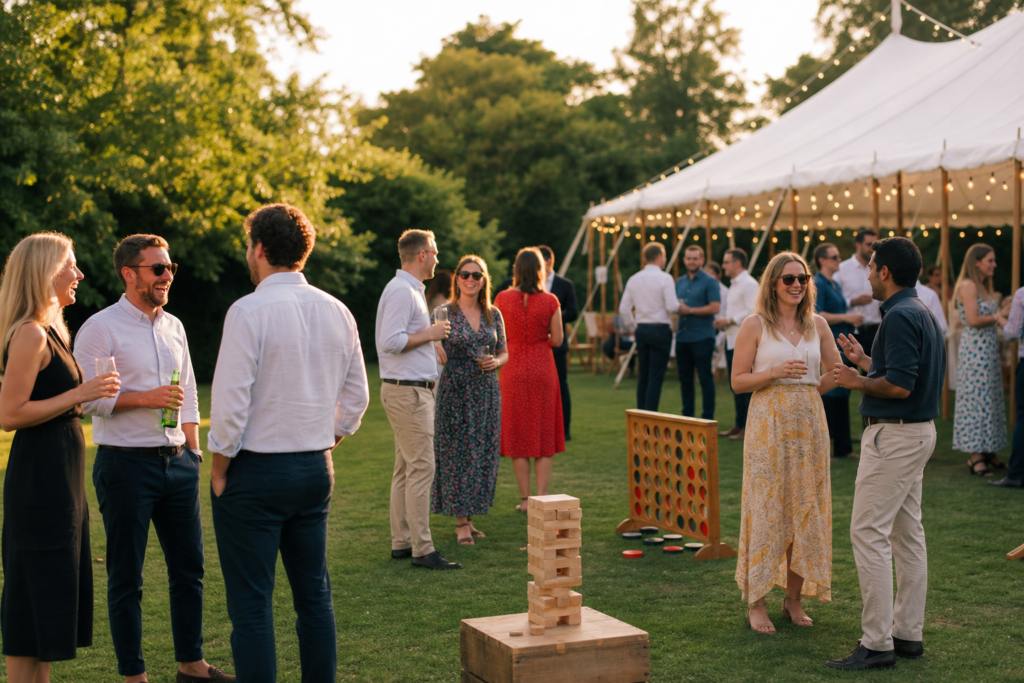
Every summer, someone in HR gets handed the same brief: sort out the summer do, keep everyone happy, and don’t blow the budget. It’s a harder job than it sounds, because a lukewarm work party is worse than no party at all. So if you’re hunting for summer party ideas for work that people will actually talk about afterwards (for the right reasons), here’s everything you need: 25 ideas sorted by setting, budget and group size, plus the planning checklist and tax rules that stop the whole thing turning into a headache.
Nearly a third of workers (31%) now expect their employer to mark the summer with some kind of event, according to recent workplace surveys. That’s not a demand for extravagance. It’s an expectation that someone noticed the year they’ve had. With UK employee engagement sitting at just 10%, well below the European average of 12% and the global figure of 20%, a well-judged summer party is one of the cheaper, more direct ways to remind people they’re part of something.
What makes a work summer party actually good
The parties people remember tend to share a few traits. They’re built around something to actually do, not just a room and a buffet. They cater properly for non-drinkers, because 48% of UK workers say they want fewer events centred on alcohol, and 42% would think twice about a job offer from a company known for boozy socials. They have a backup plan for weather. And they don’t assume every attendee has the same fitness level, interests or family situation.
Younger employees are driving a lot of this shift. Around 26% of 16 to 24 year olds in the UK are completely teetotal, so a party built entirely around the bar tab is going to leave a chunk of your team on the sidelines. Build the day around an activity, a theme or a setting instead, and drinks become optional rather than the whole point.
25 corporate summer party ideas, grouped by setting
Here’s the full list, split into outdoor and indoor so you can filter fast depending on your venue, your postcode’s weather forecast and how much control you want over the elements.
Outdoor ideas
- Garden party with lawn games, afternoon tea and a marquee for shade
- BBQ and picnic afternoon with a proper spread, not just burgers
- Company sports day with team relays, tug of war and a trophy that gets fought over every year
- Festival-style event with a small stage, food stalls and lawn seating
- Beach or tropical theme, ideal if your office is anywhere near the coast
- Boat party along a river or estuary for a change of scenery
- Outdoor cinema evening with deck chairs and a big screen after work
- Watersports afternoon (paddleboarding, kayaking, dragon boat racing)
- Treasure hunt or scavenger hunt around a park, estate or city centre
- Archery or battle archery session on an outdoor range
- Garden games tournament: giant Jenga, croquet, rounders, welly wanging
- Countryside estate day combining grounds, gardens and outdoor dining
- Go Ape or adventure course day for teams that want something physical
- Soap box derby with teams building and racing their own carts
Indoor and weather-proof ideas
- Casino night with hired tables and play money, no real stakes involved
- Murder mystery event that turns the whole room into suspects
- Cocktail masterclass with an alcohol-free option running alongside
- Retro or vintage themed party with a decade to dress for
- Escape room challenge, either at a dedicated venue or brought to your office
- Game show style event with buzzers, rounds and a bit of on-stage rivalry
- Trivia or pub quiz night with prizes that people actually want
- Cooking or bake off style competition between teams
- Rooftop terrace party for city offices with a view worth showing off
- Chocolate or gin making workshop as a smaller, calmer alternative
- Crystal maze style challenge across multiple rooms
- Hybrid party combining an in-office event with a video link for remote staff

Low budget
An office BBQ, a picnic in a local park, a garden games afternoon or an in-office quiz all work well when funds are tight. The trick is spending on one thing that feels a bit special (good food, a hired games set, decent prizes) rather than spreading a small amount thinly across everything.
Mid budget
This is where hired venues, sports days, casino nights and cocktail masterclasses tend to sit. You’re paying for a venue, some equipment or hosts, and probably catering, but you’re not into full production territory yet. Team-building activities and escape room style formats generally run at £25 to £100 per person on top of any venue cost, so factor that in early.
Higher budget
Festival-style events, boat parties, countryside estate days and anything with a stage, staging or multiple activity zones sit here. Extra cost lines start creeping in too: staffing such as security, bartenders and event coordinators typically costs £25 to £80 per hour per person, and transport like shuttle buses or taxis can add £500 to £5,000 depending on distance and headcount.
Working out which tier your ideal event actually falls into, then chasing quotes from venues and suppliers to check, eats a surprising amount of time. If you’d rather skip that back and forth, our team can put together a bespoke quote once we know your headcount and rough budget, so you know exactly what you’re getting before you commit.
Matching ideas to team size
Group size changes what actually works logistically, not just what looks good on paper.
- Small teams (under 30): cooking competitions, cocktail masterclasses, escape rooms and garden parties work well because everyone can join in without splitting into too many subgroups.
- Medium teams (30 to 100): sports days, festival-style events and casino nights start to make sense, since you’ve got enough people to fill teams, stalls or tables properly.
- Large teams (100+): boat parties, countryside estates and full festival setups suit bigger numbers, but need earlier booking and more careful logistics around transport and catering.
Popular themes worth a closer look
Festival theme
Think food trucks, a small stage or DJ, lawn games dotted around, and seating that lets people drift between groups rather than being locked to a table. It suits teams who want something with energy but not the formality of a sit-down dinner. Works best outdoors, with an indoor or marquee backup close by.
Sports day theme
Relays, tug of war, an egg and spoon race for the brave, and a proper trophy at the end. It’s competitive without being cliquey, because teams get mixed up rather than grouped by department. Good sports days build in low-effort stations too, so people who’d rather cheer than compete still have something to do.
BBQ and picnic theme
Simple, flexible and easy to scale up or down. The catering is the make-or-break detail here: go beyond burgers and sausages, cover vegan, vegetarian, halal and gluten-free properly, and don’t treat them as an afterthought table off to the side.
Garden party theme
Afternoon tea, lawn games, a bit of Pimm’s (and plenty of alcohol-free alternatives), and a setting that feels a step up without being stuffy. This theme tends to suit teams with a wider age range, since it’s not built around one specific interest or fitness level.
Planning a summer party yourself: the honest version
If you’re planning this in-house, here’s the process that actually works, not the tidy version. First, agree the budget and headcount with whoever signs off spend, because everything else depends on that number. Then set a date early, ideally avoiding school holidays and major sporting fixtures that might clash with your venue or your team’s availability.
From there, you’re juggling venue research, catering quotes, activity suppliers, wet-weather contingencies and a guest list that inevitably changes twice before the day. Small gatherings of 20 to 50 people typically need 2 to 3 months’ notice. Anything over 100 people, or a weekend date in July, needs 4 to 6 months, because that’s peak season and good venues get booked up fast.
Chasing three venues for availability, comparing quotes from a caterer and an activity supplier separately, and then trying to line up a wet-weather backup with a completely different provider is where most in-house planning starts to strain. That’s the exact gap our venue-finding service closes: it’s free to use, and because we’ve got long-standing relationships with venues across the UK, we can often secure better rates and dates than you’d get booking direct. We manage the venue, suppliers and entertainment as one job, so you’re not the one holding five separate email threads together in the run-up.
A planning checklist and rough timeline
- 4 to 6 months out: confirm budget, headcount and date; start venue research for larger or peak-season events
- 3 to 4 months out: book the venue, confirm the theme and start sourcing catering and activity suppliers
- 2 to 3 months out: send save-the-dates, confirm dietary requirements, book any transport
- 4 to 6 weeks out: confirm final numbers, run through wet-weather plans, finalise the running order
- 1 to 2 weeks out: send final details to attendees, confirm supplier arrival times and contact numbers
- On the day: have one person (or one supplier) owning the schedule so nothing slips
Weather planning for outdoor UK events
British summer weather is unreliable, so any outdoor plan needs a proper backup, not a vague hope it’ll be fine. Sensible contingencies include rain ponchos for guests, a marquee or gazebo to shelter under between activities, and an indoor version of at least the key activity so the day doesn’t grind to a halt if the forecast turns.
Catering for non-drinkers and different diets
Given that 48% of UK workers want fewer alcohol-focused events, build your drinks menu around a proper alcohol-free selection rather than a lone bottle of squash at the end of the bar. Cocktail masterclasses and gin tastings can run alcohol-free versions alongside the main event without much extra cost, so nobody’s left with nothing to do while others take part.
Dietary needs deserve the same attention. Ask for requirements when you send invites, not the week before, and make sure vegan, vegetarian, halal and gluten-free options are as good as everything else on the table, not a smaller version of it.
Hybrid and remote teams
With 28% of UK working adults now hybrid working, up from around 10% in 2021, plenty of summer parties need to work for people who aren’t always in the building. A hybrid format, where in-office activities are mirrored or streamed for remote staff, tends to work better than a purely virtual event bolted onto an in-person one as an afterthought. If your team is mostly remote, consider sending a small activity kit to homes ahead of a video-linked session, so everyone’s doing the same thing at the same time.
Tax rules for UK corporate summer parties
HMRC allows employers to spend up to £150 per head, including VAT, on annual staff functions without it counting as a taxable benefit. That allowance can cover one event or be split across two, such as a summer party and a Christmas do, as long as the combined cost per head stays under £150.
The important detail people miss: if a single event goes even slightly over £150 per head, the whole amount becomes taxable, not just the excess. Cost per head is worked out by dividing the total event cost by the number of attendees, including any guests, so a few extra plus-ones can tip you over the line without you noticing. It’s worth checking the current HMRC guidance or asking your accountant before you finalise numbers, since allowances and rules can be updated.
Why bother with a summer party at all
Summer brings a well-documented dip in focus. Virgin Media’s analysis of broadband traffic found an 8% drop between 3pm and 5pm on summer Fridays, and separate research shows 65% of workers would appreciate an early Friday finish in summer, believing it would lift morale. A well-timed summer party plays into that same mood: 61% of workers say they feel they’ve earned a bit of a break, and 59% feel no guilt taking it.
A summer party won’t fix low engagement on its own, but it’s one of the clearest, cheapest signals a business can send that it noticed the year its people have had.
Regular team building, of which a summer party is one form, is linked to a reported 36% higher retention rate and up to a 17% productivity increase in industry research, though these figures come from event-industry sources rather than government data, so treat them as directional rather than guaranteed. Either way, the logic holds: people stay where they feel valued, and a good party is a cheap way to show it.
Ready to stop juggling venues, caterers and wet-weather plans and start looking forward to the day itself? We handle the venue, suppliers and entertainment as one job, from first enquiry through to the final headcount.
Frequently asked questions
Garden parties, BBQs, sports days and festival-style events with food stalls and lawn games all work well outdoors, while casino nights, murder mystery events and cocktail masterclasses suit indoor or wet-weather plans. The best choice depends on your headcount, budget and how much of your team wants an activity versus a chance to just relax and chat.
Start by agreeing your budget and headcount, then set a date early, ideally avoiding school holidays and major sporting fixtures. From there you’re booking a venue, sorting catering and activities, confirming dietary needs, and building in a wet-weather backup if you’re going outdoors, all of which needs to happen a good few months before the day itself.
There’s no single right answer, since budgets scale with headcount and ambition, but as a rough guide, small events for around 50 guests in London have run at £5,000 to £12,000, while mid-scale events for 100 to 150 people have landed between £20,000 and £50,000. For an exact figure based on your team, it’s worth getting a bespoke quote rather than working from national averages.
Many UK employers use the HMRC £150 per head tax exemption as a natural ceiling, since staying under that figure keeps the event free of tax and National Insurance for staff. Beyond that, spend per head really depends on what you’re trying to achieve and what your business can justify, so it’s worth setting your own figure rather than assuming £150 is a target to hit.
HMRC allows employers to spend up to £150 per head, including VAT, on annual staff functions without it becoming a taxable benefit for employees. This allowance can cover a summer party on its own or be combined with a Christmas event, as long as the total cost per head across both stays under the threshold. It’s worth checking current HMRC guidance or speaking to your accountant, since the details of what counts can catch people out.
Yes, the £150 per head allowance can be split across multiple annual events, such as a summer party and a Christmas do, as long as the combined cost per head doesn’t go over £150. If it does go over, even by a small amount, the whole amount for that event becomes taxable, not just the excess, so it pays to calculate cost per head carefully before you commit to a supplier.
An office BBQ, a picnic in a local park, a garden games afternoon or an in-house quiz all deliver a good afternoon without a big spend. The key with a tight budget is putting the money into one thing that feels a bit special, whether that’s decent catering or a hired games set, rather than spreading it thinly across everything.
Sports days, treasure hunts, archery, watersports like dragon boat racing or paddleboarding, and garden games tournaments all work well for UK teams, especially when there’s a covered backup for bad weather. The best option depends on your team’s fitness levels and how competitive you want the day to feel.
A solid outdoor event plan includes rain ponchos, a marquee or gazebo for shelter, and an indoor alternative for at least the main activity. Booking a venue with covered space nearby, rather than relying entirely on open ground, is the simplest way to stop bad weather cancelling the whole day.
Hybrid formats that mirror or stream an in-office activity to remote staff tend to work better than a separate virtual-only event bolted on afterwards. Sending small activity kits, such as cooking or cocktail ingredients, ahead of a video-linked session lets remote staff join in properly rather than just watching.
Lawn games like giant Jenga, croquet and rounders work well outdoors, while quizzes, game show style formats and escape room challenges suit indoor settings. Team relay games and scavenger hunts are good options too, since they mix people up across departments rather than leaving existing friendship groups intact.
You don’t need to go fully alcohol-free, but you do need a proper non-alcoholic offering, given that 48% of UK workers want fewer alcohol-centred work events and 26% of 16 to 24 year olds don’t drink at all. Building the party around an activity or theme, rather than the bar, naturally makes drinking optional instead of central to the day.
Soap box derbies, battle archery, boat parties, crystal maze style multi-room challenges and retro decade themes all stand out from the usual BBQ or marquee format. These work best for teams that already enjoy a bit of competition or novelty, rather than groups who’d prefer something low-key.
Small gatherings of 20 to 50 people generally need 2 to 3 months’ notice, while events for 100 or more people, or any weekend date in July, should be booked 4 to 6 months ahead since that’s peak season. Thursday evening events tend to have a bit more flexibility and can sometimes be booked with 2 to 3 months’ notice even for larger groups.
Cooking competitions, cocktail masterclasses, escape rooms and garden parties all suit smaller teams well, because everyone can take part without splitting into too many subgroups. Smaller numbers also give you more flexibility on venue and date, so bookings can often happen closer to the event than they could for a large company.
Pick a venue with enough outdoor space, plan a mix of team relays and lower-effort stations so everyone has something to do, and mix people up across departments rather than keeping existing teams together. Book early if you want a specific date in peak summer, and have a wet-weather contingency in case the forecast doesn’t cooperate.
Recognising the dip directly, through things like an early Friday finish or a well-timed party, tends to work better than ignoring it. Data shows 65% of workers would welcome an early summer Friday finish and 61% feel they’ve genuinely earned some downtime by that point in the year, so a summer event taps into a mood that’s already there.
Picnics, BBQs, garden parties and outdoor cinema evenings all extend naturally to partners and children, especially if you build in activities that don’t rely on alcohol or late finishes. If you’re inviting families, it’s worth confirming numbers early since catering and activity costs scale with total attendees, not just staff headcount.
A summer party is primarily social, built to reward and relax the team, while a team-building day usually has a specific goal around communication, trust or problem-solving built into the activities. In practice the two often overlap, since a well-designed summer party with team activities can deliver team-building benefits without feeling like a training exercise.
Venue costs vary hugely depending on location, size and time of year, and London venues in particular carry a premium during peak summer weekends. Rather than guessing from national averages, it’s worth getting quotes for your specific headcount and date, or using a free venue-finding service that already has relationships with a range of venues across the UK.